 Zeki Tarik Sarioglu
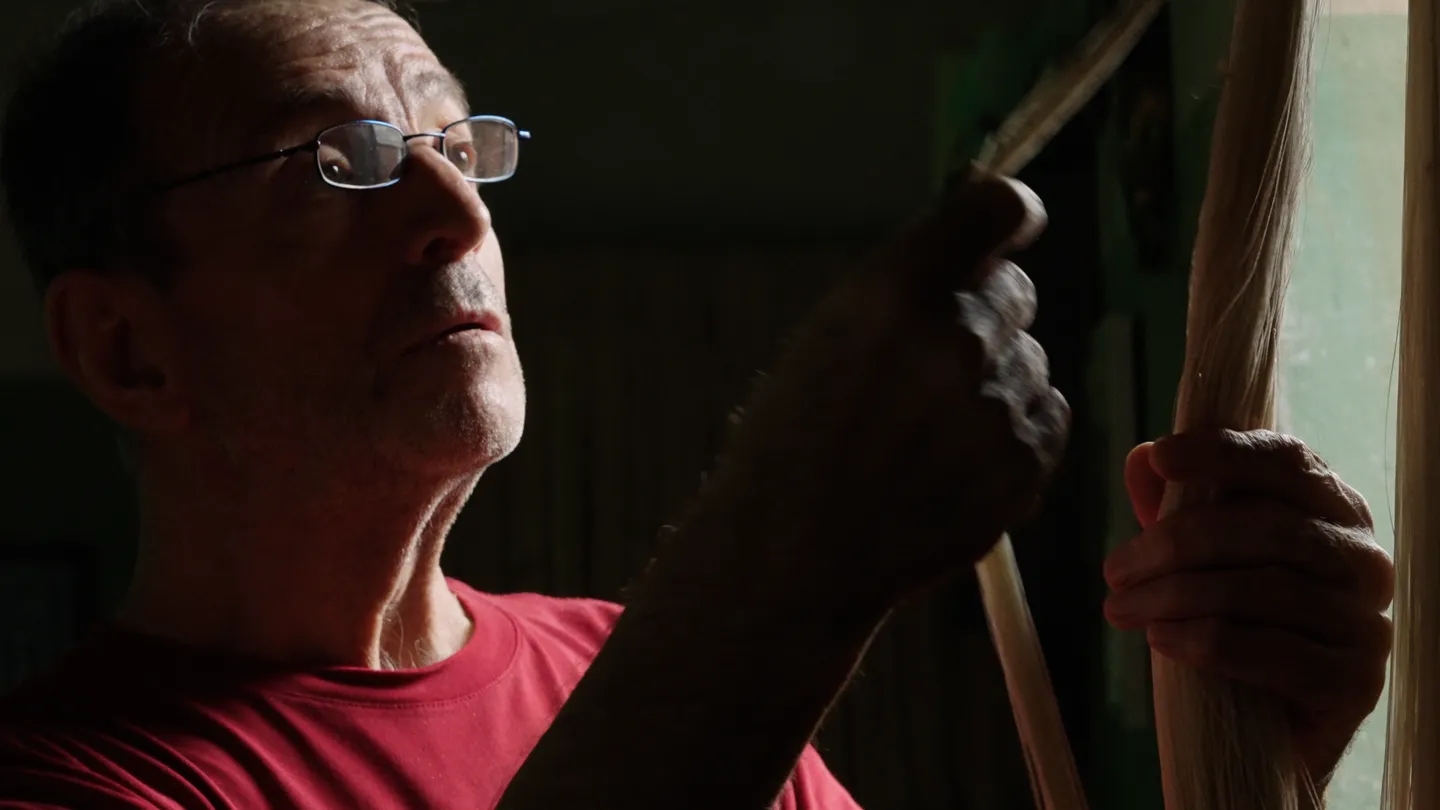
In Bursa, once known as the capital of silk, the craft of Devdah – the process of transforming raw silk cocoons into thread using traditional methods – still survives, thanks to the dedication of a handful of artisans.
One of them is 61-year-old Ertugrul Sengunalp, who has been practising this craft for 54 years.
“You can only do this job if you love it. If I didn’t, I would have given it up long ago,” he tells TRT World.
Devdah is far more than a craft of the hands. It also demands strength, endurance, patience and great precision. That is because Devdahs have to run back and forth across the workshop many times while processing the silk.
Sengunalp says he logs around 20 kilometres every day for this reason. Over 54 years, that adds up to nearly 400,000 kilometres – roughly the equivalent of circling the Earth 10 times.
His journey into Devdah began in childhood. One day, when his father’s apprentice did not show up for work, Sengunalp was called into the workshop before he had even started school.
Because he was too short to reach the workbench, his father placed a wooden board over soda crates for him to stand on. Little Ertugrul stepped onto that board and touched silk for the first time.
What began as a childhood task soon became the work of a lifetime.
“He told me what to do, and by following his instructions, I began my journey as an apprentice that very day,” he recalls.
A family legacy
For Sengunalp, Devdah is an inheritance.
He says he is the fourth generation in his family to carry on this craft. As a child, while his friends waited for him after school to play games, he would go to the Devdah workshop with his father.
His friends would come to the door and ask, “When will you be finished, Ertugrul?”
But his path had already been set.
He learned the basics of apprenticeship within a few years. Then he moved on to the journeyman stage. When he returned from military service, his father had already retired.
“Son, you can take over this craft now,” his father told him.
From that day on, Sengunalp took over the profession. But the craft he inherited from his father is as physically demanding as it is delicate.
The word Devdah is said to come from the words “dev” and “dah.” “Dev” refers to someone strong and giant-like, while “dah” means to run.
The name itself reflects the nature of the craft.
The process begins with raw silk in skeins. After being soaked in water and wound onto spools, the silk is prepared for different uses — from carpets and embroidery to needle lace and even surgical sutures.
The master attaches the silk to hooks. Holding a bone tool in his hand, he runs to the far end of the 22-metre-long workshop. He repeats the same process several times.



Each type of silk requires a specific number of rotations on the wheel.
For example, to twist silk thread for embroidery, the wheel is turned 35 times. The silk is then folded, carried back to the hooks, twisted again and stretched.
At this stage, the strength of the silk becomes clear.
Sengunalp says silk can be stronger than a steel wire of the same thickness.
But that strength is not achieved easily.
Devdah becomes even more difficult in winter. Heating the large workshop is not easy. Since the silk is constantly in contact with water, the master’s hands can become freezing cold.
“We warm ourselves up by running,” Sengunalp says.
Tied by silk
Today, what concerns him most is the future of the craft.
He says he has been carrying on this profession alone for nearly 20 years, without an apprentice. The fact that fewer young people are interested in such a demanding and patient craft makes the future of Devdah uncertain.
For Bursa, silk is an important part of the city’s memory.
According to Sengunalp, if Bursa had a sobriquet 40 or 50 years ago, it would have been “silk”.
Every thread he produces carries that memory into the present.
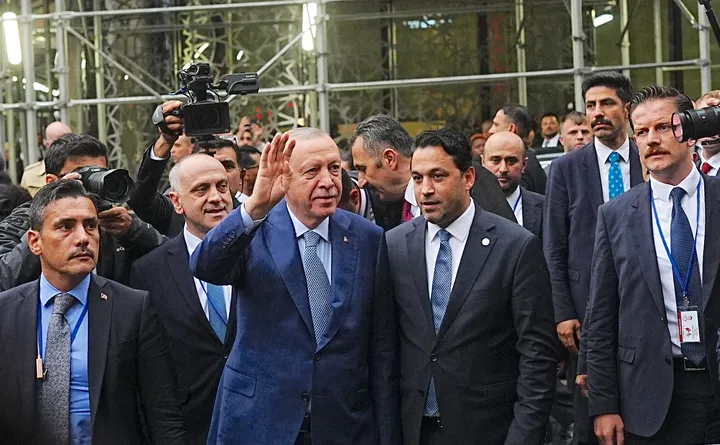
His dedication of more than half a century has been recognised. Ertugrul Sengunalp was awarded the title of “Living Human Treasure” for his contribution to safeguarding cultural heritage.
Sengunalp, who received his award from Turkish President Recep Tayyip Erdogan, says he felt deeply proud at that moment and that tears welled up in his eyes.
He says he will continue practising Devdah for as long as his health allows.
“As long as God grants me good health, I will continue practising this craft for as long as I am able even if I reach the age of 80,” he says.
Then he sums up why he is so deeply attached to it in a single sentence:
“I cannot bear to see this craft disappear.”