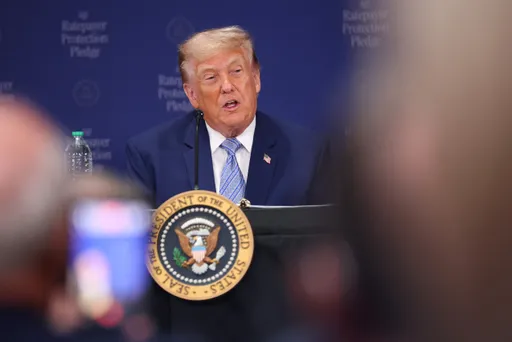
US President Donald Trump has authorised Congress to pass a bill imposing secondary sanctions and tariffs on imports from countries that persist in purchasing Russian oil and gas.
The initiative was authored by Republican Senator Lindsey Graham, who has been pushing for its passage since this spring.
He previously stated that these measures would deal a "devastating" blow to the Russian economy and stop the bloodshed in Ukraine.
He claimed that an absolute majority of representatives in both houses of Congress supported the bill.
In Russia, the possible adoption of the bill is perceived as "extremely negative," Kremlin press secretary Dmitry Peskov admitted: "We will see how this bill progresses, and we will see what details will be discussed”.
Today, the leading importers of Russian oil and gas are India and China. Both countries have adopted a cautious stance following the US's imposition of sanctions on Rosneft and Lukoil. At least several major oil refineries in both countries have halted supplies from Russia.
Since the start of the war in Ukraine, the issue of Russian oil and gas has remained one of the most problematic.
On the one hand, the Kremlin can use the proceeds from energy sales to support military operations. On the other hand, even Ukraine's allies and partners have not yet refused these supplies.
France, Spain, the Netherlands, and Belgium are the EU's largest importers of Russian LNG. Hungary and Slovakia receive oil via the southern branch of the Druzhba pipeline.
Oil is purchased through third countries. For example, India processes crude oil at its refineries and then sells the resulting petroleum products to the EU.
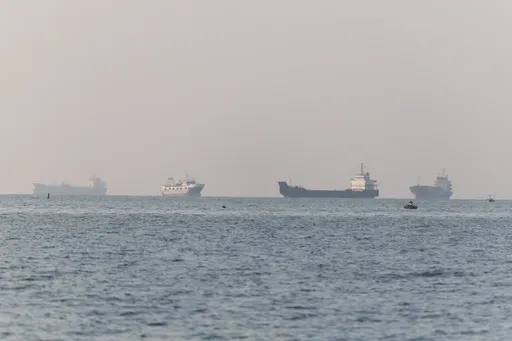
Furthermore, the Kremlin operates a "shadow fleet" that, according to S&P, transports 80 percent of Russian oil in violation of Western sanctions.
Therefore, despite its lofty claims, Senator Lindsey Graham's measure may not be as threatening to Russia in practice. And it's even less likely to stop the war in Ukraine. Economist Yaroslav Romanchuk discussed which measures could actually bring peace.
TRT Russian: How effective can the bill be?
Romanchuk: In this mechanism, as in many others, there's little hope. As experience over the past 20-30 years has shown—whether in Iraq, Iran, Belarus after 2014, or Russia under various restrictive regimes—such measures have significant gaps.
Yes, transaction loads are increasing, supply chains are changing, businesses are finding new ways, and shell companies are emerging. And manufacturers from Europe, America, and Asia are taking advantage of this, because everyone is making money.
So, some large companies will leave, but others will take their place. Third parties will emerge, entities from Kyrgyzstan, Georgia—from anywhere.


There will be offshore companies and new schemes—lawyers exist precisely to devise them. And these people will not be left without work.
Trade will become more difficult for Russia. This could have a slight impact on its economic growth—say, by 0.1 percent of GDP. But nothing more.
TRT Russian: Why don’t sanctions end the war?
Romanchuk: We need to understand that countries have different goals. And some don't count the hundreds of thousands of casualties or the billions in losses. There are states whose goal, among other things, is to neutralise the West.
And this cannot be resolved by non-military methods.
But Trump and the EU have not yet come to this simple idea.
TRT Russian: But the sanctions against Lukoil and Rosneft are showing results. Some companies from India and China have refused to supply.
Romanchuk: Some refused, others didn't. Look: did Lukoil exist in 1989? No. In 1991? Also no. There was oil—it's in Russia's depths. Lukoil merely created intangible assets, management, a brand, a network.
But, in essence, i’s not a private company; it's the Kremlin's oil department, fulfilling its assigned tasks.
The managers earned money, and the company acted as a stakeholder. But as soon as the state needs it, there will be no Lukoil, and another public joint-stock company will emerge. Any structure can be divided into parts.
And whether one or 22 other companies replace Lukoil won't change anything. Oil remains in Russia, and it's being sold. Yes, shareholders will lose income.
But for those who actually control the process, this is irrelevant. The same is true for Gazprom. Whether the company's market capitalisation is higher or lower is a matter for private shareholders.
Those who run these companies operate by their own logic. Their interests are not commercial, not about capitalisation or ratios, but rather about the Kremlin's political and military goals.
TRT Russian: So, in the end, this law that the US is currently passing won’t seriously change anything?
Romanchuk: Only a little bit at a time—little by little. All these measures, including European sanctions, are like someone putting something under a running engine mount, diluting it with gasoline, and adding sand. The engine will choke for a while.
But we have been “adding sand” for four years now – the active, large-scale phase of the war has been going on for four years.