 Zeynep Conkar
In the shadow of one of Europe’s most brutal urban sieges, a chilling new investigation has reopened old wounds.
Prosecutors in Milan have launched a case into allegations that during the 1992-1996 siege of Sarajevo, wealthy foreigners – primarily Italians – paid to join “sniper safaris,” firing on unarmed civilians from Bosnian Serb positions in the hills overlooking the city.
Though known to many since the gut-wrenching events unfolded, the story gained renewed attention after Slovenian director Miran Zupanic’s searing 2022 documentary Sarajevo Safari brought forward testimonies describing this macabre war tourism.
According to the film, and the dossier now submitted to prosecutors by journalist Ezio Gavazzeni, several dozen, perhaps up to a hundred, “weekend snipers” travelled to Bosnia with no ideological motive other than a passion for weapons and a perverse thrill.
The revelations confirm what survivors have been saying for decades, according to Albinko Hasic, founder of BosnianHistory.com, a platform dedicated to the in-depth exploration of Bosnia and Herzegovina’s history.
“The siege of Sarajevo was never a battle between two equal forces. It was a systematic campaign of terror against civilians who were encircled, cut off, and deliberately targeted,” Hasic, also a history expert, tells TRT World.
“Sarajevo lived through the longest siege of any capital in modern history, and thousands were killed while doing the most ordinary things, walking to work, collecting water, trying to stay alive,” he adds.
Gavazzeni, who filed a 17-page complaint in Milan, claims his evidence includes intelligence officer testimony, a report by former Sarajevo mayor Benjamina Karic, and even archival notes suggesting that Bosnian intelligence had passed on warnings about the goings-on to Italian military services 1993–1994.
Alleged logistics for the trips point to a network: participants gathered in Trieste, flew to Belgrade via Yugoslav charter airline Aviogenex, and from there were escorted to Serb-controlled hills where they could open fire.
Perhaps the most depraved aspect: Gavazzeni says there was a “price list” for human targets.
According to the complaint, shooting a child reportedly cost more than shooting a man, which cost more than shooting a woman, while the elderly could allegedly be shot “for free”.
The sums are staggering. In today's terms, participants allegedly paid between €80,000 ($92,000) and €100,000 ($115,000) for a weekend.
According to Hasic, what is now widely referred to as the ‘Sarajevo Safari’ came into focus through survivor testimonies, wartime reporting, and later documentary evidence.
“Throughout the siege, residents reported seeing unfamiliar foreigners on the frontline, often carrying advanced or unusual weapons. Journalists at the time also noted instances where visitors were escorted to sniper posts overlooking the city,” Hasic says.
A collective assessment of the evidence reveals a clear pattern.
“Survivors have spoken about it repeatedly. Journalists documented cases during the war. Intelligence officers recorded it. And the latest investigations have brought forward new testimonies and material. Any single account might appear fragmentary on its own, but together they reinforce one another and form a coherent picture,” Hasic explains.

Constant bombardment
The genocide in Bosnia unfolded through a series of systematic campaigns carried out across towns and villages, each designed to erase a people from their land. The fall of Srebrenica in July 1995 remains the most haunting symbol of this intent.


In a matter of days, more than 8,000 Muslim Bosniak men and boys were executed after Dutch peacekeepers were overrun, becoming the worst mass killing on European soil since the Second World War.
Families were separated, entire male bloodlines were wiped out, and thousands are still searching for the remains of their loved ones.
But Srebrenica was only one face of the genocide. Across Bosnia, civilians were trapped under sieges, imprisoned in camps, or forced into exile as the project of ethnic cleansing advanced.
“It’s also important to understand that the Bosnian war was never sealed off from the outside world. Foreign fighters, mercenaries, and opportunists from multiple countries inserted themselves into the conflict,” says Hasic.
“Some came for ideology, others for money, and others simply out of thrill-seeking. The involvement of foreigners who paid to shoot civilians is shocking, but it is entirely consistent with the lawlessness that surrounded the war and the ways outsiders exploited it,” he adds.
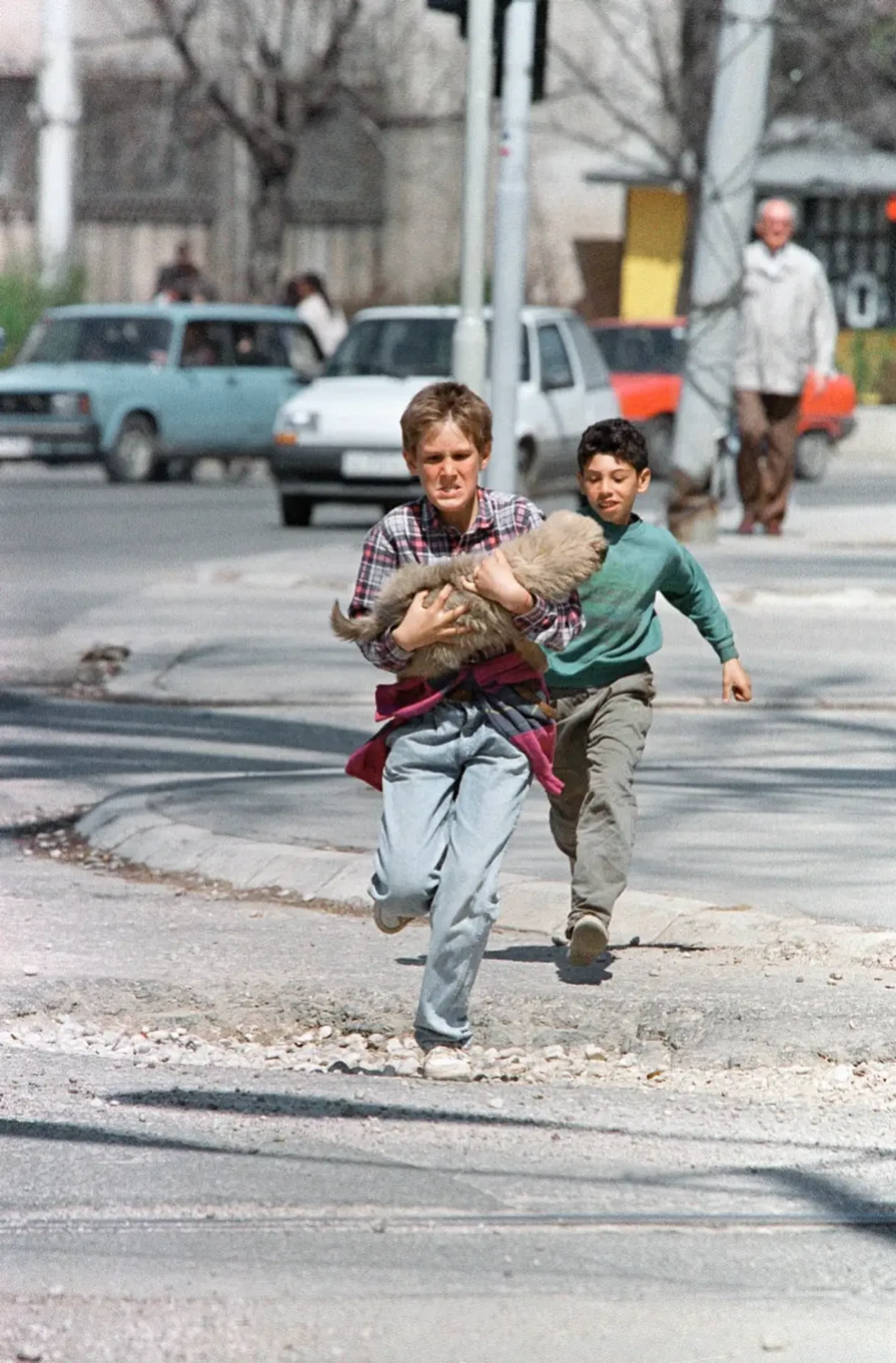
The siege of Sarajevo was one of the darkest chapters of the massacre. For nearly four years, civilians lived under constant bombardment and sniper fire. More than 11,000 people were killed in the city, and streets like Mesa Selimovic Boulevard became infamously known as ‘Sniper Alley’.
In that world of daily terror, the idea that foreign tourists paid to kill has opened old wounds for a society still haunted by the siege’s trauma.
Now, with Milan prosecutors formally investigating under charges of voluntary homicide aggravated by cruelty and base motives, there is cautious hope among survivors.
Some believe this could finally bring accountability for those who treated human life as prey. The reopening of this chapter may also be an opportunity for collective remembrance and healing.
“The Milan investigation matters because it finally shows a willingness to scrutinise the actions of individual foreign citizens who have taken part in crimes during the siege,” Hasic says.
“For so long, this side of the story was ignored.”
“For survivors, it signals something even more important: that justice is still possible, even after thirty years. It reminds everyone that crimes against civilians don’t simply fade with time or disappear because the continent prefers to move on.”
When it comes to Europe, he adds, the implications run even deeper. “For decades, the Bosnian war was framed as a tragedy unfolding at Europe’s edge, something happening ‘over there’.”
According to Hasic, the investigation dismantles that narrative.
“If citizens of European countries really travelled to Sarajevo to kill civilians for sport, then Europe wasn’t a distant observer. It was entangled in the violence. It was part of the problem.”
He underlines that this moment could push governments to reopen closed cases, unseal archives, and finally map out how far these networks of involvement reached.
It may also force Europe to confront the prejudice and dehumanisation that shaped its wartime decisions, including choices that left civilians exposed and undefended.