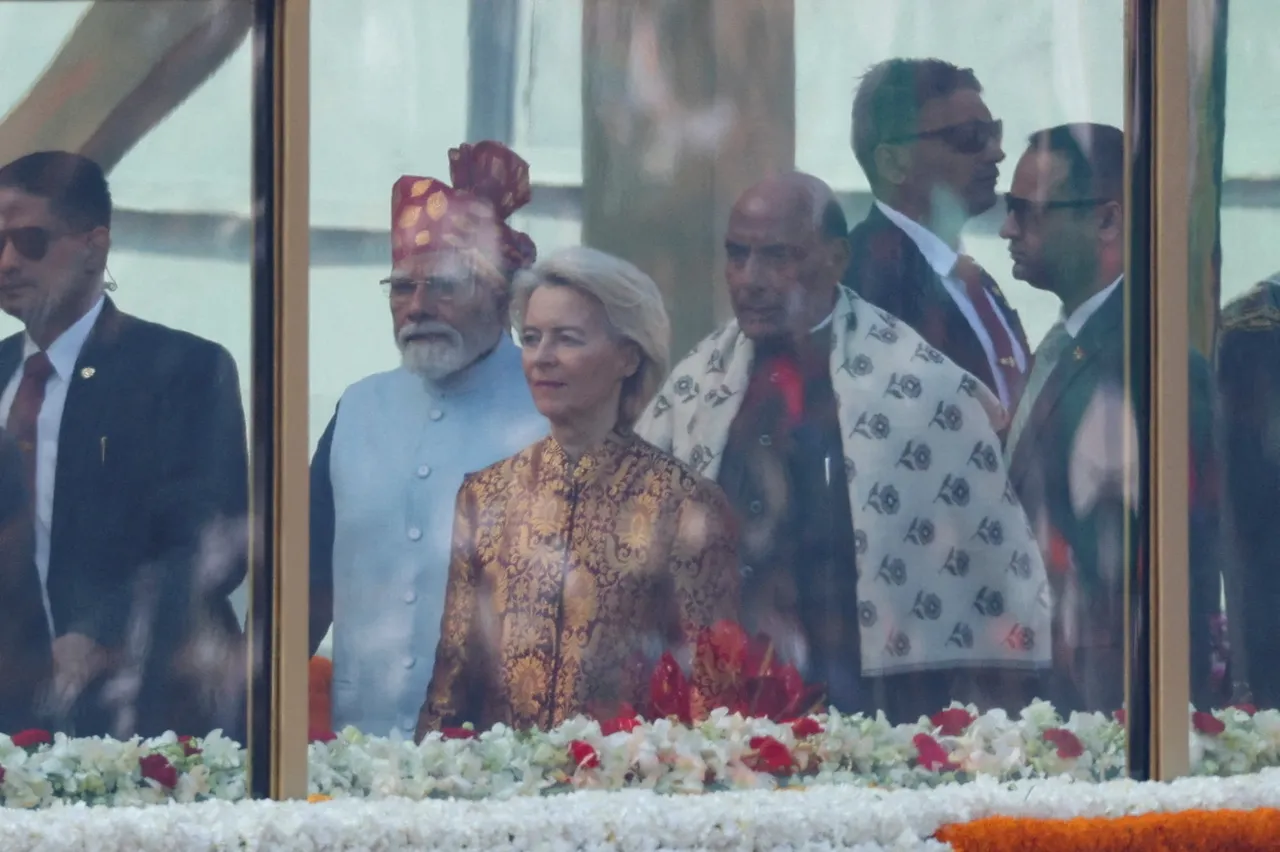
India and the European Union are set to announce the successful conclusion of a long-awaited free trade agreement on Tuesday, nearly two decades after negotiations were first launched, Indian officials said.
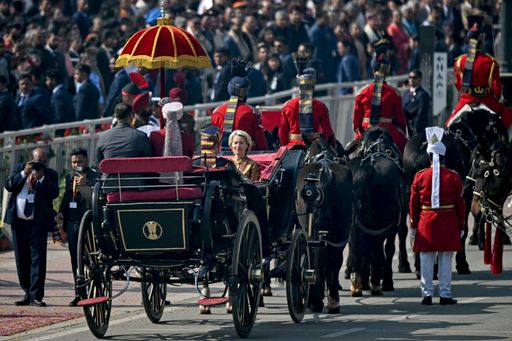
The pact will be formally unveiled as European Commission President Ursula von der Leyen and European Council President Antonio Costa meet Indian Prime Minister Narendra Modi in New Delhi.
"Official-level negotiations are being concluded and both sides are all set to announce the successful conclusion," India's Commerce Secretary Rajesh Agrawal said on Monday, calling the accord "balanced and forward-looking" and saying it would deepen economic integration and boost trade and investment between the two sides.
Indian officials have dubbed the agreement "the mother of all deals", highlighting its scale and strategic importance as New Delhi and Brussels seek to diversify trade ties amid rising global protectionism, US tariff threats and Chinese export controls.
The deal will pave the way for freer trade in goods between India and the 27-nation EU bloc, which together account for roughly a quarter of global GDP and represent a combined market of about two billion consumers.
Bilateral trade in goods reached about $139 billion in 2024, nearly 90 percent higher than a decade ago, according to EU data, with an additional $69 billion in services trade.
Indian data shows total two-way trade at $136.5 billion in the fiscal year ending March 2025.
Under the agreement, India is expected to ease access for key European exports such as cars and wine, while securing better market access for Indian products including textiles and pharmaceuticals.
Talks in recent months had focused heavily on automobiles and steel, two of the most contentious sectors.


The EU had pressed India to sharply cut import duties on cars, which can exceed 100 percent, while New Delhi — one of the world's largest steel producers — has sought relief from European trade curbs on its steel exports.
It has earlier been reported that India plans to reduce tariffs on EU car imports to around 40 percent from as high as 110 percent as part of the deal.
Some sensitive agricultural and dairy products were excluded from the negotiations, as India seeks to protect millions of subsistence farmers.
Negotiations were first launched in 2007 but stalled for years before being revived in 2022 after a nine-year hiatus. Momentum picked up last year after Modi and von der Leyen agreed to fast-track talks, amid escalating trade tensions with the United States.
The agreement comes as both sides step up efforts to hedge against uncertainty in global trade.
The EU recently signed a major trade pact with South America's Mercosur bloc and has concluded deals with Indonesia, Mexico and Switzerland. India, meanwhile, has finalised agreements with Britain, New Zealand and Oman.
Formal signing of the EU-India deal is expected after a legal vetting process that could take five to six months, with implementation likely within a year, an Indian government official said.
India, now the world's most populous country, is projected by the International Monetary Fund to become the world's fourth-largest economy this year, adding further weight to what both sides describe as a historic trade accord.