 Zeki Tarik Sarioglu
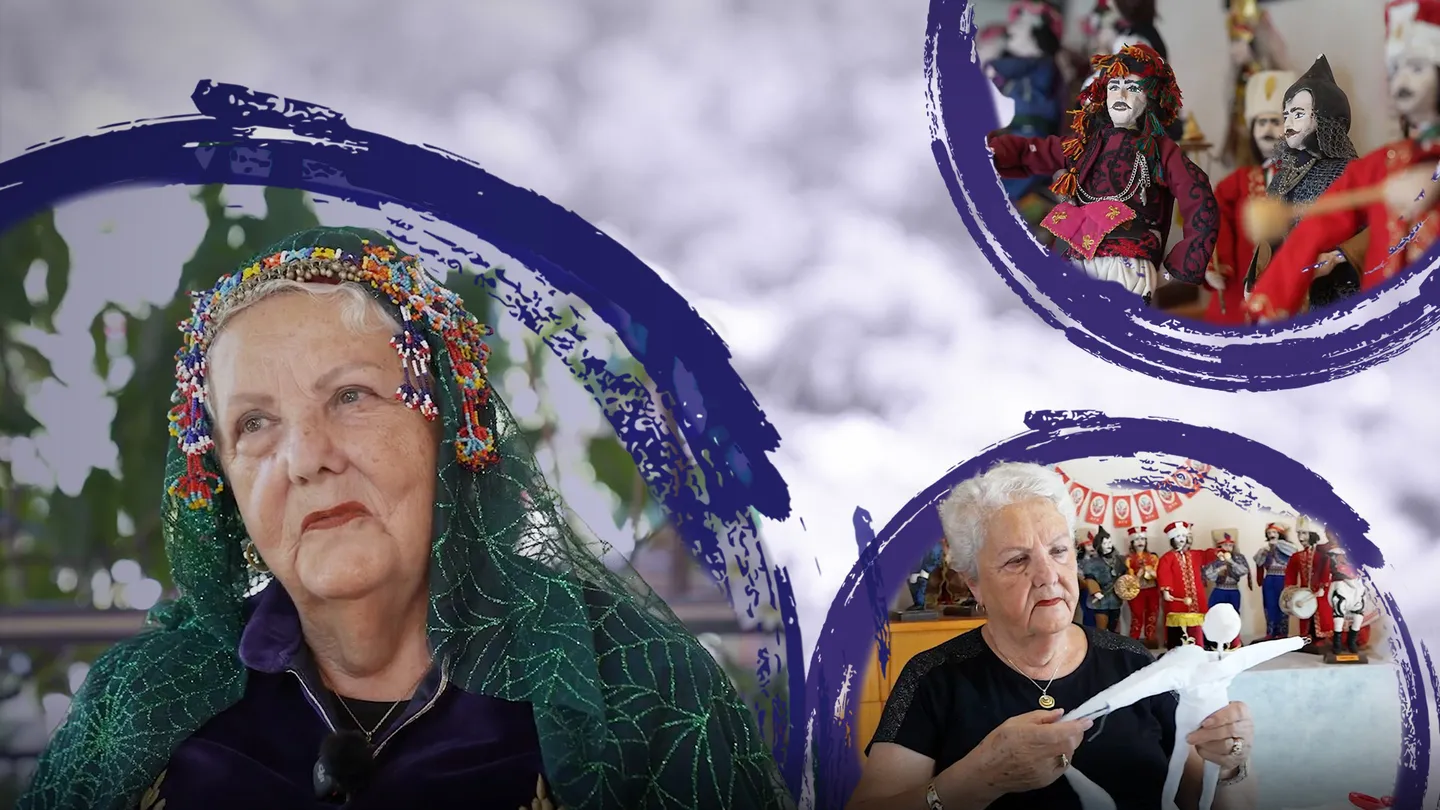
For more than two decades, Emine Polat has been bringing Türkiye’s cultural traditions to life through the art of kitre doll-making.
The Erzincan-born artisan, who taught herself the craft in 2004, has trained more than 100 students and earned national recognition for her contribution to preserving traditional Turkish arts.
But long before she discovered doll-making, Polat had dedicated herself to another cause: improving access to education for children with intellectual disabilities, eventually helping establish a school in Izmir.
Every doll Polat makes starts with a skeleton.
“Then we build the body over that skeleton,” she says.
After filling the doll with fibre or cotton, Polat shapes its face, head, hands and feet using kitre, a natural plant gum. Before she starts, however, she decides who the doll will be.
“For example, if I’m making a doll from the Black Sea region, I picture someone from the Black Sea region in my mind,” she says. “I try to bring that person to life.”
While doll-making would eventually earn her national recognition, an encounter with a young boy in the early 1990s changed the course of her life.
A turning point
Born in Erzincan in 1952, Polat graduated from a girls’ vocational high school before taking courses in every department at an evening art school.
After her children grew up, she decided to enter the workforce. She was 39 when, in 1991, “I had never seen people with intellectual disabilities before,” she says. “I had never known them this closely.”
Initially overwhelmed by the experience, Polat questioned whether she could continue working at the school.
“When I saw the children, I cried and went back, saying I can’t do this.”
But she returned, and within a month, her outlook had begun to change.
“I came to believe that these children needed support,” she says. “It became a turning point in my life.”
One particular encounter at the school would stay with her. During Disability Awareness Week, Polat’s husband bought pastries and drinks for the children, which they laid out the night before the celebration.
Among the pupils was a boy named Cenk who could not speak.
“People thought that child couldn’t do anything,” Polat says. “I still get emotional talking about it.”
The following day, as Polat picked up a box of pastries in the classroom, a small mouse jumped out.
“When I panicked and got scared, Cenk lifted me right up in his arms,” she says. “The child realised I was frightened and came to my rescue.”
The encounter strengthened Polat’s resolve to support children with disabilities.
“The child everyone said couldn’t understand anything came to my aid. I realised that I, too, had to stand up for these children.”
Building a school
Polat continued working with children with disabilities and, in 1995, approached a group of friends in Cigli, a district of Izmir, about establishing an association.
“I asked, ‘What do you think about starting an association?’ They said, ‘Of course, we’re with you.’”
The association had no income, but Polat and her friends shared an ambition: to build a school.
For three years, they used a former health clinic in Egekent as an educational institution, educating 30 children, according to Polat.
They eventually secured land for a school but still needed architectural plans and financial support to build it. An engineer Polat met by chance offered to prepare the plans, and she subsequently approached businesspeople for help.
Although they initially told her they did not have the money, they called her back two days later.
“The men there had said, ‘Let’s help this woman and build the school.’”
Construction began, and the school was completed within six months. When Polat was later advised to run it as a private institution and charge students for their education, she refused.
“I never considered doing that.”
The school was instead transferred to the Ministry of National Education and, according to Polat, remains in operation today.
“There is nothing more beautiful than touching people’s lives.”
Polat was introduced to kitre doll-making in 2004, when a competition was organised among public education centres.
“I had never made kitre dolls before,” she says.
She began researching the craft but could not find any resources to guide her.
“So I began making dolls by scaling down the proportions of the human body,” she says.
Polat entered three dolls in the competition, all of which, she says, won first place in Izmir.
What began as a competition entry developed into a craft she wanted to pursue and pass on to others.
“Later, I grew to love kitre doll-making and started teaching others. I trained more than a hundred students.”
Over the years, Polat made so many dolls that preserving them all became difficult. She eventually donated them to Malatya City Museum, where, she says, they are on display.
A labour-intensive craft
Polat explains that kitre is obtained from the sap of the geven plant, which grows in the mountains of eastern Anatolia.
The sap dries naturally before it is collected and sold. Polat soaks the material in hot water for two days until it softens completely. She then strains it to remove any residue before using it to make the dolls.
“It isn’t easy, it’s quite difficult and laborious,” she says.
The material requires further attention even after a day’s work.
“When you work with kitre and leave it, wrinkles appear the next day.”
Polat uses various tools to smooth and iron out the wrinkles.
“As I said, it’s very enjoyable but very difficult,” she says. “But it’s a beautiful craft.”
In January 2026, Polat received the Living Human Treasures award, a recognition given by Türkiye’s Ministry of Culture and Tourism to masters of traditional arts and crafts. President Recep Tayyip Erdogan presented her with the award at a ceremony in Ankara.
“This is a great honour for me,” she says. “I will cherish this happiness for the rest of my life.”
Having taught herself the craft and passed on her knowledge to more than 100 students, Polat hopes the tradition will endure.
“I hope this craft continues, develops and goes even further.”