 Ahmed Almallahi
Washington DC — The snatching of Venezuelan President Nicolas Maduro and his wife Cilia Adela Flores by US on January 3 was not merely a dramatic development in Washington's long-standing conflict with Caracas; it once again revealed deep fractures within the international — and even American — legal systems.
Many observers view the blatant abduction of the Venezuelan leader and his trial in New York as another event testing concepts of sovereignty, immunity, and the limits of using force outside the framework of a declared war.
While the administration of US President Donald Trump insists on describing the attack that also killed dozens of Venezuelans as a legitimate criminal procedure to hold a "criminal leader" accountable, international and constitutional law experts argue that what occurred represents a dangerous precedent.
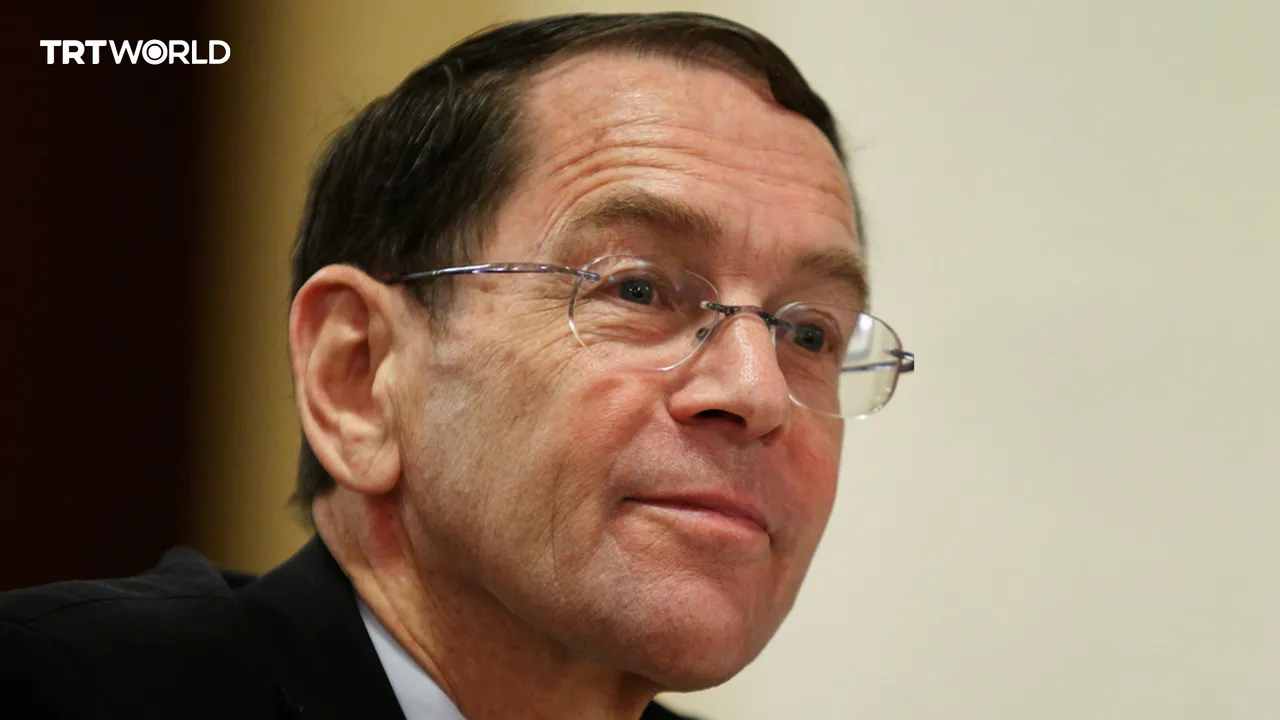
In an exclusive interview with TRT World, Bruce Fein, who served as Associate Deputy Attorney General in the US Department of Justice during the Reagan administration and supervised the Department's litigation and vetting of candidates for the federal judiciary, described Maduro's abduction as "not law enforcement in any legal sense."
"International law does not recognise the right of any state to unilaterally issue an indictment and then invade another country to arrest the accused. This opens the door to invading any country in the world under the pretext of justice," argues Fein, who is part of Maduro's legal team.
Fein, an internationally renowned constitutional lawyer, scholar and author of "American Empire Before the Fall", adds "If this were law enforcement, we would have entered, arrested the accused, and left. You do not need to control the oil of an entire nation to arrest one person."
US special forces snatched Maduro and his wife in a lightning attack and whisked them to New York to face trial on drug and weapons charges, underscoring what Trump has called the "Donroe Doctrine" of US dominance over its backyard.
Maduro has denied all charges and was defiant in his first court appearance, during which he identified himself as the President of Venezuela and asserted that he was "kidnapped" from his home in Caracas.
The seizure of Maduro has exposed the fragility of the line between law enforcement and the exercise of hegemony.
The US administration did not stop at seizing the Venezuelan president; the attack was accompanied by a political discourse regarding control and the management of the Latin American country and its resources.
Since Maduro's removal, American officials have repeatedly asserted that the US will control Venezuela, which has the world's largest proven oil reserves, and wield significant influence over its interim government led by Maduro ally Delcy Rodriguez.
The US could run Venezuela and tap into its oil reserves for years, Trump said in an interview published on Thursday.
If this were law enforcement, we would have entered, arrested the accused, and left. You do not need to control the oil of an entire nation to arrest one person
Head-of-state immunity
Internally, the operation raises constitutional questions that are equally grave.
The US Constitution grants Congress alone the power to declare war and does not authorise the president to use offensive force except in cases of self-defence.
Fein, who has testified before Congress over 200 times, presenting himself as a civil libertarian critical of US national security policy, emphasises that this condition does not apply to Venezuela.
"This is not self-defence. Venezuela was not attacking the United States. There was planning for weeks, and this makes what happened a flagrant violation of the War Power Clause in the Constitution," says Fein.
He adds that bypassing Congress cannot be justified by historical precedents.
"Repeating a violation does not make it constitutional. Just as a serial killer's actions do not become legal because they have been repeated several times."
At the heart of the case lies the issue of head-of-state immunity.
Customary international law grants sitting heads of state personal immunity before foreign courts.
This immunity, Fein explains, is not to protect individuals but to protect the international order itself.
"Immunity is not a personal privilege for the president; it is a tool to protect the sovereignty of states. If this principal falls, no leader in the world will be safe."

Washington argues that Maduro does not enjoy immunity because it does not recognise his legitimacy.
Fein, however, cautions against the perils inherent in this rationale.
"Political non-recognition does not automatically grant you the legal right to arrest a head of the state by force. If we accept this, we legalise international chaos."
If you allow courts to benefit from an unlawful kidnapping, you are granting states a license to commit crimes
No similarity with Noriega trial?
Trump administration is attempting to rely on the precedent of the arrest of Panamanian leader Manuel Noriega in 1989.
However, the comparison, according to Fein, is "misleading".
"In Panama, there was a state of actual war after Panama declared war, and Noriega was not the official president. These conditions do not exist in the case of Venezuela," notes Fein.
Fein argues that citing precedents outside their legal context reduces them to mere political instruments.
He says there is a need to separate the description of the act as illegal from the practical consequences that may follow.
"The mere fact that this act is illegitimate does not automatically mean it will have significant or immediate consequences. These are two completely different issues and mixing them may confuse the public."
Fein adds that the balance of power in the international system often allows violations to stand without accountability, at least in the short term.
Fein cautions that "we are now entering an age of continuing turmoil and turbulence internationally," arguing that the cumulative effect of such actions erodes the remaining restraints on the use of force.
Greatest danger
One of the most critical issues pertains to the legality of the prosecution itself.
Maduro’s abduction was achieved through military attack, raising questions about the potential invalidity of the trial.
Fein explains this dilemma.
"If you allow courts to benefit from an unlawful kidnapping, you are granting states a license to commit crimes and then claim that the end justifies the means. At that point, no one will be safe."
Even if the attack is considered illegal, the chances of holding the US accountable appear limited.
However, the greatest danger, as Fein sees it, lies in the cumulative effect.
"We are entering a stage where the logic of power becomes the rule. The strong do what they wish, and the weak suffer what they must."
Editor’s note: This interview has been edited to ensure clarity and conciseness.