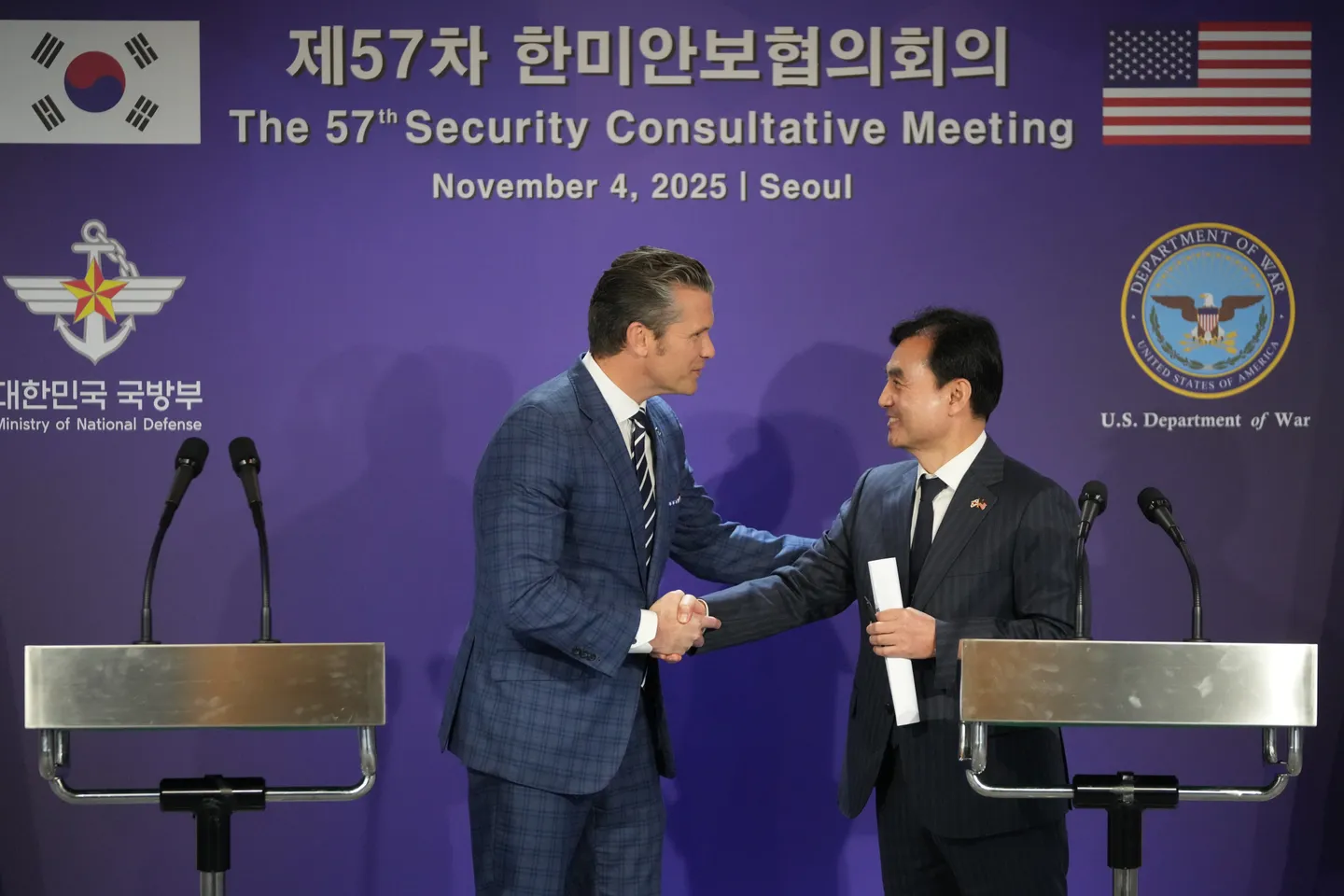
US Defense Secretary Pete Hegseth on Tuesday said that the US will work closely with South Korea on nuclear submarines and called ties with Seoul "vital."
Speaking at a joint news conference alongside South Korean Defence Minister Ahn Gyu-back after the annual Security Consultative Meeting (SCM) in Seoul, Hegseth said the two sides agreed to strengthen defence cooperation, modernise the alliance, and expand joint industrial collaboration.
"We're going to work closely with the Department of State and the Department of Energy to fulfill President Trump's commitment," he said.
On Thursday, President Donald Trump said that he has approved South Korea's plan to build a nuclear-powered submarine.
The South Korean Defence Ministry on Thursday said that Seoul could launch a nuclear-powered submarine in the mid-to-late 2030s with homegrown technology.
Hegseth also called the alliance between South Korea and the US “stronger than ever” and said for the first time the two countries agreed to maintain and repair the US warships in Korean shipyards.
"Our historic alliance is stronger than ever before and is vital to the Asia Pacific," said the US defence chief.
Modernising the alliance






Hegseth added that during the meeting, the two sides discussed practical steps that they can take to modernise the alliance.
"And I'm greatly encouraged by Minister Ahn's commitment to increase defence spending, and to make greater investments in ROK (Republic of Korea) military capabilities," said Hegseth, adding: "This includes critical missile defence and space capabilities that our forces need to preserve the peace and prevail, God forbid, in war."
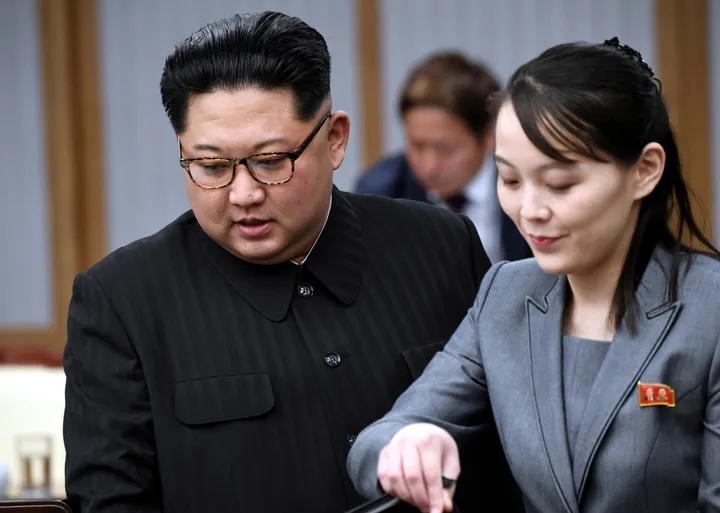
Responding to a question about the US supporting South Korea to build its own nuclear weapons, Hegseth said his Monday visit to the Demilitarised Zone underscored the core of the US–South Korea alliance, which is focused on protecting Seoul from North Korean threats.
South Korean Defence Minister Ahn clarified that Seoul is a member of the NPT and will not acquire nuclear weapons; however, its commitment to the denuclearisation of the Korean Peninsula remains "unwavering."
On Tuesday, the South Korean military said that North Korea fired around 10 artillery shells from its multiple rocket launcher system toward waters off the northern Yellow Sea on Monday, just an hour before Hegseth's arrival at Camp Bonifas of the Joint Security Area (JSA) within the DMZ.