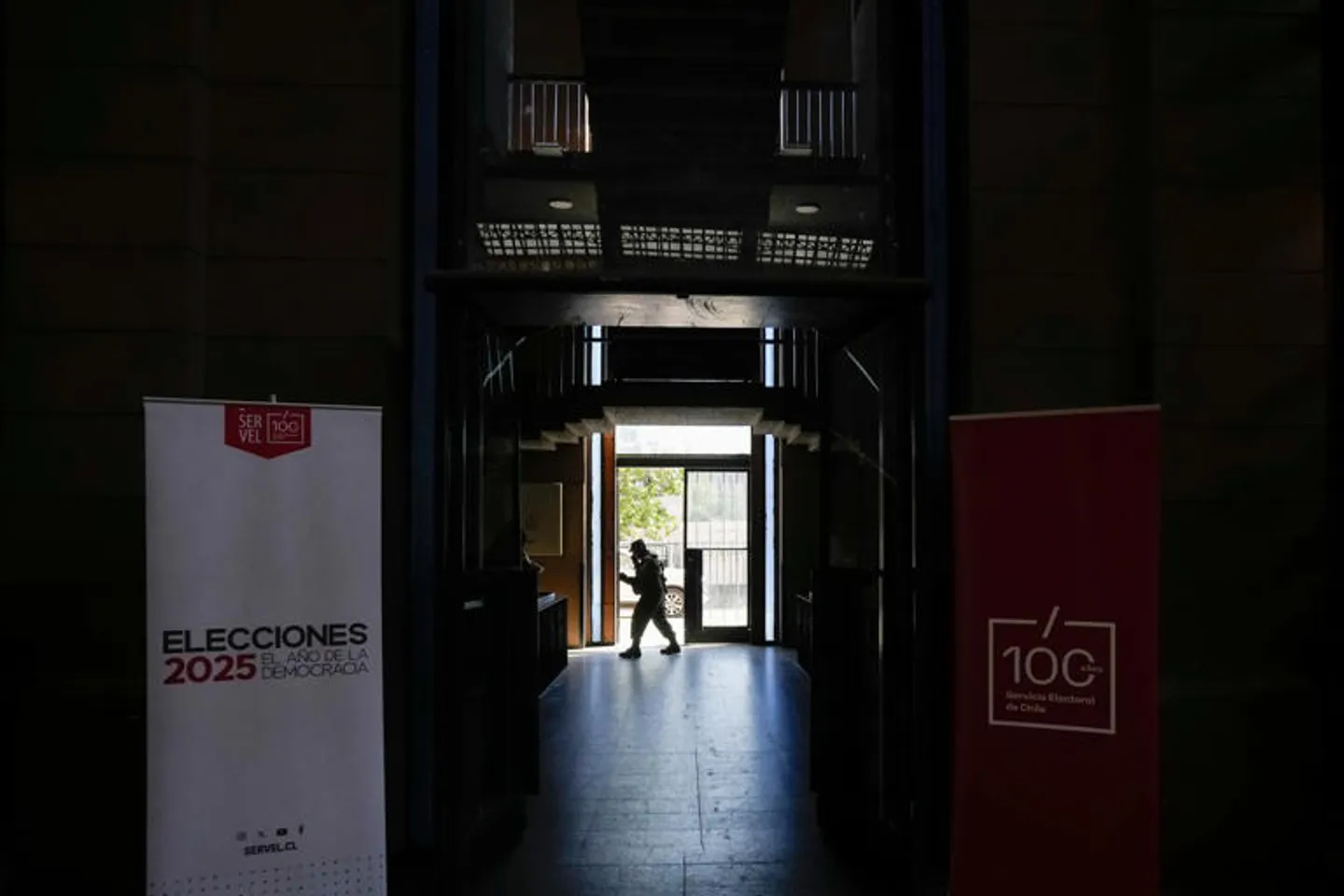
Chile votes for its next president and parliament on Sunday in a contest expected to favour the right as candidates play on popular fears over organised crime and immigration.
It’s the first of what’s likely to be two rounds of presidential elections in the South American country, as polls show none of the candidates clearing the 50 percent threshold needed to avoid a runoff scheduled for December 14.
On the surface, Sunday’s election offers Chileans a dramatic choice between two extremes: Jeannette Jara, 51, a card-carrying communist and former labour minister in the left-wing government, and, among other right-wing contenders, Jose Antonio Kast, 59, an ultraconservative lawyer and former lawmaker who opposes abortion and vows to shrink the state.
But with voters anxious about a rise in gang-driven crime that they blame on a recent surge of immigration from crisis-stricken Venezuela, the campaign has steered the starkly opposed front-runners towards the shared theme of public insecurity.
Two extremes pursue the centre
In a feat of political gymnastics, the communist candidate has promoted fiscal restraint and the Catholic father of nine has avoided talk of traditional family values.
Both say it's a top priority to fight foreign gangs, like Venezuela’s Tren de Aragua, whose recent push into Chile has fuelled kidnappings, extortion and sex trafficking and shattered the country's self-perception as far safer and more stable than the rest of the region.
“They're talking about things that all voters care about, they're vying for the centre,” said Rodolfo Disi, a political scientist at Chile's Adolfo Ibanez University.
Polling behind Jara and Kast in the eight-candidate field are Johannes Kaiser, 49, a radical libertarian congressman and YouTuber, and Evelyn Matthei, 72, a veteran centre-right politician.
With the right-wing vote divided and President Gabriel Boric’s centre-left coalition united behind its former minister, most experts see the charismatic Jara prevailing in Sunday’s first round. Boric is constitutionally barred from seeking a consecutive term.
But an initial win for Jara may yet spell her defeat in a runoff against a right-wing rival who promises a harsher security crackdown.
“If (Jara) moves toward being tougher on crime, the right can always be tougher,” said Disi. “It's a losing game.”



Mandatory voting is a wildcard
This is the first time in Chile's history that all eligible citizens will be obliged to vote for president.
The country recently reintroduced mandatory voting after ending the practice in 2012.
Voter registration is now automatic, so the millions of people who never bothered to register, even when voting was compulsory, will be casting their first ballots in a presidential race.
Those who fail to do so face fines up to $100.
Analysts are divided over the potential effects.
“It’s a huge question,” said Robert Funk, an associate professor of political science at the University of Chile.
“We have 4 million new voters. Who are they? Are they young people who like Jara? Are they people from marginal neighbourhoods attracted to Kast's hard-line stance on crime?”
Chile will also renew the entire lower house of Congress and part of the Senate on Sunday.
The country has 15.7 million eligible voters, of whom over 800,000 are immigrants with residency of five years or more and are exempt from mandatory voting.