Human rights organisations have strongly condemned Israel’s latest legislative push to allow the execution of Palestinian prisoners by hanging, warning that the bill would formalise racially discriminatory capital punishment and entrench a system of state-sanctioned killing.
The bill, advanced by far-right lawmakers and reported this week to be moving forward in the Knesset, will allow courts to impose the death penalty on Palestinians convicted of attacks on Israelis. Rights groups say the proposal is designed to apply almost exclusively to Palestinians, who are routinely tried in Israeli military courts that lack basic due process guarantees.
No date has been set for a final vote yet.
What does the proposed law say?
Under the proposal, the Israel Prison Service commissioner would appoint the executioner, with the process overseen by a prison warden, a judicial representative and a member of the prisoner’s family. Executions could proceed even if some overseers are absent, to avoid delays, the bill states.
The legislation grants full civil and criminal immunity to officials involved and bars any commutation, appeal, or cancellation once a death sentence is issued.
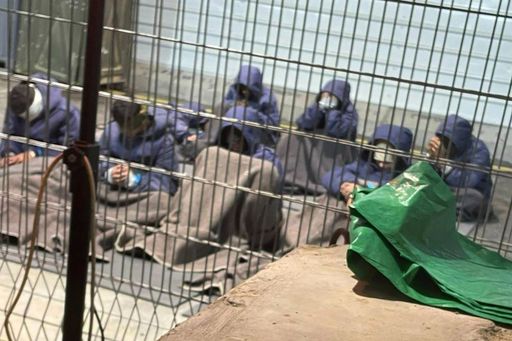
Prisoners sentenced to death would be held in complete isolation, with visits limited to authorised personnel, and executions would be carried out within 90 days of a final ruling.
Details of executions would be published by the Israel Prison Service, while the identities of those carrying them out would remain confidential.
UN: ‘Irreconcilable with human dignity’
The UN Office of the High Commissioner for Human Rights urged Israel to abandon the legislation, warning that mandatory death sentences and discriminatory application violate international law. The UN said the proposal undermines the right to life and raises the risk of irreversible miscarriages of justice in a system already condemned for its treatment of Palestinians.
“When it comes to the death penalty, the United Nations is very clear, and opposes it under all circumstances,” said UN Human Rights Chief Volker Turk. “It is profoundly difficult to reconcile such punishment with human dignity and raises the unacceptable risk of executing innocent people.”
“The proposal also raises other human rights concerns, including on the basis that it is discriminatory given it will exclusively apply to Palestinians.”
He said the language of such legislation, along with statements from Israeli politicians, indicate that this is intended to apply only to Palestinians, who are often convicted after unfair trials.
Israeli groups denounce ‘cruel and dangerous’ bill




Israeli organisations have also denounced the bill.
The Association for Civil Rights in Israel said the proposal is immoral and represents a collapse of fundamental legal principles, accusing lawmakers of weaponising the justice system for political revenge rather than justice.
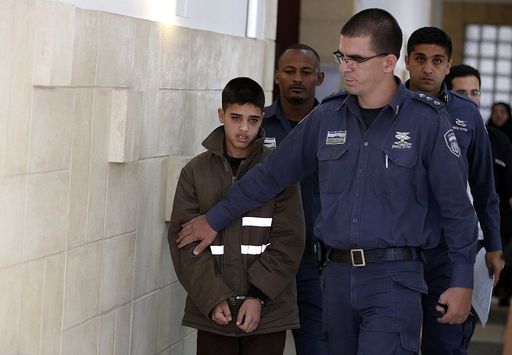
The Public Committee Against Torture in Israel described the bill as “cruel and dangerous”, explicitly criticising its discriminatory impact and its reliance on punitive state violence. The group warned that the bill normalises extreme punishment and state violence, particularly against Palestinians who face near-certain conviction in military courts.
Amnesty warns of irreversible abuse of power
Amnesty International has described the legislation as a discriminatory expansion of capital punishment and a blatant violation of international human rights law. The organisation said Israel is moving in the opposite direction of global norms by reviving the death penalty in a context marked by systemic discrimination and denial of fair trial rights.
Amnesty has issued explicit condemnation of the draft law, calling it racially discriminatory because it will in practice apply almost exclusively to Palestinians.
It described the bill as a dangerous escalation that undermines global efforts to abolish the death penalty and violates principles of justice and equality before the law.
Amnesty International’s Senior Director for Research, Advocacy, Policy and Campaigns, Erika Guevara Rosas, said: “There is no sugarcoating this. Knesset members should be working to abolish the death penalty, not broadening its application. The death penalty is the ultimate cruel, inhuman, and degrading punishment, and an irreversible denial of the right to life. It should not be imposed in any circumstances, let alone weaponised as a blatantly discriminatory tool of state-sanctioned killing, domination and oppression. Its mandatory imposition and retroactive application would violate clear prohibitions set out under international human rights law and standards on the use of this punishment”.
“The shift towards requiring courts to impose the death penalty against Palestinians is a dangerous and dramatic step backwards and a product of ongoing impunity for Israel’s system of apartheid and its genocide in Gaza,” Rosas said.
“It is additionally concerning that the law authorises military courts to impose death sentences on civilians, that cannot be commuted, particularly given the unfair nature of the trials held by these courts which have a conviction rate of over 99 percent for Palestinian defendants”.
Calls for international intervention
Multiple Palestinian human-rights organisations have issued a joint position paper opposing the bill and condemning its retroactive application and discriminatory enforcement. They have called the legislation both a violation of international law and a further entrenchment of punitive legal measures against Palestinians.

“The enactment of a new law imposing the death penalty exclusively against Palestinians marks a new episode in the ongoing series of oppression and constitutes a grave escalation in Israel’s widespread violations against Palestinians, including hundreds of extrajudicial executions. This law will apply solely to Palestinians, thereby revealing yet another facet of Israel’s apartheid regime, as the death penalty will not be enforced against any Israeli who kills a Palestinian,” the position paper read.
The Organisation of Islamic Cooperation (OIC) condemned the bill as well, decrying it as an execution law that is racist and is targeting Palestinian prisoners and urging action by the international community.