Israel has no legal authority to permanently replace Jordanian-era laws with Israeli legislation in the occupied West Bank, but can only suspend them through military orders based on the military regime it imposed in the territory since 1967, experts said.
“Practically, Israel can suspend Jordanian-era laws through military orders based on the military regime it imposed after 1967, but legally it does not have the right to permanently abolish these laws or replace them with its sovereign legislation," Issa Al-Shalabi, a political science professor at Jordan’s Al-Hussein Bin Talal University, told Anadolu in an interview.
On Sunday, Israel’s Security Cabinet approved a series of decisions allowing Israelis to purchase land in the occupied West Bank, repealing Jordanian-era laws that have governed land ownership since 1967, and extending Israeli authority into areas under Palestinian civil control.
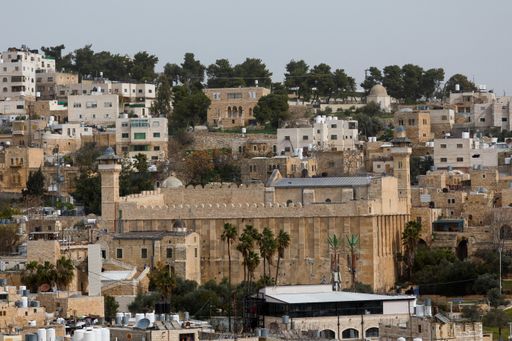
According to Israel’s public broadcaster KAN, the decisions include repealing a law barring the sale of Palestinian land to Jews in the West Bank, unsealing land ownership records, and transferring building permit authority in a Hebron settlement bloc from the Palestinian municipality to Israel’s civil administration.
“Abolishing a law presupposes legal sovereignty, which does not exist internationally. This means Israel is imposing a fait accompli by force, not by legitimacy," Shalabi said.
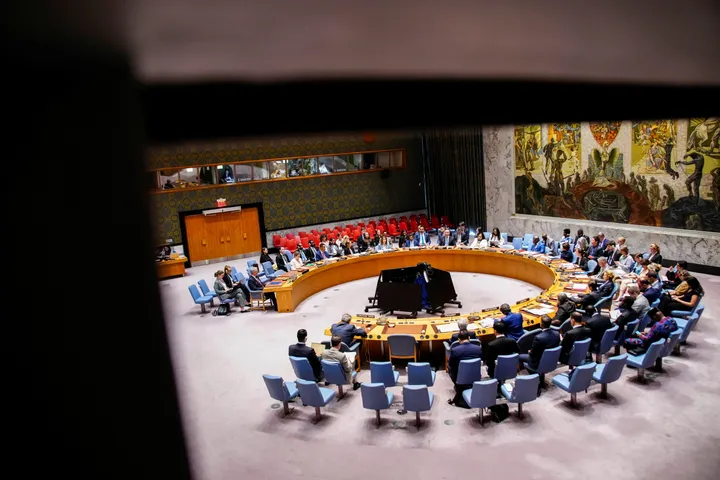
He said facilitating the sale of land to illegal settlers constitutes a violation of UN Security Council resolutions 242, 446, and 2334, and “may legally amount to a war crime.”
The professor stressed that Jordan has tools to counter the Israeli moves.
Amman "enjoys a unique legal status as the former legal authority, which grants it a special role in safeguarding holy sites and documenting violations,” Shalabi said.
“Jordan can move by activating its diplomatic tools at the UN, supporting International Criminal Court files with official memoranda, and using the 1994 peace treaty (with Israel) as a means of political pressure,” he added.
On Jordanian-Palestinian coordination, the professor said the two sides cooperate on three levels, including legally by unifying positions before international courts and reaffirming the Jordanian legal reference for the occupied territory.
“Politically, they coordinate messages with the EU to highlight the undermining of the two-state solution,” he said. “On the ground, they cooperate to support Palestinian resilience and preventing land leakage through legal mechanisms.”
"The Jordanian-Palestinian cooperation is the base for obstructing any legitimisation of the (Israeli) decisions and protecting the historical legal reference," he stressed.
‘Illegal’ Israeli move
Abdullah Kanaan, the secretary-general of Jordan's Royal Committee for Jerusalem Affairs, said the Israeli measures are part of efforts “to create a reality that legitimises settlements, annexation, and the displacement of the Palestinian people.”
“The Jordanian law banning the transfer of property ownership to Israelis remains valid and enforceable in the West Bank under the historical status quo, given that the West Bank and Jerusalem are occupied territories governed by international law and the Geneva and Hague Conventions,” he told Anadolu.







“Therefore, any measures taken by the occupation to change this legislation is null, void, and illegal," he added.
Kanaan called on the international community to act to protect these laws from the “Israeli disregard.”
"The issue is about preventing the creation of an international precedent that permits the cancellation of laws in occupied territories,” he said.
"Silence toward Israel means replacing international law with the law of the jungle, where the strong devour the weak.”
Jordan retained its right to oversee religious affairs in East Jerusalem under the 1994 Wadi Araba Peace Treaty with Israel.
In March 2013, Jordan’s King Abdullah II and Palestinian President Mahmoud Abbas signed an agreement granting the kingdom the right to "custodianship and defence of Jerusalem and the holy sites” in the occupied Palestinian lands.
Jordan, stemming from the Hashemite custodianship and the legal mandate that predates the occupation laws, "represents an international pressure force that rejects this overreach," Kanaan said.
Jordanian outcry
Jordan has already denounced the Israeli decisions as “illegal,” a "blatant violation of international law,” and an assault on Palestinians’ right to an independent state.
In a Sunday statement, the Jordanian Foreign Ministry said the Israeli measures aim to impose “unlawful Israeli sovereignty, entrench settlement activity, and impose a new legal and administrative reality in the occupied West Bank.”
The steps constitute “a flagrant breach of international law, an undermining of the two-state solution, and an attack on the inalienable right of the Palestinian people to establish their independent, sovereign state on the June 4, 1967 lines with occupied Jerusalem as its capital,” the ministry said, stressing that Israel has “no sovereignty over occupied Palestinian land.”
Jordan reiterated its “absolute rejection and condemnation” of unilateral, illegal, and null measures in the West Bank and warned that the policies of Israel’s far-right government fuel cycles of violence and instability in the region.
It urged the international community to meet its legal and moral responsibilities “and compel Israel and its extremist government to stop its dangerous escalation in the occupied West Bank and the inflammatory statements of its officials.”
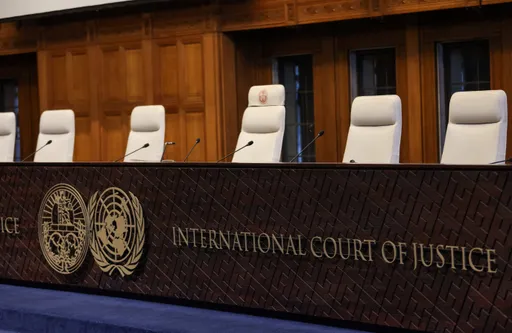
The International Court of Justice declared Israel’s occupation of Palestinian territory illegal in a landmark opinion in July 2024 and called for the evacuation of all settlements in the West Bank and East Jerusalem.