Researchers at China’s Deep Space Exploration Laboratory have built a prototype designed to produce oxygen from Mars’s thin atmosphere at room temperature.
The aim is to supply oxygen for astronauts to breathe and for use in rocket propulsion, the South China Morning Post reported on Sunday.
In lab tests, the prototype split more than half the carbon dioxide fed into it, surpassing the roughly 50 percent limit of conventional methods, the researchers said.
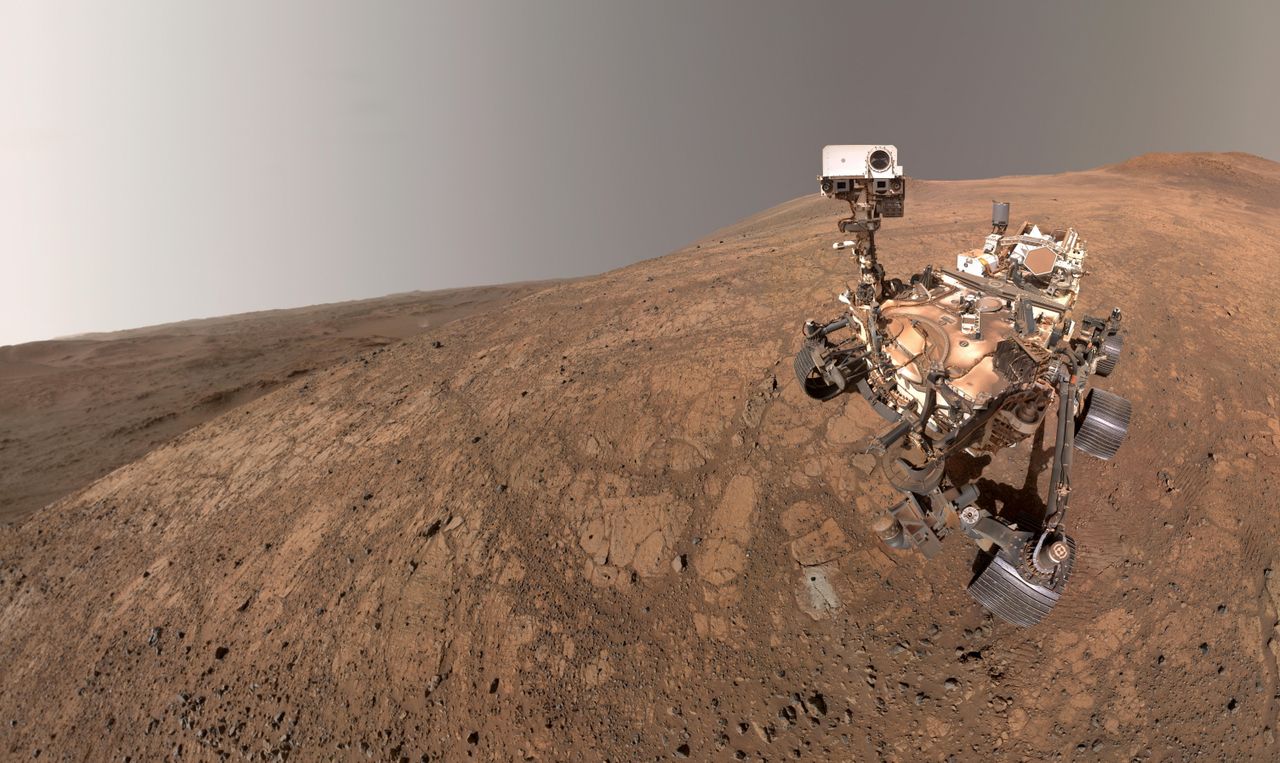
NASA’s MOXIE instrument aboard the Perseverance rover heats Martian air to around 800°C (1,470°F), while the Chinese prototype operates at room temperature.
Avoiding extreme heat could save power, reduce thermal stress, and limit dust-related wear on the equipment.
‘Key technical step’
The prototype’s reaction chamber is about the size of a golf ball, measuring just under 5 centimetres (2 inches) across. A specially shaped ceramic window guides microwaves into the chamber.
Carbon dioxide makes up about 95 percent of Mars' thin atmosphere. Each astronaut needs roughly 0.8 to 1 kilogram of oxygen a day for basic life support.
The researchers described the work as a “key technical step” towards future life-support systems on Mars and said it was of “strategic significance” for deep space exploration.
They still need to measure the device’s oxygen output and power requirements, test it with a simulated Martian atmosphere, pair it with solar power, and build equipment to collect the oxygen.