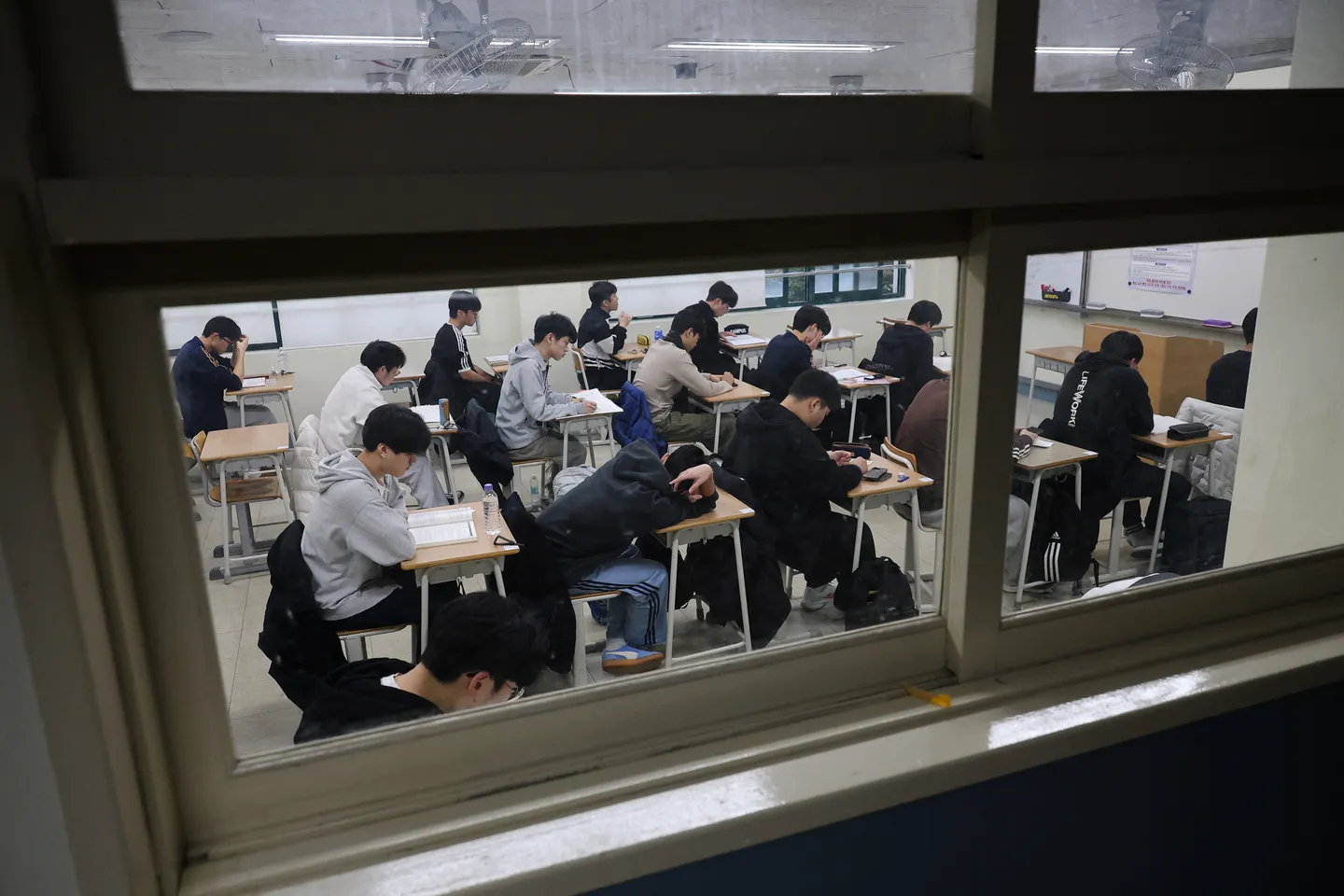
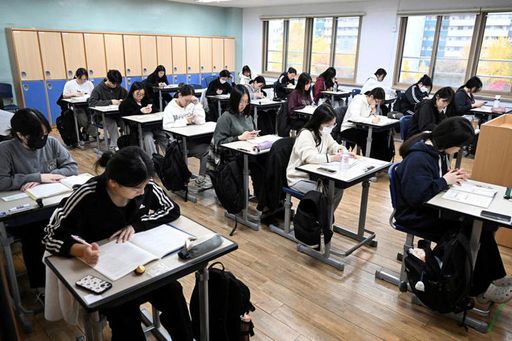
Flights are temporarily halted, the stock market will trade an hour later, and parents are packing shrines for prayers as South Korean students take the college entry exam on Thursday.
The college entry exam, known locally as the "Suneung", is essential for admission to top universities and widely regarded as a gateway to social mobility, economic security and even a good marriage.
With so much at stake, the South Korean government is taking no chances as anxious-looking students bid farewell to their parents on what many consider to be the most important day of their teenage lives.
A 35-minute nationwide ban on flights has been imposed during the English listening test, except in emergencies, while banks and public offices told their workers to start an hour later to avoid traffic on the roads.
A total of 140 flights, including 75 international services, will be rescheduled from 1:05 to 1:40 pm because of the exam, the land ministry told AFP.
Videos of police rushing late students to exam halls have also become an annual occurrence.
Seaweed soup
Heavy media presence and traffic police were seen at Yongsan High School in Seoul as students streamed in early in the morning to sit the day-long Suneung — short for the College Scholastic Ability Test.
At the Yongsan school gate, junior high school students, who will take the crucial exam in the coming years, cheered the test-takers, holding encouraging signs and chanting slogans, including: "Get 100 score on Suneung".
"I came here to give my support for my high school seniors. Being here makes me motivated to study harder for the next two years to prepare for my own Suneung," said Kang Dong-woo, 16.







There are many taboos associated with the college entrance exam in South Korea.
Among them is avoiding seaweed soup for lunch, as its slippery strands are believed to make students "slip" in the high-stakes test — a superstition that has long shaped test-day menus.
After sending their children to exam centres, parents often visit churches or Buddhist temples to pray for good results.
Bullying records
More than 550,000 students registered for the exam, though turnout is typically slightly lower.
The 2026 college admission cycle marks the first time all four-year universities must consider a student's history of school violence in their decisions.
In recent years, victims of bullying have spoken out in a #MeToo-style wave, accusing perpetrators of escaping accountability and demanding justice.
Previously, factoring in such records was a recommendation, not a requirement.
Ten state-run universities rejected 45 applicants over school violence in the last admission cycle, according to MP Kang Kyung-sook.