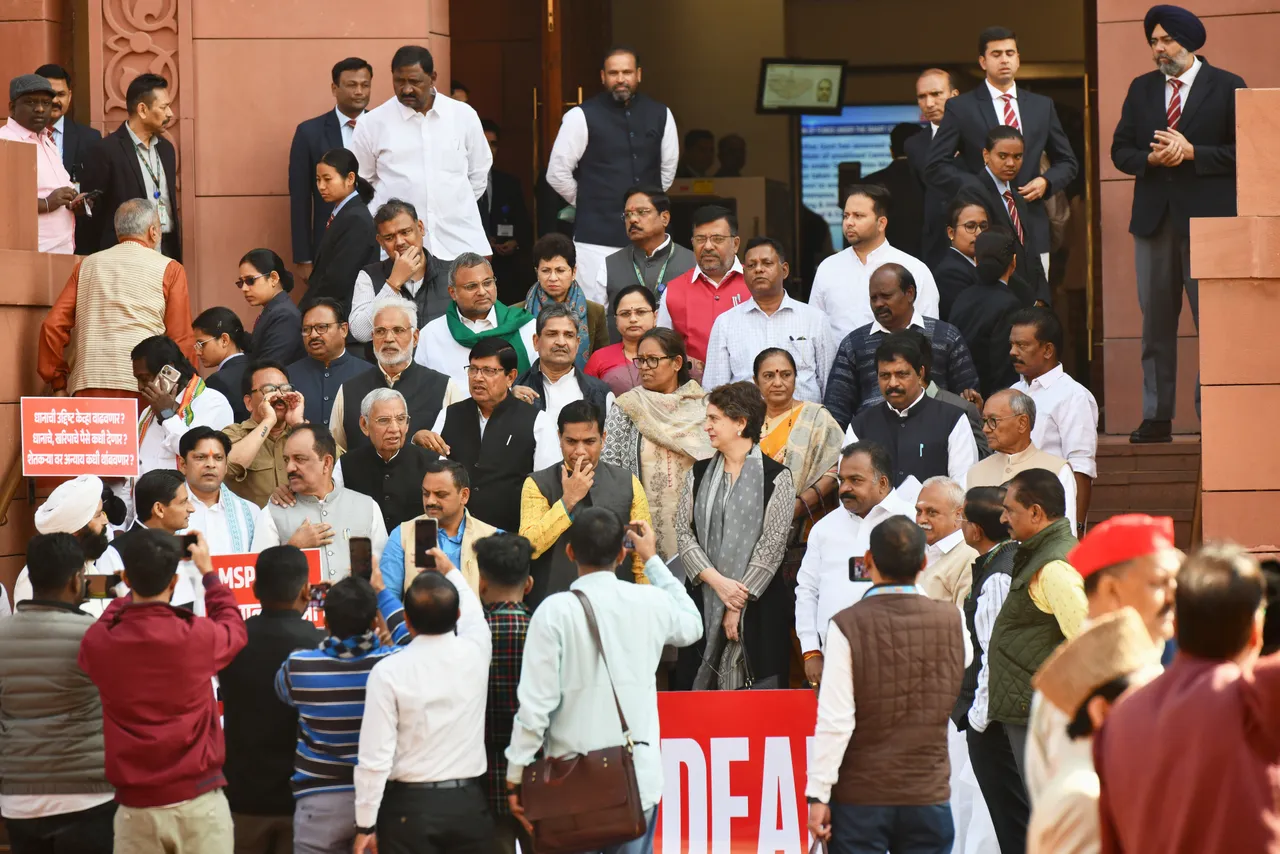
A coalition of major trade unions and farmers’ groups in India mounted a nationwide strike on Thursday to protest an interim trade deal with the United States, saying the agreement undermines the interests of farmers, small businesses and workers.
In Parliament, lawmakers from opposition political parties demanded that the government scrap the trade deal and criticised Prime Minister Narendra Modi with the slogan “Narendra Modi, surrender Modi.”
The one-day strike partially disrupted public services and manufacturing activities as Modi, leader of the ruling Hindu nationalist Bharatiya Janata Party, faces pressure to disclose details of the agreement with the US.
A union leader said the trade deal with Washington opens the Indian market to subsidised agricultural products, threatening the livelihoods of millions of small farmers.
“Cheap American farm produce will be dumped in India, making it difficult for our farmers and small businesses to compete,” said Amarjeet Kaur, general secretary of All India Trade Union Congress, a prominent union that took part in the strike.
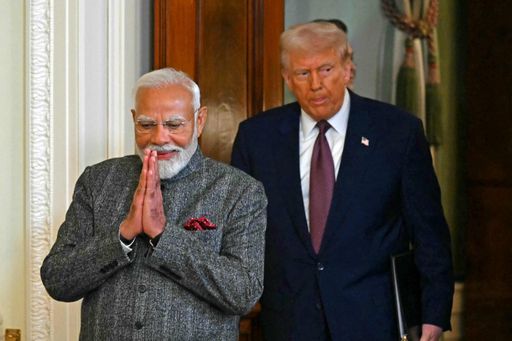
New Delhi has defended the interim trade pact as a step toward expanding exports, attracting investments and strengthening strategic ties with the US.







India and the US this month announced they were moving closer to a formal trade pact, releasing an interim framework that would lower tariffs and deepen economic ties.
A fact sheet issued by the White House shows a reciprocal tariff on Indian goods decreasing from 25 percent to 18 percent, while an additional 25 percent penalty tariff for India's purchase of Russian oil will be dropped.
The fact sheet released on Monday had come as a blow to the Indian government, as it initially included “certain pulses” in the group of items that India would buy from the US. India consumes a lot of pulses, and the country is working to increase domestic production.
In return, India will stop buying Russian oil and purchase $500 billion worth of US goods in the next five years, including energy, while cutting taxes and non-tariff barriers.
The protesters in India also opposed Modi’s efforts to privatise state-run companies and implement new labour codes, calling the sweeping changes “deceptive fraud” against workers.
Indian officials have argued that labour reforms were needed to boost efficiency and create jobs in the long run.