Host/Producer: Ezgi Toper
Guest: Dr. Pongkwan Sawasdipakdi
Craft Editor: Nasrullah Yilmaz
Production Team: Afzal Ahmed, Ahmet Ziya Gumus, Mucteba Samil Olmez, Khaled Selim
Executive Producer: Nasra Omar Bwana
TRANSCRIPT
PONGKWAN SAWASDIPAKDI: Both Cambodia and Thailand deeply really believe that that area or that border belongs to themselves. And therefore, when it comes to border territorial sovereignty, it might be really hard to uphold the deal when it seems like negotiations don't lead them anywhere.
EZGI: You’re listening to “In the Newsroom”, and I’m Ezgi Toper. In this podcast, we have conversations with colleagues and experts that go beyond the headlines.
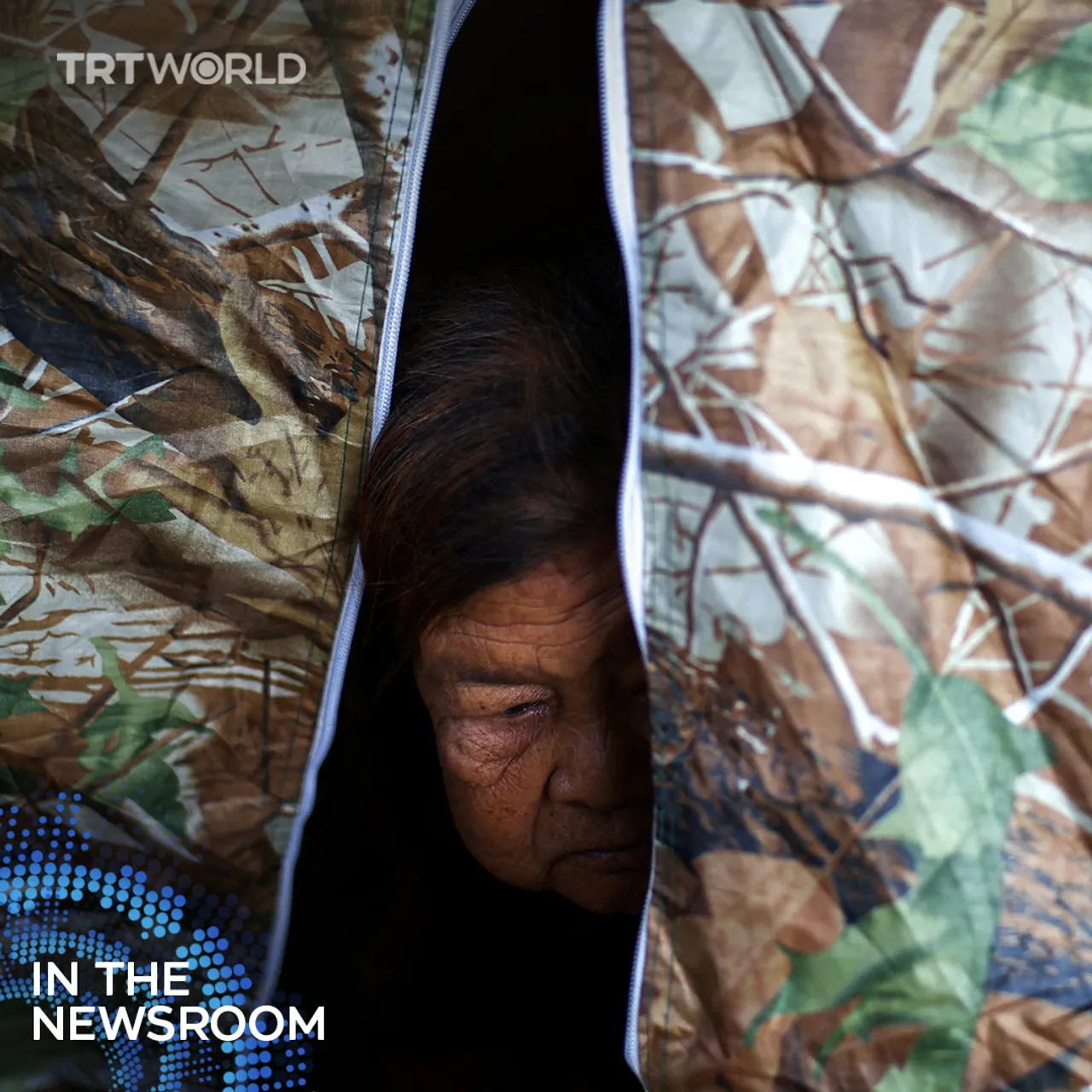
Renewed border clashes between Thailand and Cambodia have escalated at a speed few expected. Air strikes, rocket fire, and tens of thousands of families fleeing their homes on both sides of the frontier.
A fragile ceasefire brokered just months ago has collapsed, and with more than 400,000 people now displaced, the region is facing its most dangerous spike in tensions in more than a decade. Both governments accuse the other of violating the peace agreement and internationally, the US is once again positioning itself as a mediator, though with limited leverage and even less urgency.
In this episode, I speak with Dr. Pongkwan Sawasdipakdi, PK, who teaches international relations at Thamma-sat University in Bangkok. She breaks down what’s happening on the ground and why the conflict may be far harder to contain this time.
So PK, for someone who hasn't been following the situation, can you explain what is happening between Thailand and Cambodia right now?
PK: Both sides accused each other of starting this new round of fighting first from the Thai side, the Thai army and the Thai government accused the Cambodian army for laying out new landmines along the border, which is actually prohibited under the peace deal. And then because of that, right, is there a round of exchanges, and then it escalated to a new round of fighting. Obviously, the Cambodian government is also accusing Thailand for firing first. So, as far as we know right now, sitting in the capital, nobody has any confirmation about who is starting the fighting first this time. What we now know is both sides are actually blaming and pointing fingers at each other. So that the other side is taking the responsibility for being the first party to really violate this peace deal first.
EZGI: The peace deal PK mentions was an agreement signed in July under pressure from the US and several ASEAN members, as Trump explains:
US PRESIDENT TRUMP: And we saved maybe millions of times on this one peace deal itself… And I’ll tell you what makes me so happy is the two countries we’re dealing with they really like each other. I’m not used to that when I do these deals.
EZGI: The deal required both Thailand and Cambodia to pull troops back from the most contested stretch of the border, to stop deploying drones or heavy artillery, and to halt the laying of any new landmines, which both sides had been accused of using in earlier skirmishes.
But despite Trump’s bragging, it was fragile from the start. Neither side agreed to a formal monitoring mechanism, and no neutral observers were deployed to verify violations. So, when clashes broke out again last week, there was no trusted body to confirm who fired first, only competing accusations.
PK explains to me how the dispute is framed inside Thailand and through Thai historical narratives.
PK: The issue of border conflict, especially with Cambodia, has been discussed multiple times and then actually it's within the national narrative that we lost territories to the French. And then we tried to take that territory back during the Second World War, but following the war, we had to return it to the French and then the Cambodian took the Preah Vihear here, which is a temple along the border case to the ICJ in the 1950s. And based on the map that we accepted and took from the French, you know, in the 19th century, the ICJ ruled in favor of Cambodia and therefore we had to leave the temple to the Cambodian and that actually occupied a very unique space in Thai people's historical memory. And every time when the issue about the border trigger between Cambodia and Thailand, it becomes an issue where people take issue with nationalist sentiment and things like that. So, of course, it's actually deeply embedded in our historical memory.
EZGI: The modern Thai–Cambodian border was largely drawn during the French colonial period, when France controlled Cambodia and parts of what is now Laos and Vietnam.
Bangkok accepted a series of maps produced by the French in the early 1900s, at a time when the very concept of fixed borders was still new in Southeast Asia.
One of those maps placed the Preah Vihear temple, a Khmer sanctuary perched on a cliff, on the Cambodian side. Decades later, Thailand disputed that interpretation, but in 1962 the International Court of Justice ruled that the original French map stood.
PK: If you actually go back to 2008, Cambodia was actually trying to apply for UNESCO, right, so the Preah Vihear here apply, you know, at the Preah Vihear Temple that was the dispute area before to UNESCO World Heritage sites. Of course, because of some very unclear verdict from ICJ that, temple belongs to Cambodia, and the vicinity or the area surrounding that belonged to Thailand. So it was really unclear. And that's why when the Cambodian applied, it had to seek sort of support from Thailand as well. And the Thai government at that time actually supported it, both sides get benefit from it. So that incident was actually weaponised by the opposition or the protesters to kind of like, increase this nationalist sentiment against that government, and that was pretty successful, right? That actually led up to Cambodia taking this Preah Vihear case to the ICJ again, which, of course, Thailand lost that case one more time.
PK: So, there is a mainstream narrative in Thailand that Thailand has lost territory 14 times. And every time when issues, you know, about border conflicts between Thailand and Cambodia, and for some reasons, this mainstream narrative will start to circulate again. Right? So like in high school textbooks or whatnot, right? If you actually search, you can actually see this narrative and even official websites.
EZGI: Oh wow.
PK: And then so there is this one book by Dr. Tong Chai Winna Chikun. It's called Siam Mat. This book actually argued that, so when the French came or the British came, the concept of border demarcation and territorial sovereignty were really foreign to Thai people at that time. So we cannot actually use the concept. Of losing territories when we didn't have the concept of territory at the first place, right? And of course, this narrative didn't make it to the mainstream narrative and people still believe that we actually lost territory to the colonial powers in the 19th century.
EZGI: The US, Malaysia, a lot of countries are attempting to de-escalate the situation Realistically, how much leverage do they have over Thailand and Cambodia?
PK: I would say not much, right? The Prime Minister has dissolved the parliament, meaning he might not actually take any responsibility for things that are happening following this. I mean, Malaysia probably does not have leverage over this at all. If any party would have leverage over this issue would be the United States. And it seems like they're really slow about this, right? A lot of tweets or things coming out from Trump is trying to figure out what's really going on on the ground. But I'm not really sure how much he actually cares about this issue. And if he doesn't really care about it, he doesn't really approach both Cambodia and Thailand in time, then I'm actually afraid that the two countries will just take these issues into their hands, and not really ready to de-escalate the conflict.
And also another thing is the leverage that the United States has is on the tariffs. Right? Remember the last time, Thailand and Cambodia signed the peace treaty because that was actually before the tariff level announcement.
So Cambodia and Thailand agreed that it was going to stop the conflict first, and then it was 19% announced. And during the ceremony, both, I think in the case of Thailand, we received a rare earth agreement with Cambodia, right? no, not only with Cambodia, with the United States. Right? So there, at that time, there was actually an incentive for the Thai government to actually sign the peace deal because they got something in return. And even if this is performative, right, it could be performative, but they could already signal the audience in Thailand that they have achieved something.
There are a lot of news about how Thailand achieved, you know, deals with other countries related to trade and things like that. So on that point, you know, they have already shown their constituents that they have done something on this. So I'm not sure what they do care about trying to negotiate with the United States over tariffs. Anymore, right? And they've been really consistently saying that the United States should separate or delink trade from the security issues.
EZGI: But why is it so difficult to maintain a lasting ceasefire in this particular dispute?
PK: Yeah, it's a one million dollar question, right? This is a good way for the army to use their weapons and budgets. And therefore, there is that incentive to keep the fighting going because, you know, that's when, you know, where they can test weapons and use weapons that they haven't used before. That's how they actually increase their importance, when it comes to their priority in domestic politics, right? There could be something about setting up the stage for a next election, whereas now, the current party, Punchai Thai Party seems to receive support by the people for being very confrontational in this conflict, right? So it gains that nationalist support, support from the nationalist people who want more confrontation with Cambodia, right? So, they're leading on that front. They could ride this nationalist wave into the new round of election. So, and that might be why, right, it's really hard to uphold the deal but also maybe beyond or on top of that, it could be because both parties, right, both Cambodia and Thailand deeply really believe that that area or that border belongs to themselves. And therefore, when it comes to border territorial sovereignty, it might be really hard to uphold the deal when it seems like negotiations don't lead them anywhere.
PK: If I speak to my students, and I mean, this is something that always happened, right? People who are like-minded will cluster together, so people that I talked to. I would definitely prefer more diplomatic approach, negotiation, and things like that and de-escalation, obviously, because we don't want to see more people being displaced from their homes, and we could also see that a lot of benefits could be gained from joint development of the area, on the overlapping area and things like that, but you know, but that is something that is not really shared if you. So if you approach this by going to, you know, social media, most of things that are being posted on social media are very nationalistic.
People would prefer to see more war, more fighting. And another thing which is really interesting is… so analysing this from a very objective perspective or even trying to understand the motivation from the Cambodia or even show empathy to the Cambodian army or Cambodian soldiers will be interpreted by some Thai people as being pro-Cambodian. So the nationalist sentiment is very strong and I am afraid that even people who prefer the more diplomatic approach would not want to voice this online. And that's why we're actually seeing more people posting on the national and using nationalistic tones because if you do something differently, you're going to be canceled by these people who are more nationalistic.
So one thing that you could actually say for sure is, ASEAN fails, right? At least fails in a very… the most important dimension of it, which is preventing war between member states. And you know, going back last… a few months ago, you probably say, well, ASEAN did something, right? There was this peace deal and things like that, which is not really clear that it's not being upheld, and ASEAN could not do anything about it. Right. And then this could actually mean, you know, more difficulty in negotiating other areas that do need negotiation in ASEAN, right? However, on a more positive note, though, I actually had a conversation with someone, really working with other countries in ASEAN. They actually said on issues that aren't really related to high politics.They can still generate some sort of consensus, even with their Cambodian counterparts. So that's probably some positive light to take. But again, you know, on the high politics, war issues, security issues, especially traditional security issues, I think ASEAN fails on that front.
EZGI: So looking ahead, what are possible scenarios?
PK: So I think something to take into consideration or probably keep our eye on is I don't actually know after the parliament dissolution. Whether the fighting would stop. Right. And then I'm saying this because we also don't know the relationship between the new round of election and diversionary warfare and how that might actually lead to the popularity of the sitting party, right, the sitting prime minister. So if there is that relationship, we might actually see the conflict start to subside. And it might actually lead to some some room for negotiation and things like that. But again, right, this is just speculation and we don't know for sure if these two things are related. But even if these two things are related, and the fighting subsides, I think the nationalist sentiment will stay. So the stay in between Thailand and Cambodia, I think will last for at least 10, 20 years, right? Unfortunately. So, we've discussed a lot about how to actually reconcile these wounds, and before this new round of conflicts, and how to probably change our high school textbooks so that it reflects more solidarity between us. I think it's harder now to achieve because of this very incident that's happening, right now. So that nationalist sentiment will actually constrain the new governments, right? Even if it's another government, another party winning the election, I think this nationalist sentiment will hold. And even if that party would probably like a more diplomatic approach, in this, in this issue. They would have to risk losing some public support over that because the nationalist sentiment already gained traction and on this.
PK: Another thing is, probably the attitude towards the military, right? The military is gaining a lot of popularity by the people. So some military turned politicians might actually play more role in the new round of election. That's something to keep our eyes on as well.
EZGI: Thank you so much.
PK: You're welcome.
EZGI: The fighting along the Thai–Cambodian border may ebb and flow in the days ahead, but as PK explained, the deeper challenges are structural: competing historical narratives and rising nationalism that make compromise costly.
Even if the attacks stop, mistrust between the two countries is likely to last for years, with ordinary people bearing the heaviest burden.
Thanks for tuning in. Until next time, I’m Ezgi Toper, and this was “In the Newsroom”.
[CREDITS]