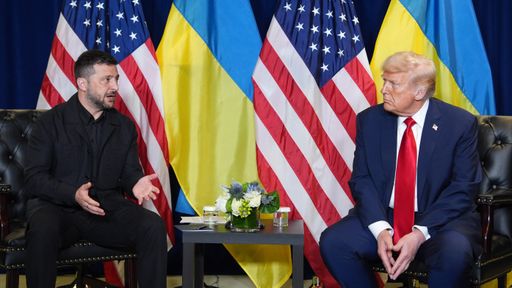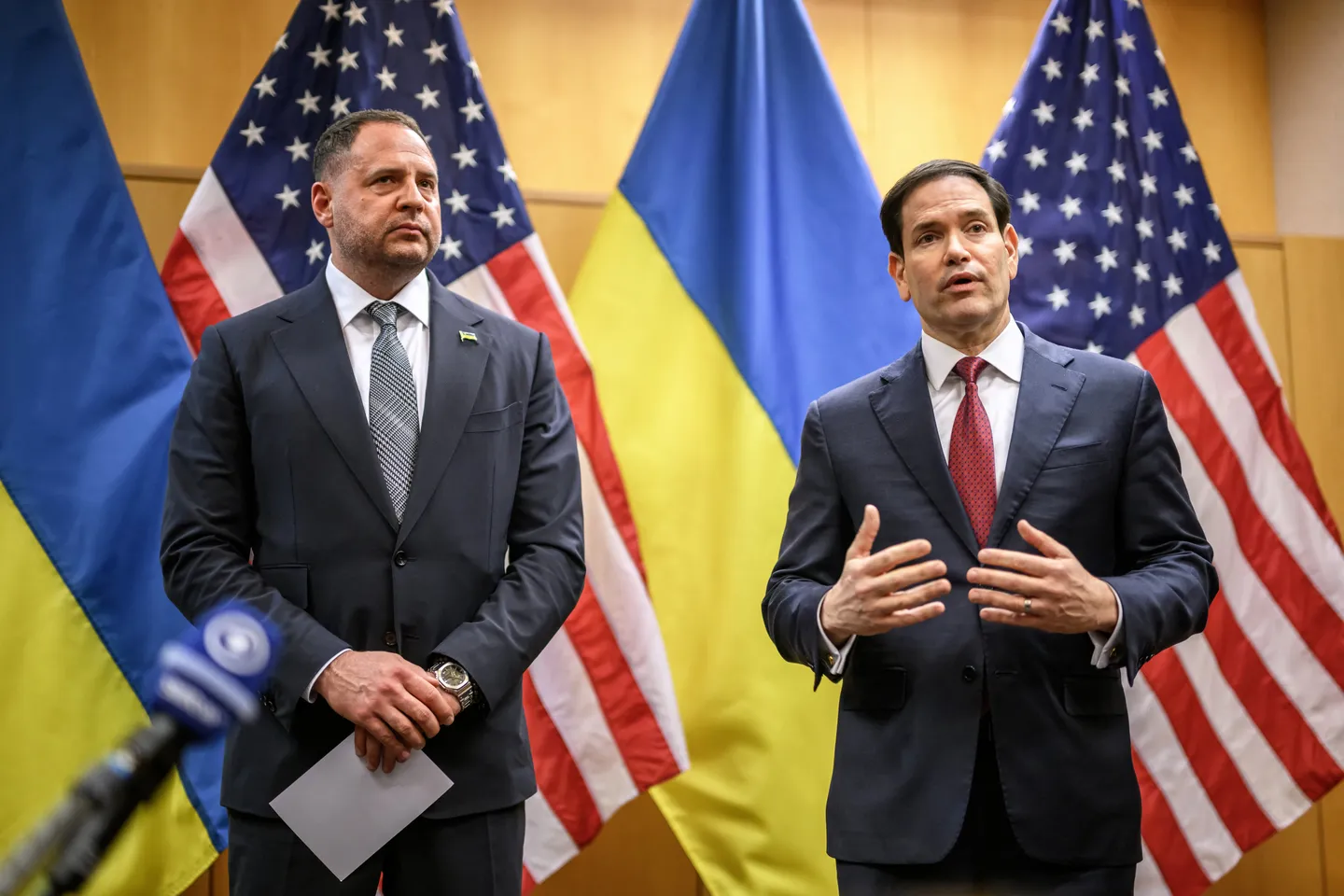
US Secretary of State Marco Rubio and head of Ukraine's delegation Andriy Yermak both have hailed "good progress" in talks underway in Geneva to discuss a proposal to halt the Ukraine war.
"We have very good progress, and we are moving forward to the just and lasting peace Ukrainian people deserve," Yermak told reporters on Sunday, while Rubio said of the talks, which were continuing into the evening, that they were "probably the most productive and meaningful ... so far in this entire process".
"We were able to go through some of the items now, point by point. And I think we’ve made good progress," Rubio said.
Rubio added that delegations had broken off to refine proposals aimed at narrowing remaining gaps.
"We're working through making some changes, some adjustments, in the hopes of further narrowing the differences and getting closer to something that both Ukraine and obviously the United States are very comfortable with," he said.
"Obviously, this will ultimately have to be signed off of our presidents, although I feel very comfortable about that happening,” he said, adding that the US also has “substantial insights” into Russia’s priorities.
Ukraine’s presidential chief of staff Andriy Yermak, for his part, thanked the US for their commitment, adding that work would continue in the coming days and with European partners.
Rubio concluded by saying the delegations would return later with updates. "Let us work on more answers for you … We will come back later tonight," he said.
A counter-proposal
Europeans, on the other hand, have submitted a modified version of the United States' peace plan for Ukraine that pushes back on proposed limits to Kiev's armed forces and territorial concessions, according to media reports on Sunday.

The document, prepared for talks on the plan in Geneva, proposes that Ukraine's military be capped at 800,000 "in peacetime" rather than a blanket cap of 600,000 proposed by the US plan.
It also says "negotiations on territorial swaps will start from the Line of Contact", rather than pre-determining that certain areas should be recognised as "de facto Russian", as the US plan suggests.
The counter-proposal was drafted by the so-called European E3 powers - Britain, France and Germany, a source familiar with the document said.
The document takes the US proposal as its basis, but goes through point by point with suggested deletions or changes.
It proposes that Ukraine receive a security guarantee from the United States similar to NATO's Article 5 clause.
It pushes back on the US proposal for the use of Russian assets frozen in the West, primarily in the European Union.
"Ukraine will be fully reconstructed and compensated financially, including through Russian sovereign assets that will remain frozen until Russia compensates damage to Ukraine," the document says.
The US plan proposed that $100 billion of frozen Russian funds would be invested in a "US-led effort to reconstruct and invest in Ukraine" and that the US would receive 50 percent of the profits from that venture.
The US also proposed that the balance would be invested in a "separate US-Russia investment vehicle".