 Kazim Alam
Sarvesh Singh, a 46-year-old father of four in the Indian city of Moradabad, filmed a desperate video plea to his mother before reportedly committing suicide late last month.
“Mother, please take care of my daughters. Please forgive me. I could not complete the task. I am going to take a drastic step,” said Singh, a teacher temporarily posted as a booth-level officer (BLO) for the Election Commission of India (ECI), before he allegedly took his own life at his home.
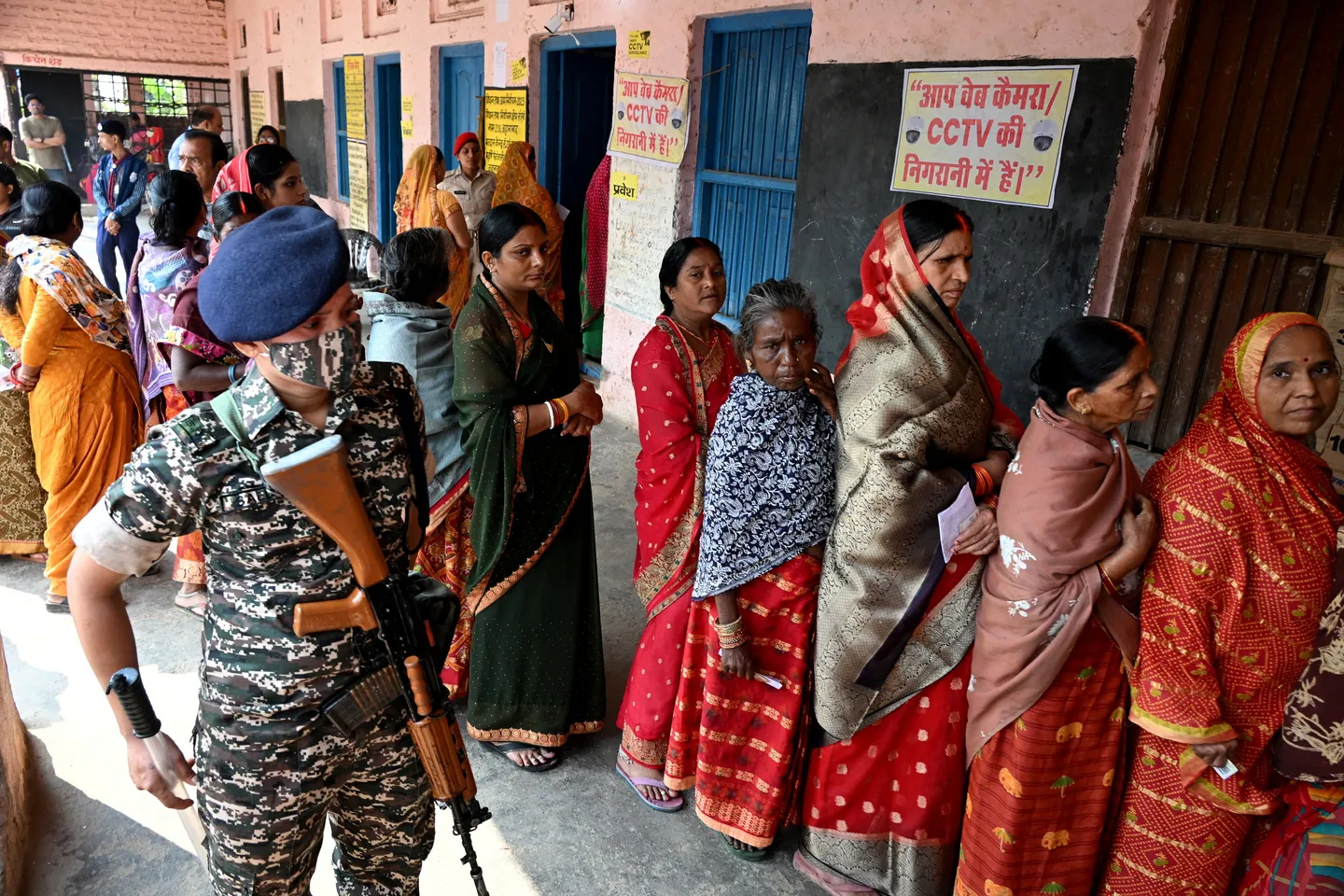
Tasked with helping voters fill election-related documents and upload data to the government database, BLOs are at the front and centre of a controversial exercise known as the Special Intensive Revision (SIR), which aims to update the electoral rolls in the world’s most populous nation.
Elections in several states are scheduled for next year.
Opposition parties allege that the SIR, ostensibly a routine update of the electoral rolls in 12 provinces and federal territories, has morphed into a political operation to reduce the number of voters belonging to minority communities, which are supposedly less sympathetic to Prime Minister Narendra Modi’s BJP party.
The ECI has conducted no inquiries so far, even though it did double the pay from a paltry 6,000 Indian rupees or $67.
Under intense pressure to complete the exercise before the next elections, more than 30 BLOs have died in recent weeks, as their workdays stretch 14-15 hours, seven days a week.
“He was like my brother,” Anwar Ali, a schoolteacher serving as BLO in Moradabad, tells TRT World.
“I spoke to him regularly. It’s sad that he had to go like that.”
In his video, Singh referred to 20 sleepless days under the crushing weight of the SIR exercise.
His death was one of at least 33 BLOs who have died from either suicides or stress-induced medical emergencies in six provinces.
A damning report from the non-profit SPECT Foundation labels the SIR a “death trap” for BLOs, documenting cases from Bihar to Gujarat, where suicide notes scream of exhaustion and helplessness.
Among the SIR participants who died allegedly under work pressure were Rameshbhai Parmar, a Gujarat principal who collapsed post-shift, and Sudhir Kumar Kori, reprimanded for seeking wedding leave before his suicide.
In his suicide note, Gujarat’s Arvind Vadher talked about “feeling exhausted and troubled” for days.
“I can no longer continue this SIR work… I feel completely helpless. I have no option left anymore,” he wrote.

‘Too much work, too little time’
BLOs are the underpaid cogs in India’s democratic machine. They are local government employees, usually primary schoolteachers, who go door-to-door to distribute forms, convince reluctant households to cooperate, and upload new data via glitchy apps late into the night.
Critics claim the rushed SIR exercise aims to disenfranchise the BJP's perceived foes, such as Muslims. The BJP denies that it’s using the SIR to get an electoral edge over its political rivals.
Ali, who is a 27-year veteran educator, says he logs 12 hours daily, seven days a week, interacting with villagers.
“The field work is tough. You have to go to hundreds of homes to distribute forms and tell people how to fill those. Then you have to get all those forms back. People don’t always cooperate," he says.
The commute of one of Ali’s colleagues exemplifies the grind. Two hours each way, extending daily shifts to 14-15 hours, culminated in a paralysis attack that left the man bedridden.
Unlike his colleague Singh, Ali says he has not entertained any suicidal thoughts.
“I’m built differently. But I understand that not everyone is that strong, mentally and physically,” he says.
Ali points to alleged discrepancies in voter lists as the root cause of the whole mess, but adds that the SIR’s punitive deadlines have amplified chaos.





“People not returning the forms compounds the problems for BLOs. They come under pressure because they have to wrap up the whole exercise in a limited period of time,” he says.
Vinod Kumar, another schoolteacher-cum-BLO in Moradabad, echoes the sense of despair.
He tells TRT World that his family life has taken a serious hit as he is forced to work Sundays too.
“My family suffers because I work so many hours every day. I can’t spare any time for family matters,” he says.
Too much work is expected from BLOs in too little time, he says.
“We have to go to people’s homes and convince them to give us up-to-date data about family members. Many people are not forthcoming,” he says.
People routinely suspect something fishy, he adds. “They think it’s a ploy to take away their right to vote.”
Kumar says he tried to console his colleague Singh, before he allegedly killed himself under work pressure.
“We told Sarvesh not to worry too much. He was afraid that he wouldn’t be able to get back all the forms he had distributed. He just could not take the pressure,” he says.
Network glitches often lead to work pile-ups and increased pressure, he adds.
“Internet problems create delays. Not every BLO can take that kind of deadline pressure. Unfortunately, a few get pushed towards committing suicide," he says.
‘Assault on democracy’
Kumar’s observations hint at communal divides that the BJP allegedly exploits.
“In my experience, Hindus are the ones who keep causing delays. Muslims, however, are quick to submit all documentation,” he says.
This aligns with broader allegations that the SIR is a targeted exercise to eliminate minority voters from electoral lists.
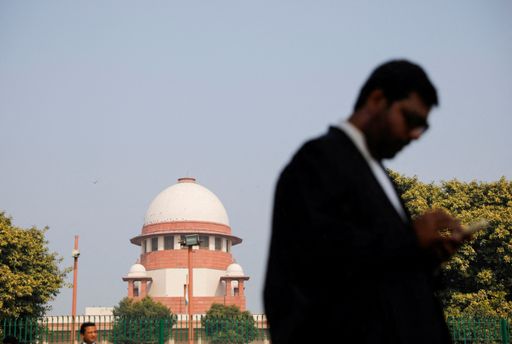
In Delhi, BJP campaigns have stoked Islamophobia to “raise awareness”, peddling materials that portray Muslims as fraudulent voters in an attempt to justify their removal.
Aman Wadud, a spokesperson for the opposition Congress party, frames the SIR as Modi’s assault on democracy.
“The entire SIR exercise is exclusionary. It is basically an exercise to prove citizenship, which is not the mandate of the ECI,” he says.
He invokes history to liken the policies of the ruling BJP party to those of the colonial power before the independence of India in 1947.
“Under the British, only 29 percent privileged people had the right to vote. Our founding fathers, by one stroke of pen, gave every Indian the right to vote,” he says, adding that the BJP is now bent upon snatching that right from citizens belonging to minorities.
“The SIR could be the largest exercise of disenfranchisement in India’s history. Everyone who traditionally does not vote for the BJP is the target,” he says, while naming Muslims, Dalits, Bengali speakers, and people in the lower bracket of India’s infamously caste-ridden society as prime targets for disenfranchisement.
Wadud says that India’s central election body is acting like the “front organisation” of the BJP.
“Everything that the ECI is doing is to help the BJP,” he says, vowing that his party would leave no stone unturned to reverse the illegal deletions from electoral lists once it wins power back.