Won't kill Iran's supreme leader — at least 'for now': Trump
"We know exactly where the so-called 'Supreme Leader' is hiding. He is an easy target, but is safe there – We are not going to take him out (kill!), at least not for now," Trump says on his Truth Social platform.
Won't kill Iran's supreme leader — at least 'for now': Trump
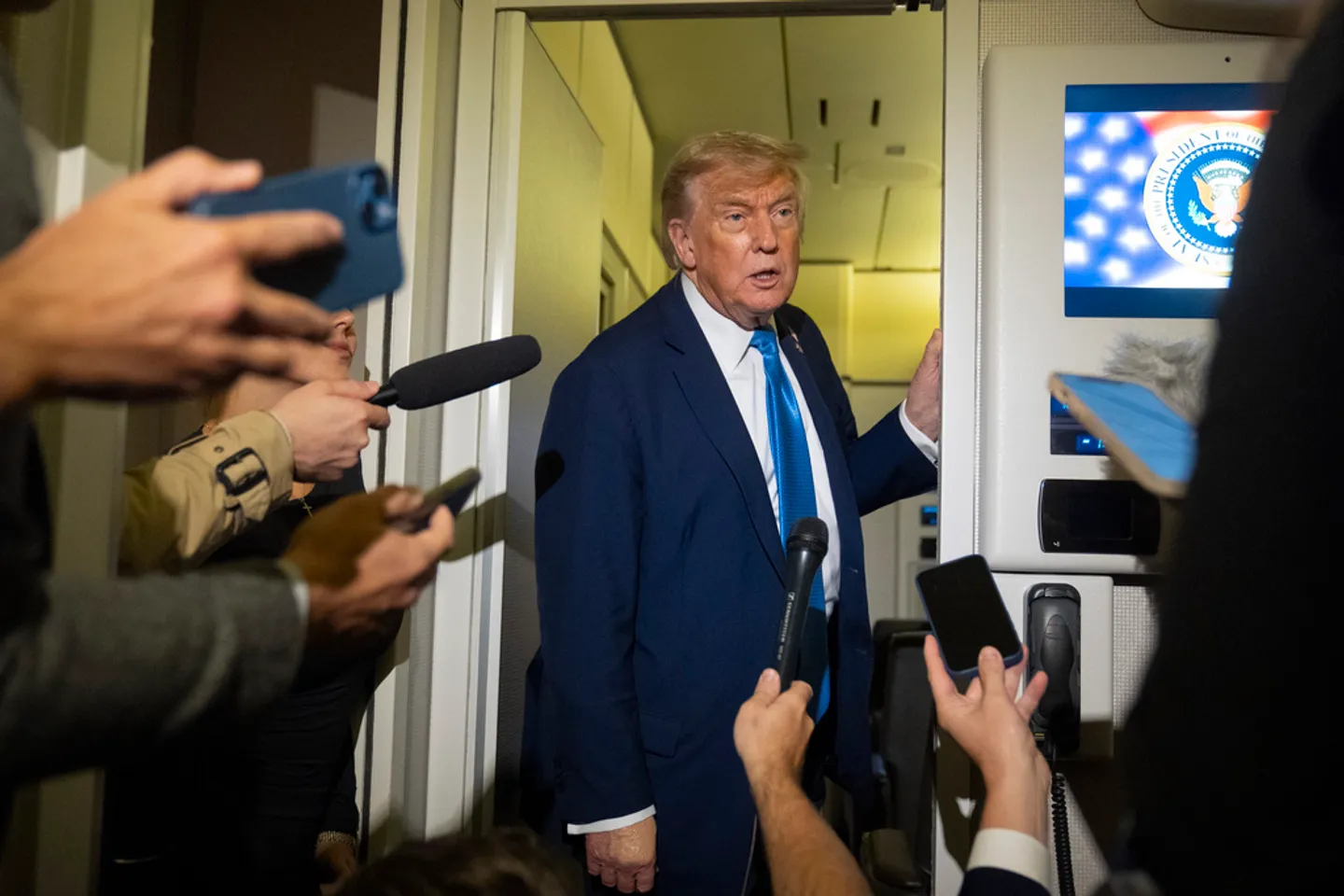
Donald Trump speaks with reporters while aboard Air Force One en route from Calgary, Canada to Joint Base Andrews, MD, late Monday, June 16, 2025.
June 17, 2025

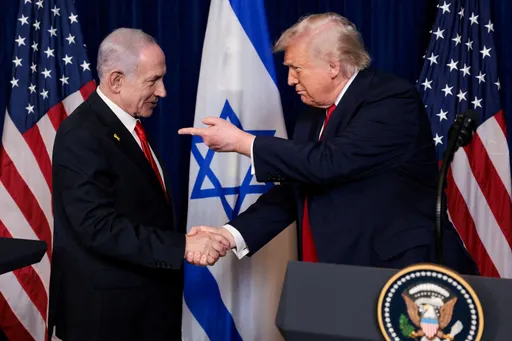
US President Donald Trump dramatically stepped up his rhetoric against Iran's supreme leader, saying on social media that the United States knows where Ali Khamenei is located but will not kill him "for now."

In another post on Tuesday, Trump also appeared to demand Iran's "UNCONDITIONAL SURRENDER!" as he fueled questions about whether the United States would join Israel's attacks on Tehran's leadership and nuclear facilities.

"We know exactly where the so-called 'Supreme Leader' is hiding. He is an easy target, but is safe there – We are not going to take him out (kill!), at least not for now," Trump said on his Truth Social platform.

"But we don't want missiles shot at civilians, or American soldiers. Our patience is wearing thin. Thank you for your attention to this matter!" said Trump.

Minutes later, the US president followed up with another message simply saying: "UNCONDITIONAL SURRENDER!"

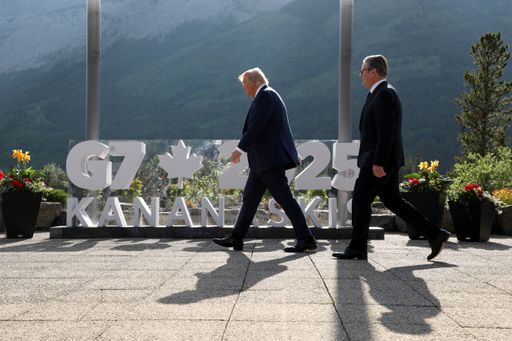
Trump flew back early from the G7 summit in Canada late Monday as the conflict between Iran and key US ally Israel escalated, and was set to meet top officials in the White House Situation Room on Tuesday.


The US president has so far stressed that his country is not getting involved in the conflict, and has said that Iran could still take a deal to end its nuclear program that he had proposed before Israel's attacks.

But Trump has given mounting signals that Washington's intervention in some form may now be imminent.

Trump said on Tuesday that "we have complete and total control of the skies over Iran," hailing the use of US-made weaponry without explicitly mentioning Israel.
RelatedTRT Global - China: Trump 'adding fuel to fire' in Iran-Israel conflict

Israel, the closest US ally in the Middle East, had recently made a similar claim.

Earlier, Trump told reporters on Air Force One while returning from Canada that he wanted "a real end, not a ceasefire" to the Iran-Israel conflict, and warned that "I'm not in too much of a mood to negotiate."
RelatedTRT Global - 'This is big stuff' — Trump cuts G7 trip short as fears of US attacks on Iran grow

SOURCE:AFP
Explore
Iran executes man accused of spying for Israel and another over Daesh link
Iran’s Defence Supreme Council signals a wartime shift in power
Iran-Israel tensions may spark wider war, warns Turkish intelligence academy
Iran warns US will be held accountable for attacks on nuclear sites in future talks
Israel vows to stop Iran from rebuilding nuclear programme, threatens renewed conflict
Iran says it won’t abandon uranium enrichment, stresses nuclear programme is peaceful
Ideology over insight: How strategic blindness left Iran exposed
Satellite photos suggest Iran attack on Qatar air base hit geodesic dome used for US communications
Iran says nuclear cooperation depends on IAEA ending 'double standards'
Saudi crown prince meets Iran’s foreign minister in first visit since the 12-day war with Israel
US has scheduled Iran talks after strikes and ceasefire — Trump
Israel attempted to assassinate Iran president: Tehran
Iranian missiles directly hit 5 Israeli military bases in12-day war — radar data
Iran's Khamenei makes first public appearance since clash with Israel
Iran reopens most airports and airspace after ceasefire with Israel
After suspending cooperation with IAEA, what’s next for Iran and its nuclear programme?
Pentagon says US air strikes 'degraded' Iran’s nuclear programme by up to two years
A timeline of Iran's thorny relationship with the IAEA
Iran’s president orders country to suspend cooperation with UN nuclear watchdog IAEA
To be (nuclear) or not to be: Iran’s NPT dilemma after US strikes