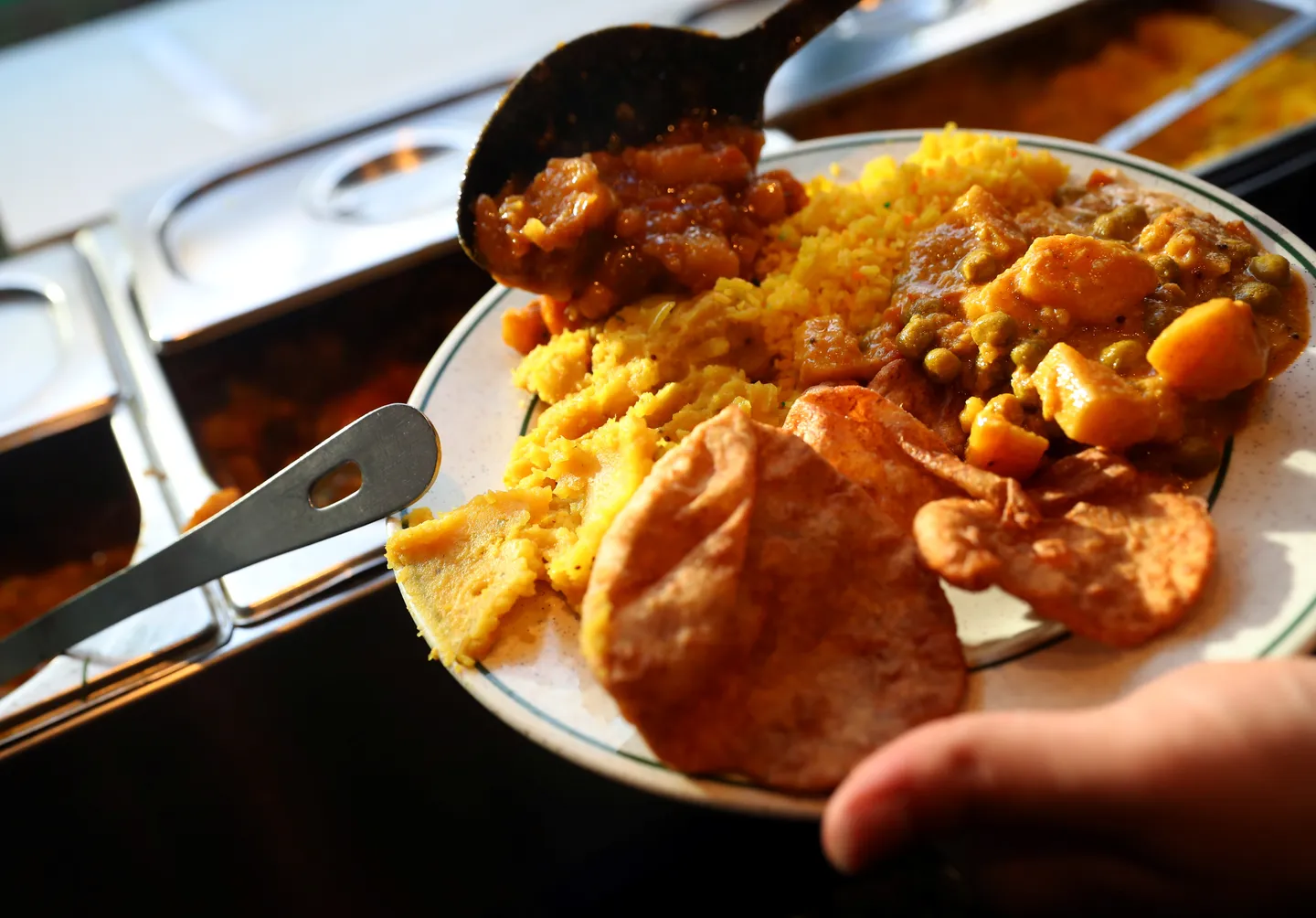
India's culinary traditions reflect the diversity of its regions, religions, castes and communities.
While vegetarianism occupies an important place in Indian culture, meat, fish and eggs are also integral to the diets of millions of Indians, including a significant proportion of the country's Hindu population.
Yet the growing politicisation of food has raised questions about whose dietary practices are considered representative of India and what this means for religious belonging, livelihoods and access to nutrition.
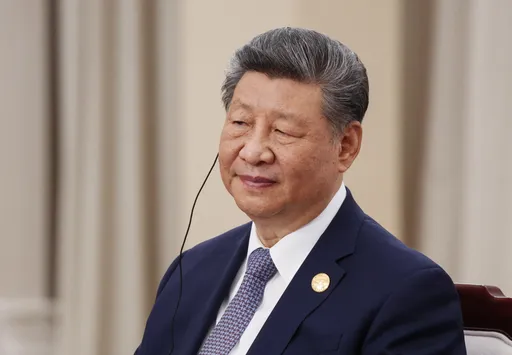
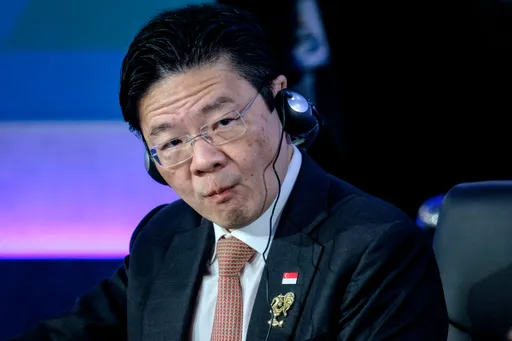
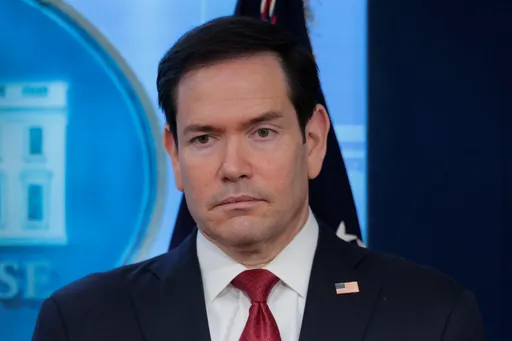
This debate came into focus recently when Prime Minister Narendra Modi hosted leaders of BRICS, the grouping originally comprising Brazil, Russia, India, China and South Africa, in New Delhi. The gala dinner was entirely vegetarian, with regional dishes on the menu.
The following day, opposition leader Rahul Gandhi said that 80 percent of Indians are non-vegetarian, while defenders of the government argued that the opposition was politicising food.
There is some truth in both positions. Vegetarian food is an important part of Indian cooking, and the dinner was hardly an unusual choice for an official occasion.
The real issue is the cultural monopoly that emerges when one dietary preference is presented as representative of an entire nation.
India is incredibly diverse, yet we are seeing one specific diet being weaponised politically, leaving millions of people feeling like outsiders in their own kitchens.
The figures do not fit neatly into either side's argument. Data For India estimates that around 80 percent of Indians aged 15–49 consume animal-source foods, such as eggs, fish and meat. Its analysis also finds that a little over three-quarters of Hindus consume these foods, although this does not mean that everyone eats meat regularly.
A 2021 Pew Research Center survey found that 39 percent of Indian adults identify as vegetarian, rising to 44 percent among Hindus. Researchers Balmurli Natrajan and Suraj Jacob, analysing three national surveys, put the vegetarian share between 23 and 37 percent.
The estimates differ because the surveys use different questions and definitions, but they all point to the same difficulty: no single figure captures how India eats.
Eating meat does not necessarily mean eating everything, either.
Pew found that 81 percent of Indians follow some form of dietary restriction on meat. Among Hindus, 83 percent either identify as vegetarian or restrict what they eat or when they eat it.
These practices vary across regions, castes and communities, as well as with religious observance. A vegetarian dinner can represent one part of this food culture, but it cannot stand in for all of it.
Beef is where the question becomes more politically charged. Pew found that 72 percent of Hindus believe someone who eats beef cannot be Hindu.
Yet Natrajan and Jacob estimate that between 7 and 15 percent of Indians eat beef, including people from Muslim, Christian, Dalit and Adivasi communities.
The strength of the taboo does not make these eating practices disappear. It does, however, make them easier to turn into a test of religious belonging.
The economic contradiction
There is an economic contradiction here, too. India's meat export trade is largely based not on cow meat but on buffalo meat, commonly called carabeef.
This distinction matters because laws governing cattle slaughter differ between states, and buffalo slaughter is also subject to state-level rules and conditions. Export regulations, meanwhile, distinguish buffalo meat from cow meat.
According to India's Agricultural and Processed Food Products Export Development Authority, India exported around 1.42 million tonnes of buffalo meat in the 2025–26 financial year, worth approximately $5.1 billion.
The authority identifies India as the world's largest buffalo-meat exporter.
Behind those figures are livestock owners, processing facilities, transporters, traders and workers whose livelihoods depend on the trade. When cow meat and buffalo meat are spoken about as though they are the same, the people who depend on this trade often get caught in the confusion.
For traders, even a lawful business can become difficult when rules are unclear, transport is questioned, or they face intimidation over suspicions of selling cow meat.
The burden of restrictions on meat is not shared equally.
Data For India finds that nearly nine in 10 people in the poorest fifth of households consume animal-source foods, compared with around seven in 10 in the richest fifth. These figures include eggs and fish as well as meat.
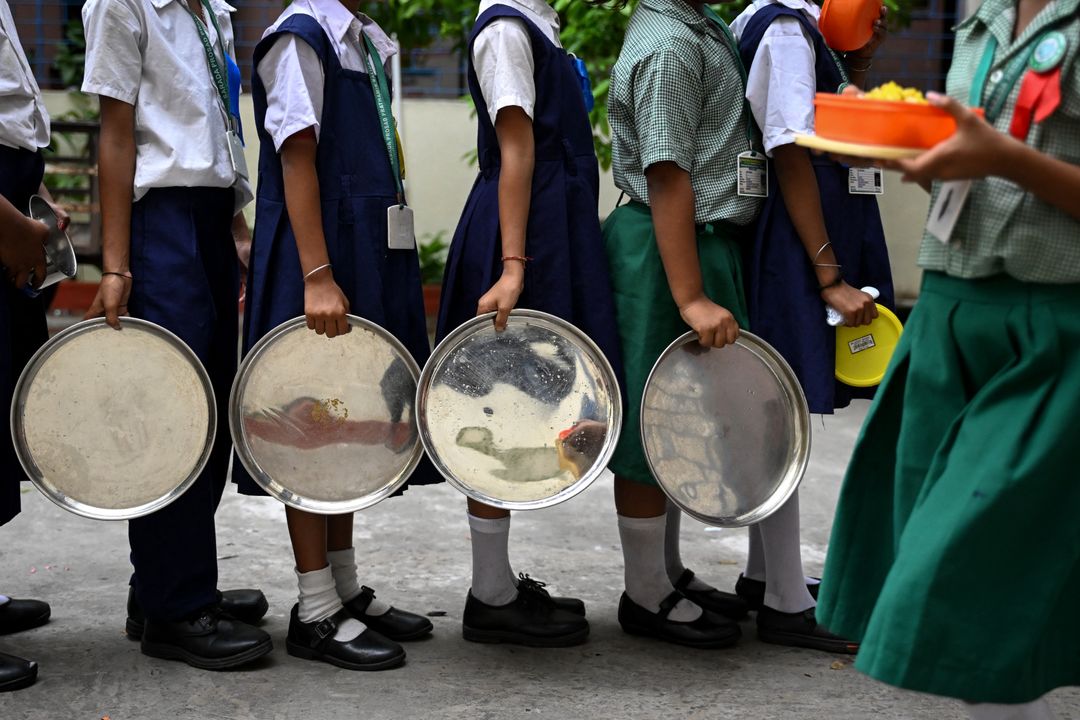
Decisions such as closing meat shops during festivals or removing eggs from school meals can therefore affect poorer households in particular. Public nutrition programmes should take account of what children actually need and what families eat instead of assuming that one dietary preference works for everyone.
Protecting India's culinary diversity
There are ways to prevent these tensions from becoming more costly. Governments need to make the rules around buffalo-meat transport and sale clear so that traders operating legally are not left vulnerable to suspicion or harassment. Protecting cows cannot become an excuse for vigilantism.
The same consideration should extend to public food programmes. If a child eats eggs, that option should not disappear because a school or state government prefers to promote vegetarianism.
There is room for both on a school menu, just as there is room for different food traditions at an official dinner.
The BRICS dinner itself was never the problem. India was free to serve its guests a vegetarian meal.
The problem arises when that choice is made to represent something larger: what India is and what Indians are expected to eat.
Millions of Indians do not fit that picture, including Hindus whose food habits are far more varied than political rhetoric suggests.
Respecting vegetarian traditions should not require making other food practices seem less Indian. Nor should people have to fear for their livelihoods or their place in society because of what they eat or the food they trade.