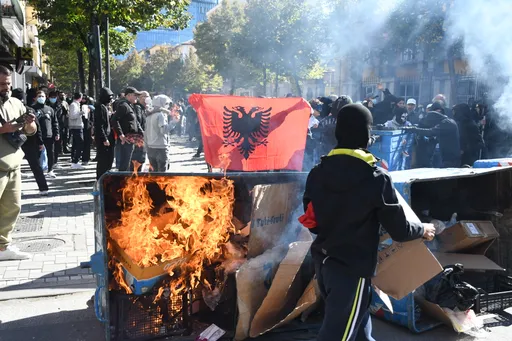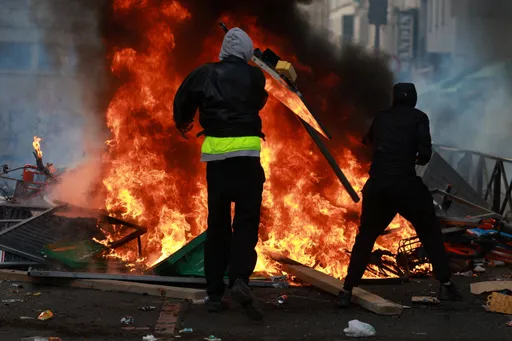
Even before the smoke had cleared over France's scarred city centres, the far right had found its favourite target to pin the blame on. Nationalist commentators and online accounts rushed to allege that migrants were behind the looting and arson that followed the weekend's nationwide protests, and that immigration had set the country alight.
The evidence does not support the claim. French authorities and police have not linked immigrants to the rioting. Instead, they have blamed "insurrectionist elements from radical far-left groups, joined by numerous criminals".
Fact-checkers reached the same conclusion, finding that the available evidence does not show immigration caused the protests, even though immigration remains a contested political issue in France.
The unrest grew out of a mass movement. Organisers put turnout at about 800,000, with demonstrators answering calls from a labour union, student organisations and activists hoping to revive the "yellow vest" movement. That is hardly a migrant-led uprising.
Even the political camp most closely tied to the marches has distanced itself from the violence. Jean-Luc Mélenchon, the left-wing leader who joined the Paris march, insisted that "those who share our fight have no business in looting or destruction".
The far-right leader Marine Le Pen, for her part, aimed her fire at the government, describing it as "exhausted, disoriented" and powerless.
Across the political spectrum, the argument in France is about the state's failures, not about who arrived in the country.
The protests began on September 28, driven by rising living costs and poor conditions in schools. Students complained of a shortage of professors and "dilapidated buildings", and accused the government of trying to push young people out of higher education.
Petrol, energy and food prices have meanwhile spiked in recent months. With a presidential election about six months away, anger over living standards and crumbling public services has been building.
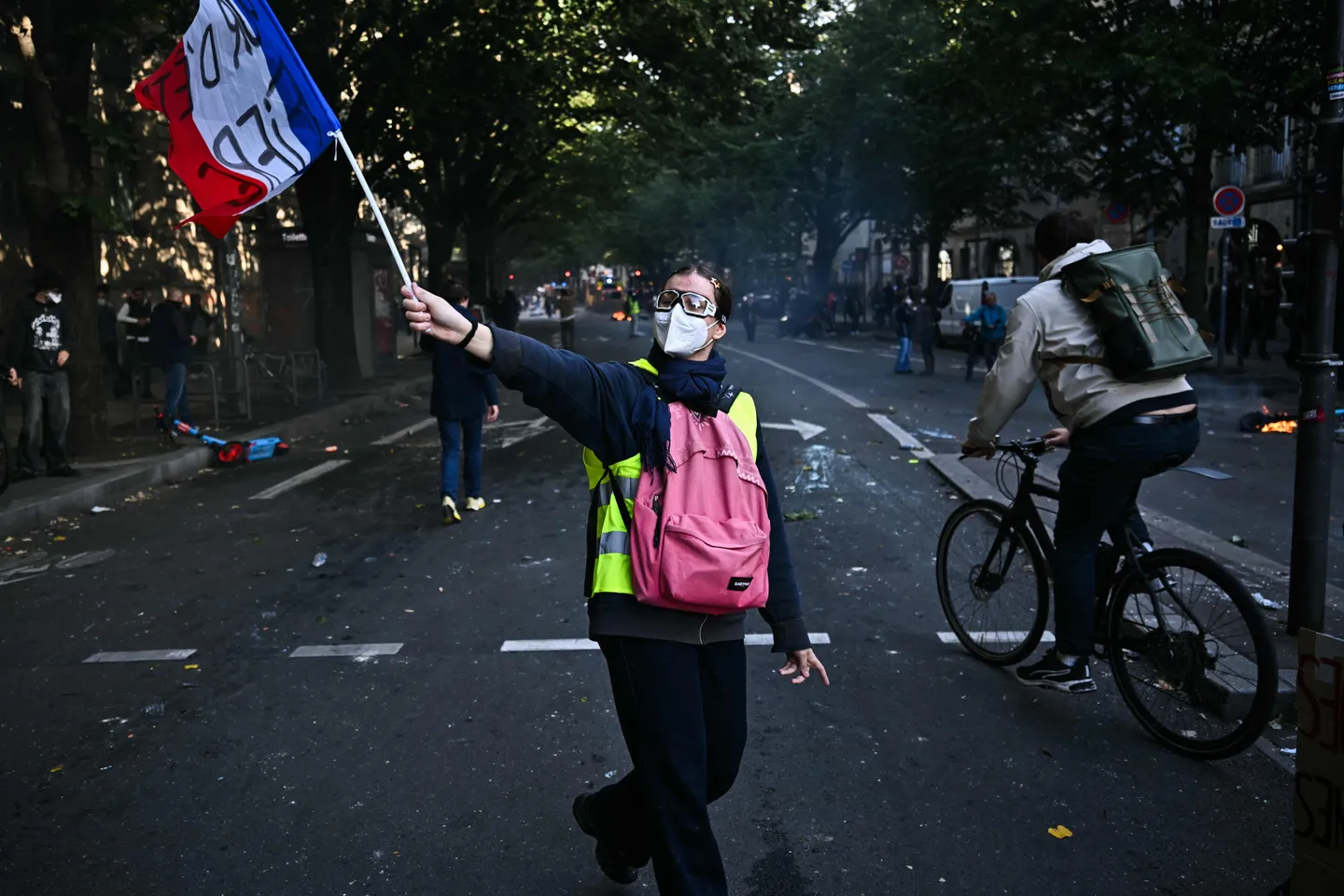
On Saturday, hundreds of thousands of mainly peaceful demonstrators took to the streets. The mood turned when groups of black-clad, masked activists and vandals appeared. An estimated 1,500 shops and businesses were looted or destroyed, and the interior ministry says about 1,000 police officers were injured, seven of them seriously.




At least 2,400 people were arrested. In Saint-Etienne, a 17-year-old lost his right hand after being hit by a crowd-control grenade.
A state that lost control
The most damning verdict has come from inside government. Interior Minister Laurent Nunez admitted on Monday that police "lost control" in some cities during the weekend's violence.
He blamed a "lack of anticipation" in preparations and said he had tendered his resignation to President Emmanuel Macron "because I felt responsible for everything that happened". Macron did not accept it, with the Elysee citing the need for continued leadership of law enforcement.
Macron himself condemned the "failures" that led to the violence, saying: "Nothing can justify this. Nothing can explain it. Nothing can excuse it."
Macron asked Nunez to ensure transparency over "failures in planning and intelligence" and to introduce new operational methods for security forces. Prime Minister Sebastien Lecornu convened a crisis cabinet to assess one of the worst weekends of public disorder in modern French history.
Macron has also authorised regional prefects to ban demonstrations nationwide, a move likely to inflame tensions among the peaceful majority who marched.
Macron's televised address on Sunday, in which he called for national unity and promised the perpetrators would be punished, was widely criticised. Opponents and social media users said it lacked concrete detail to address the grievances.
The picture is of a government that missed the warning signs, failed to protect peaceful protesters, and now faces public anger over living costs it has yet to address.
Its own interior minister has admitted that the state lost control. Blaming migrants may be politically convenient, but it explains nothing about what happened on France's streets.