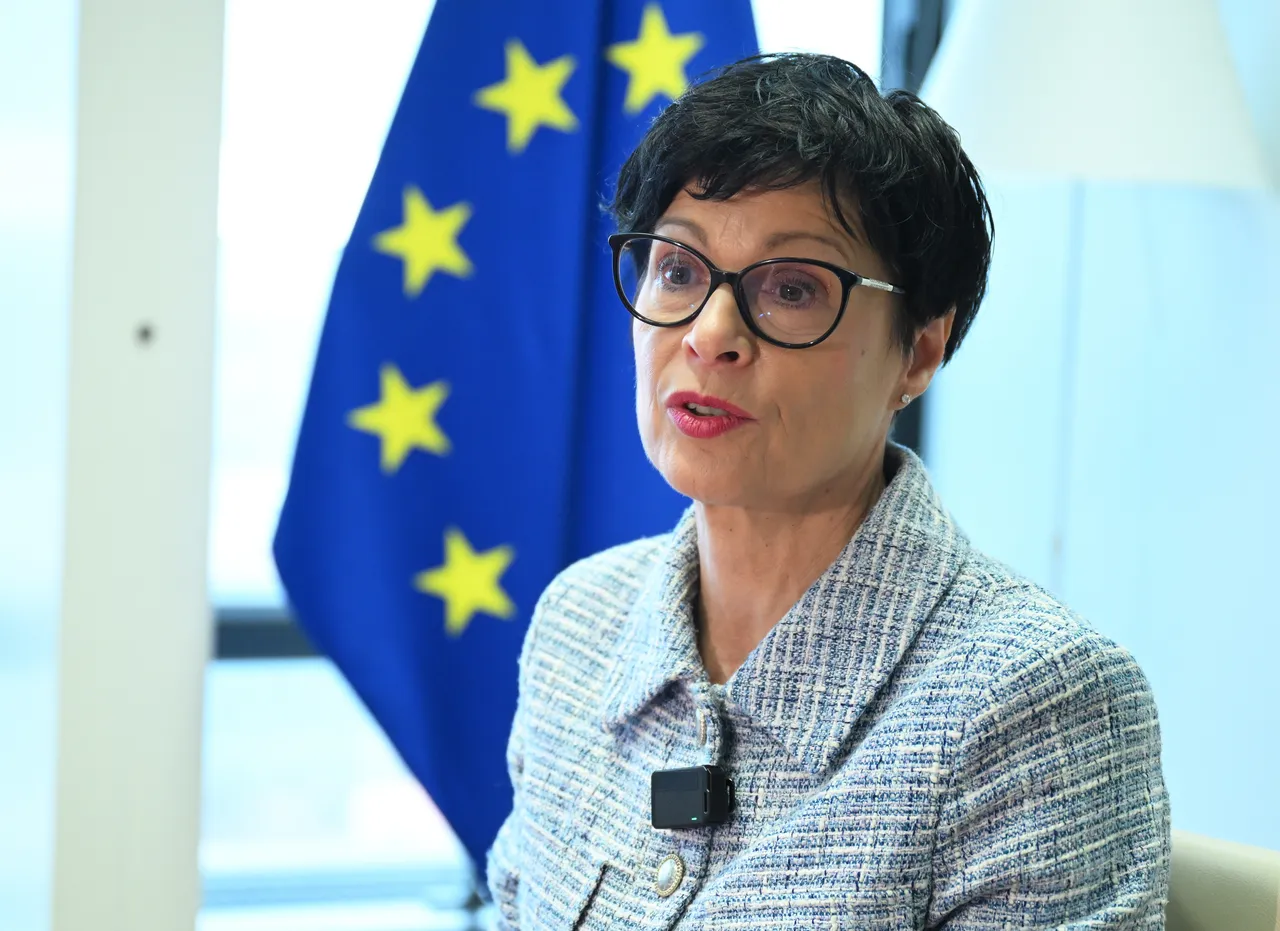
“humanitarian conflictsThe time has come to look at relations “with fresh eyes”, as “stronger partnerships between the EU and Türkiye would be win-win for all of us,” EU Commissioner for Enlargement Marta Kos has said.
In an exclusive interview with Anadolu ahead of her visit to Ankara on February 5-6, she said: “There is really more that connects EU and Türkiye than what is dividing us, and we really should work on this,” stressing that “our economies are very much interdependent.”
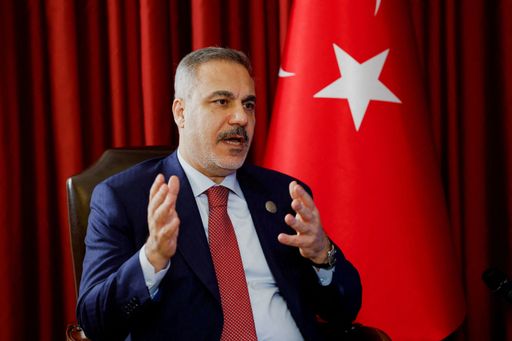
Kos said she is “very much looking forward” to her first official visit to Türkiye, and explained that she had “intense contacts” with her Turkish officials “since the first day" of her mandate, especially with Foreign Minister Hakan Fidan.
She asserted that her visit aligns with the approach of EU Commission President Ursula von der Leyen, who held talks with President Recep Tayyip Erdogan with the aim of opening a new perspective in the relations.
“We are really living in challenging times. The world is changing around us. We are seeing the return of imperial behavior as China, Russia, and the US are aggressively building their spheres of interest,” Kos said.
In the face of these geopolitical challenges, Kos urged strengthening cooperation, noting: “Our economies are very much interdependent. Whatever happens on the field of migration on each side is affecting the other side.”
Kos expressed hope that the Ukraine peace agreement would be signed soon to “change the realities in Europe and also especially in the Black Sea, where I see Türkiye as a very important partner already.”
Focusing on trust
Kos said her visit aims to build trust, stressing that “trust is getting nowadays more and more important” in both politics and business. She described Türkiye as the “heart” of the EU’s Connectivity Strategy, saying the bloc “can’t do this without Türkiye” as it seeks to strengthen links between Europe, Central Asia and the Caucasus.
She welcomed the return of the European Investment Bank to Türkiye, revealing that two renewable energy projects worth €100 million each ($118 million) will be signed in Ankara, calling them “the start” of deeper engagement. Kos added that the EIB, along with the EBRD and World Bank, would play a growing role in future renewable energy and connectivity projects.
To support this agenda, Kos will meet with Turkish Minister of Transport and Infrastructure Abdulkadir Uraloglu, and the Minister of Energy and Natural Resources Alparslan Bayraktar.
Impact of EU trade deals
Asked about the potential impact of recently signed trade deals with the South American trade bloc Mercosur and India on the EU’s Customs Union with Türkiye, Kos asserted that the agreement underpins the “attractiveness” of making a free trade agreement with the EU and its 450-million-strong market, despite “some people are doubting” the bloc’s geopolitical relevance.
She stressed that EU–Türkiye trade is “almost twice as much as our trade with Mercosur,” calling recent free trade deals “very important.”
Urging focus on the “bigger picture” amid global uncertainty, Kos said it will be “more and more important that we do business with reliable partners.” She said the EU should “make much more out of this trading relation,” including improving the Customs Union and removing remaining barriers.
“This needs to be our common project and both sides have to deliver,” Kos said, acknowledging that the Customs Union has not been updated for 30 years and that broader political developments, including Cyprus-related issues, will shape progress.
'Made in Europe' initiative cannot exclude Türkiye
The EU’s proposed “Made in Europe” initiative, which prioritises European companies in public procurement, is a response to changes in global trade and the erosion of World Trade Organization rules, EU official Kos said.
She argued that trade dependencies are increasingly being used as leverage and stressed that public spending should support companies that invest, innovate, and produce in Europe, calling it a matter of security.
Kos said discussions on the initiative are ongoing and emphasised that economic decisions must align with geopolitical interests, adding that this approach does not exclude Türkiye. However, she noted that further conditions need to be developed for Türkiye to participate in EU public procurements.
She welcomed the resumption of high-level EU–Türkiye dialogues and said she would meet Türkiye’s Treasury and Finance Minister Mehmet Simsek in Ankara, expressing hope that cooperation could expand to areas such as energy and transport once trust is further built.
EU membership perspective
Asked about Türkiye’s EU membership prospects, Kos said accession talks have been at a “standstill since 2018,” but stressed the bloc still “considers Türkiye as a candidate country.”
“I know that Türkiye has a very long democratic tradition and a strong civil society, and this is what we would like to strengthen,” Kos said, adding that this would help “build trust between the EU and Türkiye.”
She pointed to the “immense possibilities” of cooperation between the EU’s 450 million consumers and Türkiye’s population of more than 80 million, saying that renewed focus on democracy could unlock greater cooperation.
Kos also said progress in the accession process is shaped by both candidate countries and EU member states, and remains closely linked to broader regional and bilateral dynamics, including Cyprus issue.
Defence cooperation
Asked about Türkiye’s role in strengthening EU defence, Kos described the country as a “very important, reliable NATO partner” and the alliance’s second-largest member. She noted that Turkish drones played a “decisive role” early in the war in Ukraine, calling Türkiye “a kind of natural partner for Europe.”
“Under certain conditions, Turkish companies can already cooperate and be part of our rearmament programs,” she said, adding that she would “like to really see stronger involvement of Türkiye in the security in Europe.” However, she stressed that EU defence policy ultimately depends on member states, and said new Cyprus settlement talks present “a great opportunity” to improve cooperation further.
Visa liberalisation
Referring to the EU’s recently announced visa strategy, Kos underlined that due to last year’s high-level dialogue on migration, the EU could introduce the so-called cascade system, allowing Turkish citizens to more easily get multiple visas, and that “this is already showing the results.”
She highlighted that visa-free travel is one of the main topics in which she would like to see advancement, but warned that there are six conditions to be fulfilled.
Wowing to keep visa liberalisation on the “high priority list” during her visit to Ankara, she explained that connectivity does not only mean “hard power in the sense of trade and transport and energy.”
“When I speak about the connectivity, I would also like to stress the connections between people,” Kos asserted.