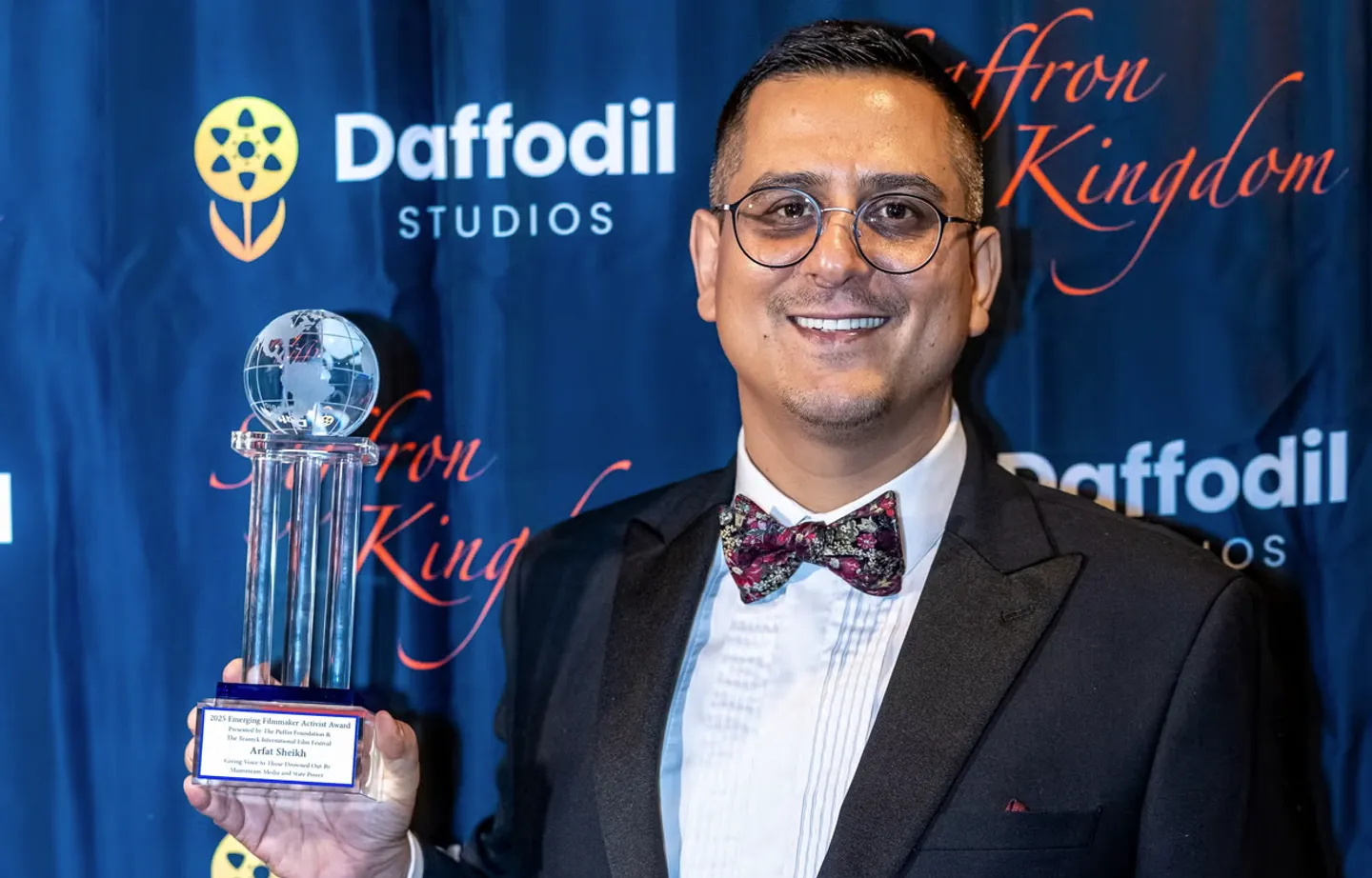
Award-winning Kashmiri filmmaker Arfat Sheikh has been released from US Immigration and Customs Enforcement (ICE) detention on bond after being detained on September 24, according to a statement by a campaign of his friends and relatives to free him.
Sheikh, whose work has explored conflict in his native India-administered Kashmir, was detained by ICE, part of the Department of Homeland Security, while coming off a plane from California at the Washington Dulles International Airport, the campaign said.
It said Sheikh's bond was granted on Tuesday and he was released on Thursday, adding that the deportation case against him continues.
The campaign said Sheikh, who lived in Alexandria, Virginia, entered the US in 2019 on a student visa to pursue graduate studies in film at Georgia State University and filed for asylum in 2020.
The campaign said he had a pending immigration application and was authorised to work and live in the US.
DHS said on Wednesday Sheikh was arrested on September 24.
It said Sheikh "legally entered the US on a temporary basis and illegally overstayed his lawful admittance." A pending application does not confer legal status in the US, DHS said, adding he will receive due process.
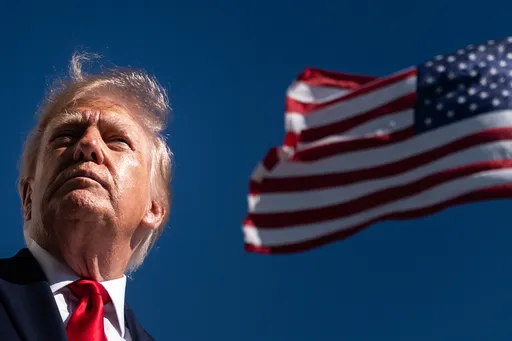
President Donald Trump's administration said in August it was working "to identify and revoke the non-immigrant visas of foreigners who have come to the US claiming to be short-term visitors, but then file for asylum to stay here permanently."
Trump has pursued an immigration crackdown and deportation drive that he says aims to improve domestic security.
Rights advocates say the crackdown has violated due process and free speech rights and created an unsafe environment, particularly for ethnic minorities, who have raised concerns about racial profiling.
Saffron Kingdom



Sheikh's first feature film, 2024's "Saffron Kingdom," won Best Feature Film at the Chicago Filmmakers Awards, the LA Film and Documentary Awards, the Melbourne Independent Film Festival and the Wake Forest Film Festival.
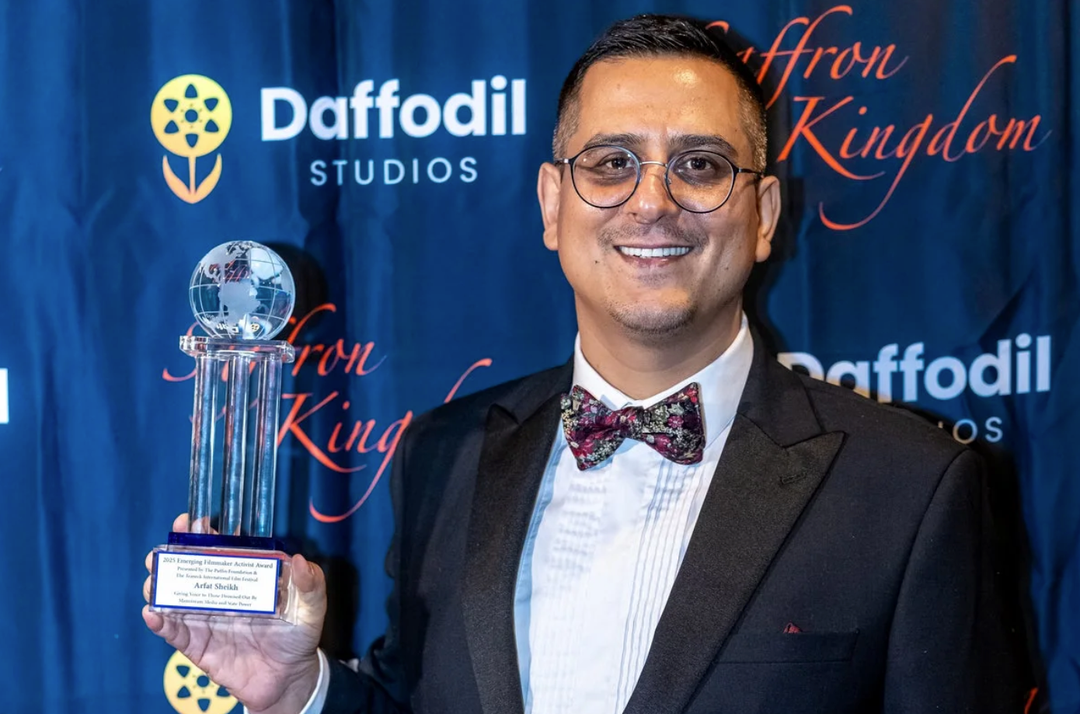
Sheikh, who hails from India-administered Kashmir, won the Emerging Filmmaker Activist Award at the Teaneck International Film Festival.
The film explored conflict in Kashmir through the journey of a family from Srinagar in India-administered Kashmir in the 1990s to Atlanta in 2019.
Muslim-majority Kashmir is claimed in full by both Hindu-majority India and Islamic Pakistan, but each control only part of it and have fought wars over the territory. India revoked Kashmir's constitutional autonomy and annexed it in August 2019.
A significant proportion of Muslim Kashmiris favour the right to self-determination as promised by several UN Security Council resolutions, seeking either full independence or accession to Pakistan.
In May 2025, India and Pakistan fought a brief war using missiles, fighter jets, drones and other weapons, which ultimately led to US involvement.
US President Trump helped broker a ceasefire during the military confrontation, an intervention later publicly praised by Pakistani Prime Minister Shehbaz Sharif, while India maintained that the truce was reached through direct bilateral military communications and that Trump had played no role in it.
Sheikh, who grew up in India-administered Kashmir during the 1990s, told TRT World in a 2024 interview that his film "Saffron Kingdom "was born from his desire to reclaim his people's narrative, who have often been negatively depicted by Indian cinema."
"This film is my way of breaking Bollywood's hegemony over our narrative. It's about debunking the lies they have been peddling for years," he said.
In the interview he recalled traumatic memories of being locked in a room with his family while the Indian military tortured his uncle.
His father, a renowned Kashmiri musician, was murdered while travelling to northern Indian state of Punjab. "His death was reported in newspapers, but each paper had its own version of events. We were not even given his body," he said.