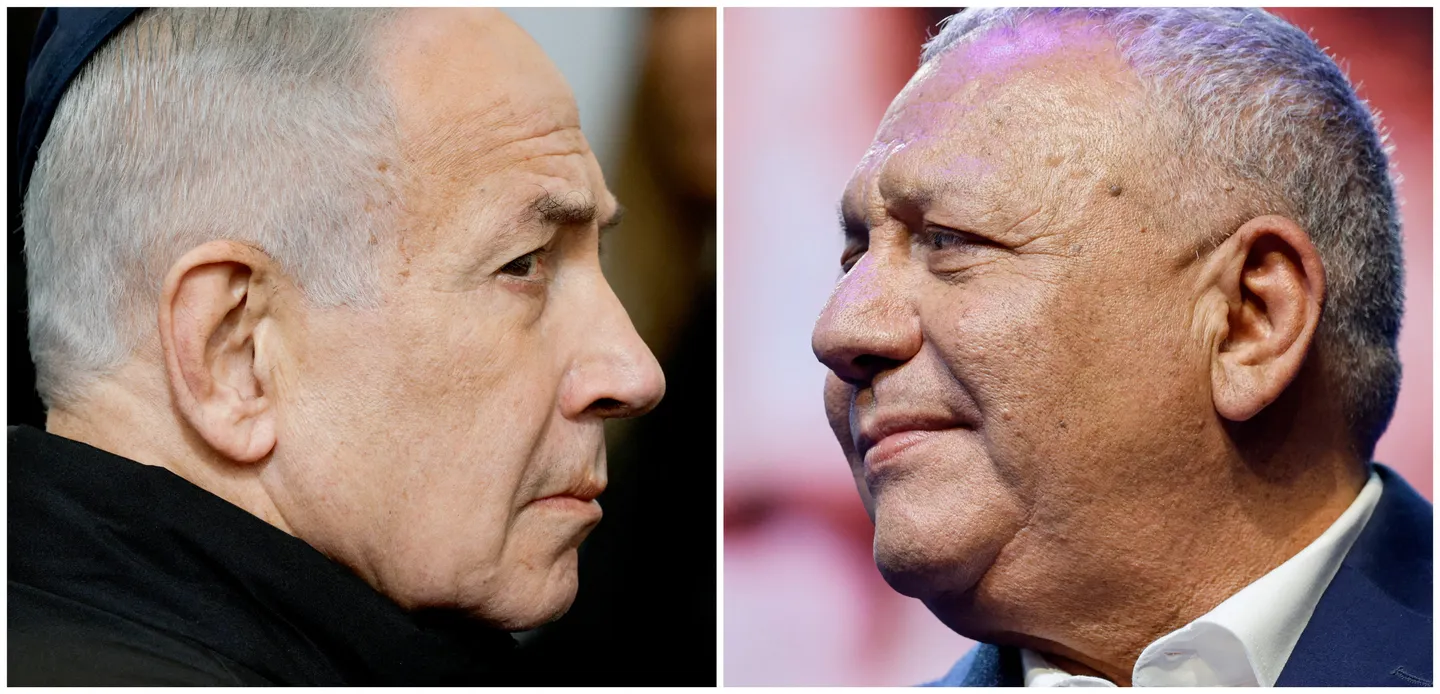
Gadi Eisenkot, who is tasked with forming the next Israeli government, has invited the right-wing Likud party of caretaker prime minister Benjamin Netanyahu for coalition talks, his party said.
Eisenkot's centrist Yashar party said on Saturday that the talks, scheduled to begin on Sunday, reflected a "genuine commitment to forming the broadest possible government".
Former military chief Eisenkot has until next month to form a government to replace Netanyahu, after the October election failed to deliver a clear majority for either bloc.
Saturday's announcement comes as Eisenkot's wide-ranging camp faces divisions on whether to forge alliances with the ultra-Orthodox parties, or the Arab-majority lists, or whether to form a national unity government with Netanyahu's bloc.
"In an effort to pursue every option for forming a new government, Yashar Chair Gadi Eisenkot has instructed the party's negotiating team to invite its Likud counterparts to a marathon series of talks beginning with the meeting already scheduled for tomorrow," the party said in a statement.
Former prime minister Naftali Bennett, an important figure in Eisenkot's camp, on Saturday called for a "Zionist unity government headed by Eisenkot" and said his party would refuse to join up with Netanyahu or his bloc.

Netanyahu trying hard for unity govt
Netanyahu has been pushing hard for a national unity government, which he says is needed to guarantee Israel's “security”.
Shortly after Eisenkot's announcement, Likud laid out its position on forming such a government with Eisenkot's bloc, including demands to halt "all personal attacks and incitement" as well as political "boycotts" against Netanyahu and the government.
Eisenkot has indicated he would be open to forming a government with members of Netanyahu's Likud, but has previously ruled out serving in a government led by Netanyahu himself.
Likud also called for a joint declaration committing to a unity government including "all parties that support the existence of the State of Israel as the nation-state of the Jewish people" and without the participation of Arab parties.
Likud proposed a set of guidelines for a unity government including an agreement that Israel is the nation-state of the Jewish people, a rejection of Palestinian statehood, the maintenance of Israel's "security zones" in Syria, Lebanon and Gaza, and an arrangement on the issue of ultra-Orthodox conscription into the military through a "broad agreement" with the community's leaders.
On Friday, Eisenkot vowed not to let coalition-building talks drag on and said that he would be prepared to put forward a minority national emergency government for a parliamentary vote should efforts to create a broad-based government fail.