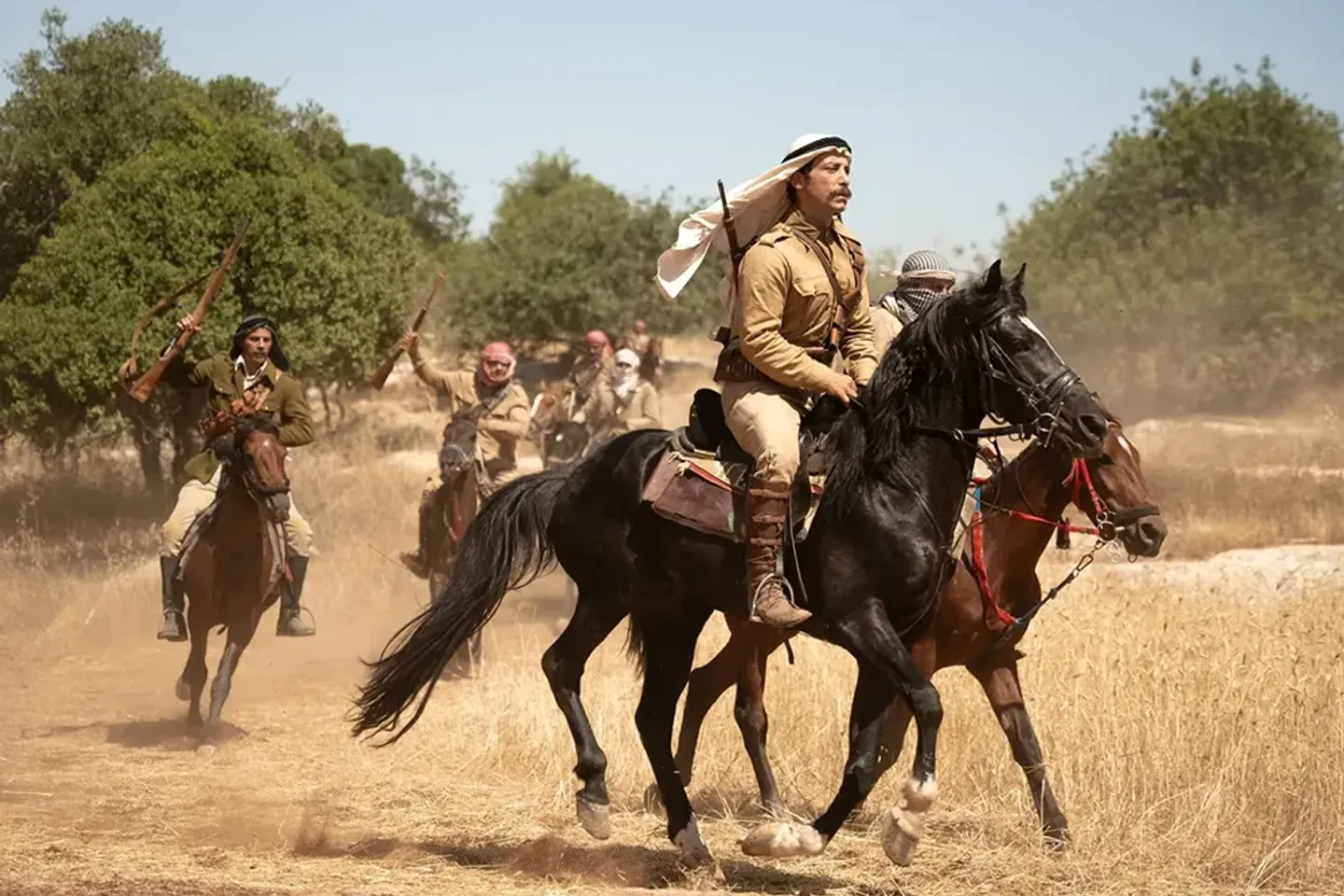
 Nagihan Haliloğlu
Newsletters and the film grapevine had been teasing audiences about Annemarie Jacir’s new film Palestine 36 since it wrapped production, and the buzz increased after it premiered in Toronto in September.
The film is a historical drama on a grand scale, bringing together the resources of the British Film Institute, Doha Film Institute and TRT Sinema, among others.
Palestine 36 finally made it this side of the Atlantic and had its first public screening on October 17 as part of the London Film Festival. Tickets were sold out as soon as they went on sale.
Hardened Palestine film fans who queued up outside the Mayfair Curzon for last-minute tickets had the privilege of seeing the film’s stars. Husam Zumlot, the newly recognised Palestinian state’s ambassador to the UK, filed past them to witness this cinematic event.
The screening began with welcoming speeches from Palestine 36’s makers, followed by several minutes of applause.
When the film started, the first caption read “1936, The Year You Were Born”, the Palestinian filmmaker clearly telling the story of someone dear to her.
The caption felt like she was also addressing the audience, saying it’s a year you too could have been born in, you too could easily have been subjected to the same twists of history.
Palestine 36 takes place in Ramallah, the town and a fictional village called Basma.
The film is interlaced with colourised archival footage that shows the coming of the European Jews, the building of the settlements, and the destruction of Palestinian villages.
In that sense, Jacir is fleshing out the camera-shy faces we are used to seeing in black and white reels, people who witnessed the theft of their land, and who tried to resist it to set an example for generations to come.
The film starts with a scene of the first radio broadcast of the British Mandate in Palestine.
We are introduced into the modern world of the 1930s, the joys of easy communication, women’s skirt suits and exciting journalism.
This aspect of the story focuses on Khuloud (Yasmine Al Massri) and her husband Amir (Dhafer L'Abidine), who run a kind of salon for the Anglo and Arabophone chattering classes of Ramallah, with Khuloud representing the “new woman” dressed in men’s clothes and writing political columns with a male alias.
‘A new land registry system’
There are always English officers present, and to the Turkish audience, these scenes of “explaining ourselves to the British” will be very familiar, especially from the work of Halide Edib, who was writing during the British occupation of Istanbul a decade earlier.
These scenes of polite society alternate with scenes from the village, and the go-between is Yusuf (Karim Daoud Anaya), who speaks perfect English.
He brings news and newspapers from the town, and we see the children comment on the picture of the King of England, who “has to leave the throne because he is in love with a divorcee”.
The main novelty of the times for the villagers, however, is the settlers in short shorts, building settlements right next to their land and surrounding them with barbed wire.
Soon, an English official (Billy Howlie) pays a visit to the village and informs the elders that England is introducing a new land registry system, “replacing the Ottoman donum”.
The word “replacement” has rarely sounded so sinister in a scene in a cinema. Just as the viewers know this is the beginning of the end, the villagers realise at once that this replacement of the Ottoman system will be used in favour of the European Jewish settlers.
Jacir is depicting a moment when, on the surface of it, the settlements could have gone a different way. There is a very telling scene where the Palestinian landowners sit at a table and discuss whether the Jews are not good for business in Palestine, and that they pay good money for the land.
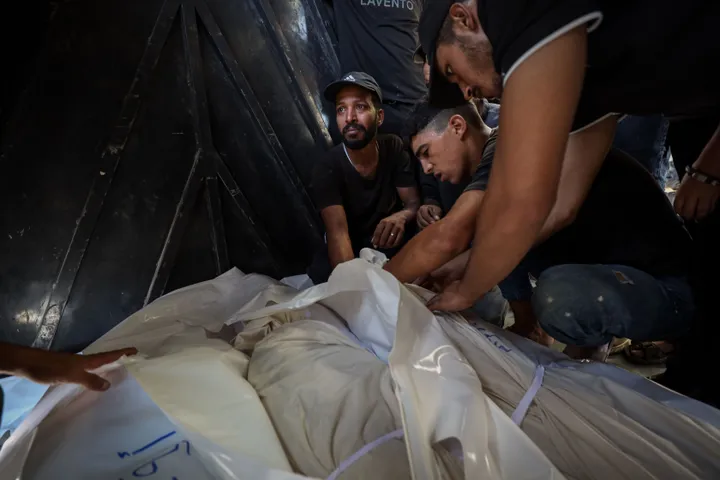
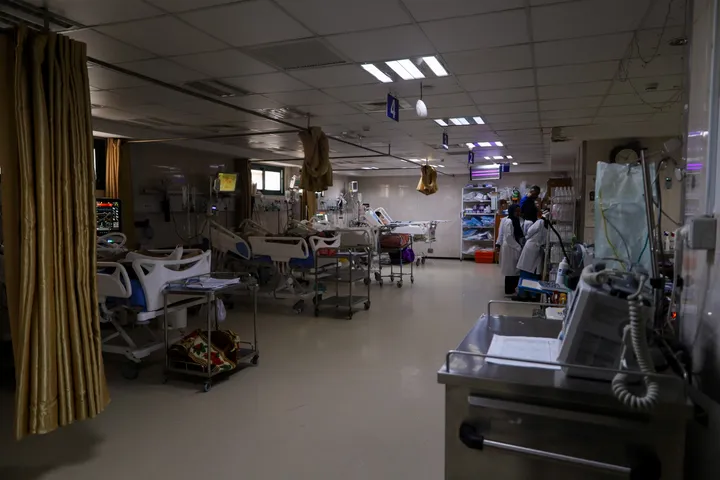

The villagers refer to the settlers often as “company”, referencing the American and European Jewish settlement companies that still sell land that belongs to Palestinians in synagogues in the Western world.
In our effort to understand how things came to this pass, with this film, Palestinian landowners join the ranks of the villains, somewhat conforming to the common Turkish historical view of events.
The Turks get a name check when the villagers realise that the settlers are not to be reasoned with, and everyone tries to contribute to the resistance.
One family takes out their antique-looking, beautiful, inlaid gun, calling it “jamal turki”, a Turkish beauty from the olden days.
‘Not another Ireland’
Jacir is careful not to centre Jewish settler violence against Palestinians, as we have seen enough of that to last us a lifetime.
She focuses instead on the callousness of the English officer class who “don’t want another Ireland”, and who keep convening under their conspicuous crusader-inspired Kingdom of Jerusalem banners.
At times, the evil of the English soldiers feels caricature-like, but then one remembers all the caricature-like evil photos and videos Israeli soldiers have been sharing on social media.
Reminding the viewer that it did not start on October 7, 2023, Jacir shows how the villagers who are harassed by the settlers are themselves declared criminals by the English military police.
“For the safety of the settlers”, the English military randomly searches civilians – women, children, and priests – scenes that are all too familiar today and which remind us that this practice is an English colonial legacy that has been taken to its evil extreme by the Israelis.
Jacir makes sure the audience understands that Christians of Palestine are seen just as alien to the English as its Muslims.
One story thread follows the fortunes of a priest and his son – and gives them one of the pivotal scenes in the film that feels like a coda to the Palestinian struggle, about how resistance and patience, sumud, will always trump pain.
As the English increase their oppression, not only are the men who went to talk to the settlers “without the English meddling” are arrested, but the whole village is lined up and houses destroyed – the current Israeli modus operandi to the letter.
The other detail that reminds the viewer of the British colonial mode of operation is the news that the Arab leaders have been sent to the Seychelles, just like Turkish MPs had been sent to Malta.
This English legacy was one of the questions that were raised during the Q-and-A session after the film. Jacir was asked how it felt to show Palestine 36 to an English audience that knew so little about the British Mandate in Palestine.
In her answer, Jacir highlighted how the British Film Institute and several friends in the UK have been very supportive from the beginning: This support is evidenced in the British actors she has been able to enlist for the project, like Jeremy Irons, Liam Cunningham and Billy Howlie.
There is a point in the film when the English officer baddie warns Billy Howlie’s character about being on “the right side”, for him, the Zionist side of history.
The reception of Palestine 36 shows that more and more people are waking up to the fact that the “right side” is always the side of the indigenous people, and that colonial projects are destined to fail – however long they may last.