 Ata Şahit
The wave of protests that erupted in Tehran in late December and rapidly spread across Iran marks not merely another episode of economic unrest, but a qualitatively distinct phase in the country’s recurring cycle of social and political contestation.
While triggered by economic collapse, the protests have quickly evolved into a broader challenge to political legitimacy, unfolding in a post-war context marked by eroding social patience, intensified elite fragmentation, and heightened sensitivity to foreign intervention.
Iran has experienced multiple protest waves over the past eight years, each leaving a lasting imprint on state-society relations.
The 2019–2020 protests, sparked by the abrupt reintroduction of fuel rationing and a sharp rise in gasoline prices, were rooted primarily in material grievance and repression. The 2022–2023 uprising following the death of Mahsa Amini, by contrast, centred on identity, civil liberties, and systemic injustice.
The current protests do not fit neatly into either category. Instead, they combine economic collapse with overt political demands in a manner that signals a deeper crisis of confidence in the governing order.
The immediate catalysts were familiar: the rapid depreciation of the national currency, structural fragilities in domestic markets, and a long-deepening cost-of-living crisis.
Yet the speed with which economic grievances became intertwined with explicit political slogans suggests that the protests have moved beyond a reactive economic reflex. What is now at stake is not merely livelihood, but legitimacy itself.
The initial epicentre of this new protest wave was Tehran’s Grand Bazaar and its associated commercial networks—one of the key nodes of Iran’s economic system.
Historically, the Grand Bazaar has played a decisive political role, most notably during the 1979 Revolution, not simply as an economic actor but as a strategic social space in which crises of political legitimacy became publicly articulated.
Collective actions such as shop closures, strikes, and passive resistance have long signalled moments when confidence in the political system’s capacity to manage the economy was eroding.
In this respect, the first mobilising actors were merchants, small business owners, and trade networks operating in import-dependent sectors that were directly exposed to the currency shock.
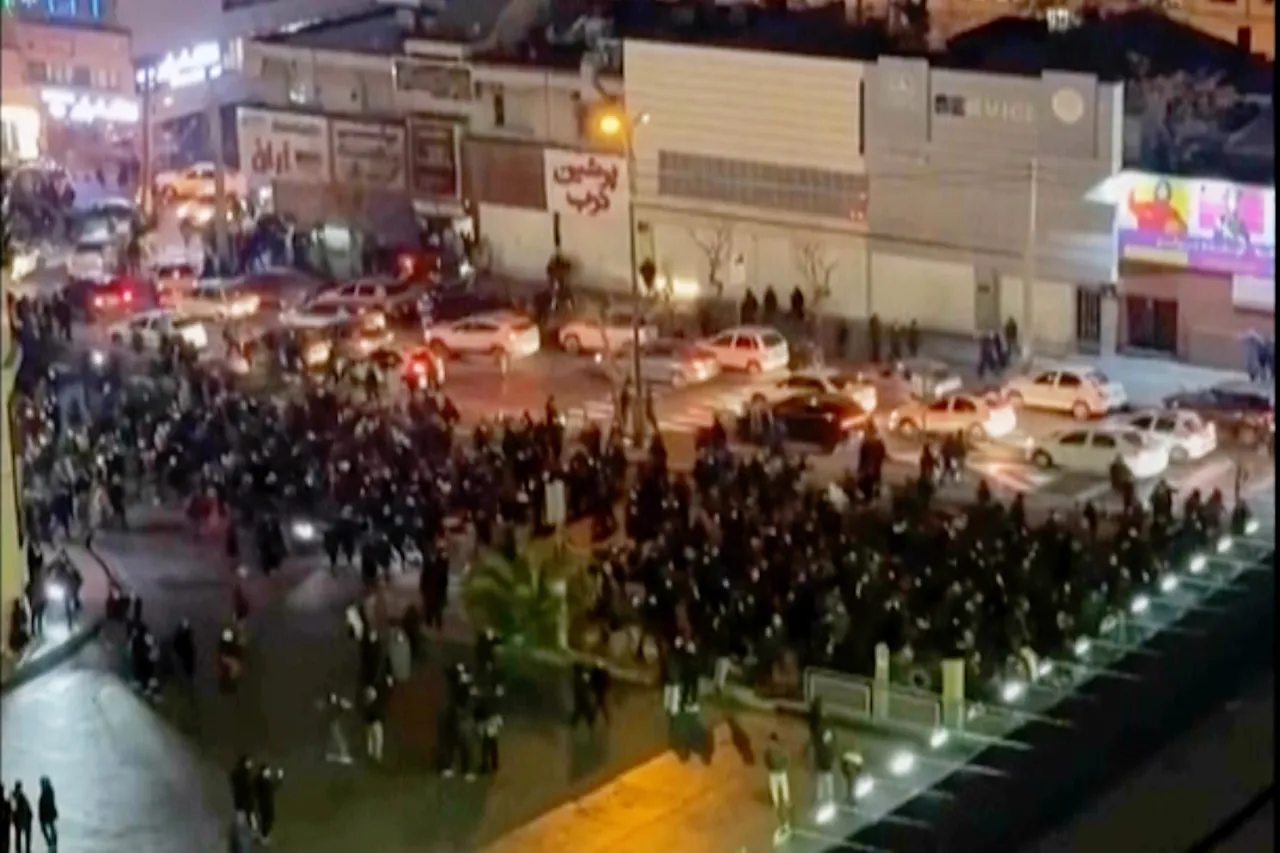
By December 29, 2025, the protests expanded markedly in both spatial and discursive terms. What began as bazaar-based actions confined to arcades and commercial passages spilled onto Tehran’s main arteries and symbolic public spaces, crossing the boundaries of economic protest and reaching a threshold at which political demands became increasingly visible.
A day later, the protests reached a critical turning point as demonstrations assumed a nationwide character. On December 30, street protests were held not only in Tehran but also in major cities such as Shiraz, Kermanshah, Isfahan, Ahvaz, and Karaj.
Universities and students entered the protests as active participants, significantly broadening the movement’s social base. Their involvement enabled economic grievances to converge with demands for political freedoms and representation, reinforcing the protests’ systemic dimension.
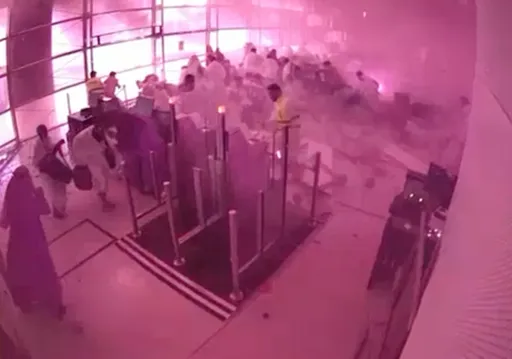
On the same day, footage circulated alleging that security forces had opened fire on protesters in certain areas. With the reported loss of life, the protests crossed a crucial threshold, shifting from a low-intensity sphere of social tension into an overt security crisis.
The protest wave acquired an entirely new dimension on the night of January 8, when demonstrations transformed into openly radical actions directed against the political system itself.
At around 8pm local time, protests erupted in at least 46 cities across 21 provinces, where radical slogans were chanted against Iran’s Supreme Leader, Ali Khamenei. This escalation raises a central question: what distinguishes this protest wave from earlier cycles of contention in Iran?
Trump’s explicit support for the protesters
The protests have generated intense debate not only through domestic dynamics but also through international reactions and foreign policy discourses.
As demonstrations expanded, both Western statements and the rhetoric of Iran’s political and security elites hardened, with the unrest increasingly framed as a struggle between internal order and external intervention.
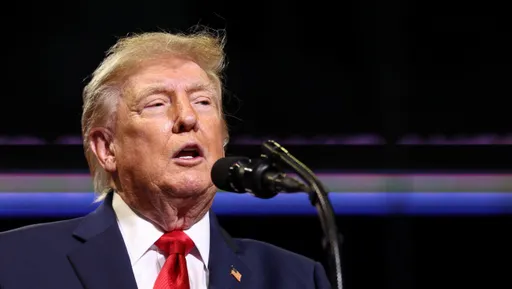
In this context, Donald Trump stated in a post on his Truth Social account on January 2 that “if Iran shoots and violently kills peaceful protesters, which is their custom, the United States of America will come to their rescue.” He characterised such practices as customary and signalled that the United States stood ready to respond.
Trump reiterated a similar stance on January 5 during remarks aboard Air Force One, noting that developments in Iran were being closely monitored and warning that Tehran would face a “strong response from the United States” if protesters were killed.
Despite half a century of hostility in Iran–US relations, no American president has previously articulated the rhetoric of “saving the Iranian people” in such explicit terms. For Iran’s governing elites, this language inevitably evokes collective memories of US interventions in Iraq and Afghanistan.
According to claims circulated by Iranian and international human rights and monitoring groups, during the first twelve days of the protests, demonstrations occurred at least once in over 100 cities across all 31 provinces, with at least 40 people reportedly killed and more than 2,000 detained by the night of January 8.
Should the protests continue and casualties rise, the course Trump might pursue remains uncertain.
Divergent voices among Iranian leaders
Within Iran’s domestic political arena, official responses to the protests have been framed predominantly through a security-oriented lens.
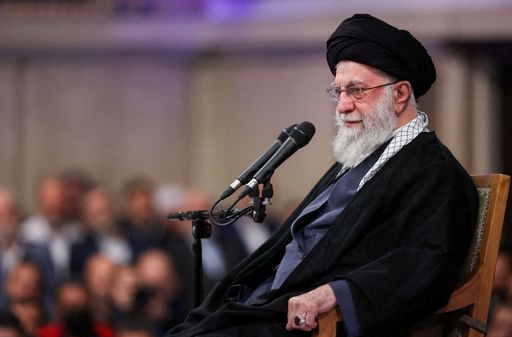
Ali Khamenei has tended to reduce the demonstrations to livelihood-related demands voiced by bazaar merchants and market traders, drawing a clear distinction between what he describes as legitimate protest and actions he labels as disorder.
By stating that “our interlocutor is the one who protests, but there is no point in engaging with those who create chaos; their place is clear,” Khamenei has explicitly delineated the boundaries of the state’s response.
In a speech delivered on January 9, he characterised the protests of January 8 as acts carried out by vandals who, he claimed, set fire to their own buildings in order to please the President of the United States. He had issued similar remarks in previous days, reiterating that “there is no point in engaging with those who create chaos; their place is clear.”
The judiciary’s stance has been even more uncompromising. Gholam-Hossein Mohseni-Ejei announced on the ninth day of the protests that no leniency would be shown toward detainees, instructing that case files be completed swiftly and verdicts issued without delay.
Ejei justified this hardening stance by pointing to expressions of support from the United States, Israel, and Donald Trump, presenting foreign reactions as evidence of the unrest’s underlying drivers.
By contrast, President Masoud Pezeshkian has adopted a more conciliatory tone, emphasising restraint and tolerance toward the public while incorporating elements of self-criticism.
In this vein, Mohammad Jafar Ghaempanah, Vice President for Executive Affairs, stated on January 7 that Pezeshkian had instructed security forces to avoid heavy-handed measures against protestors, provided national security was not jeopardised.
What ultimately shapes these divergent responses is Iran’s distinctive state architecture. Within the existing constitutional and de facto order, the armed forces and security apparatus fall directly under the authority of the Supreme Leader, while the presidency lacks meaningful executive power in these domains.
As a result, particularly during periods of crisis, conciliatory rhetoric from the executive branch rarely translates into institutional restraint.
Another notable feature of the current protest discourse is the renewed prominence given to Reza Pahlavi by Israel-affiliated circles.
Claims circulated in Israel-affiliated media suggesting that the protests are unfolding under Pahlavi’s leadership point less to on-the-ground realities than to efforts to sustain the psychological and political infrastructure of regime change scenarios.
Reza Pahlavi does not constitute an inclusive political figure within Iranian society; his resonance is largely confined to small diaspora groups.
He lacks both an inclusive leadership profile capable of bridging Iran’s diverse social segments and the organisational capacity required to manage periods of acute crisis.
Nevertheless, continued investment in his symbolic role by Israel-aligned actors reflects externally oriented strategic calculations rather than Iran’s internal political dynamics.
In this context, Pahlavi functions less as a viable alternative leader than as a presentational instrument within regime-change narratives.
Post-War psychology
One of the principal features distinguishing the current protests from earlier waves is their emergence in the aftermath of the twelve-day Iran–Israel war, in June.
During that conflict, Israel-aligned media outlets attempted to encourage Iranians to take to the streets, but these calls failed to gain traction.
The outcome was widely interpreted as evidence of a consolidated domestic front and reinforced state-society solidarity.
In the immediate post-war period, Iranian authorities adopted a relatively softer rhetorical posture, emphasising national. This temporary consolidation, however, proved unsustainable. Structural weaknesses in governance, persistent economic constraints, and unmet expectations for reform have once again generated widespread despair and anxiety about the future.
Notably, warnings about these risks have emerged not only from opposition circles but also from within the system itself.
Former presidents Hassan Rouhani and Mohammad Khatami, alongside President Pezeshkian, have each—albeit in differing tones—highlighted the societal consequences of a deepening governance crisis.
In this context, the ongoing protests may be interpreted, from Israel’s perspective, as an indication that the conflict with Iran has not effectively ended and that a new arena of internal vulnerability has emerged within the country, thereby placing Iran at a relative disadvantage.
In conclusion, the protests now unfolding in Iran should be understood neither as a fleeting episode of social unrest nor as an imminent existential threat to the state.
Rather, the decisive factors lie in the rapid erosion of social patience in the post-war period, the renewed salience of perceptions of external intervention, and a pervasive lack of confidence in the state and political system’s capacity for reform.
Taken together, these elements suggest that Iran has entered a phase of domestic political turbulence characterised by heightened fragility in the period ahead.