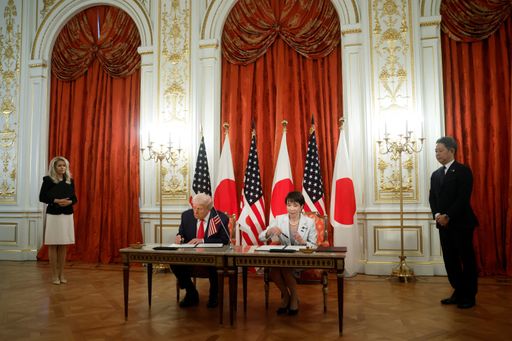
President Donald Trump is scheduled to host leaders from five Central Asian countries at the White House as he intensifies efforts to secure rare earth metals, which are essential for high-tech devices, including smartphones, electric vehicles, and fighter jets.
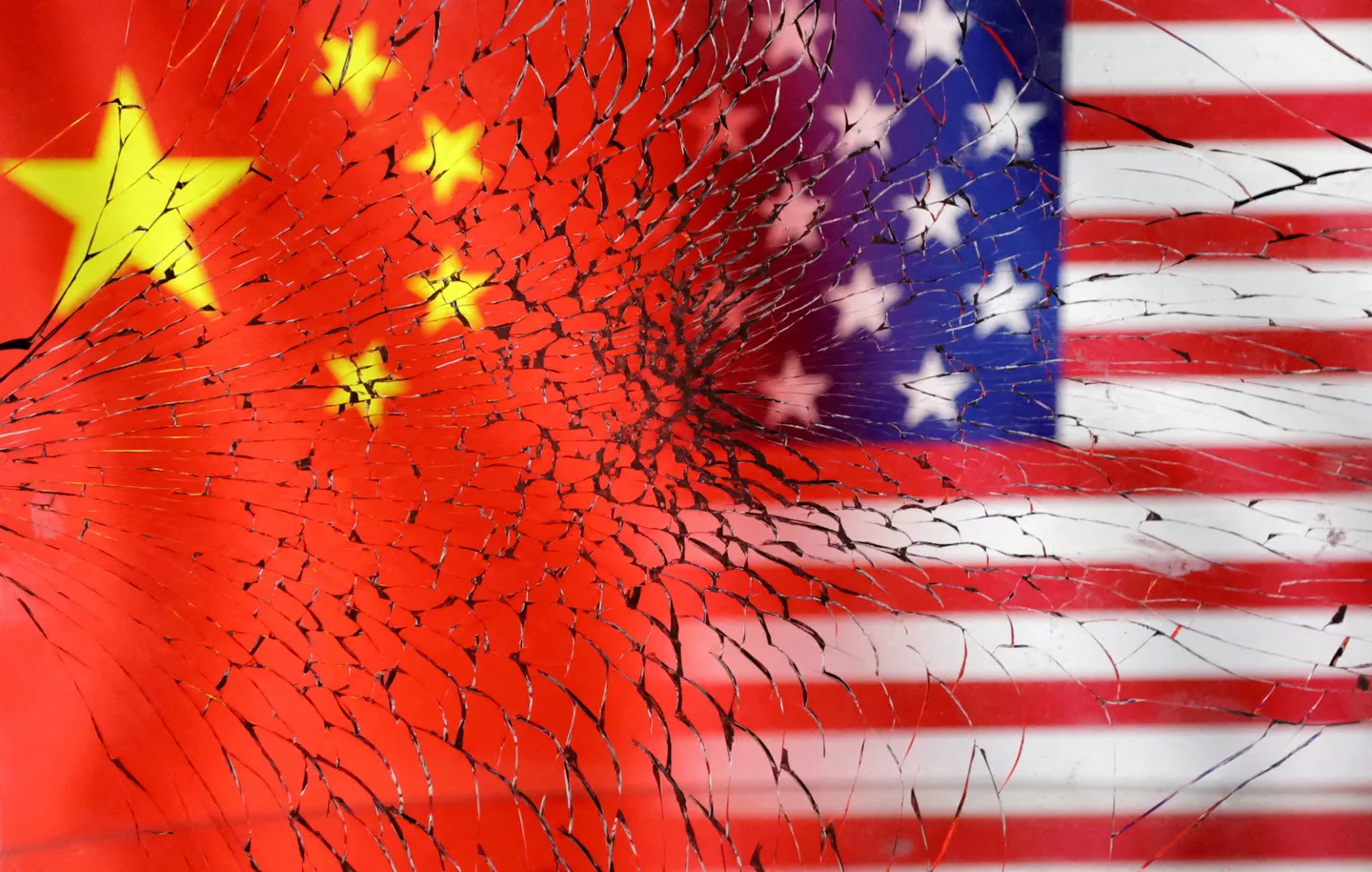
Trump and officials from Kazakhstan, Kyrgyzstan, Tajikistan, Turkmenistan, and Uzbekistan will attend an evening summit and dinner on Thursday. This follows Trump's achievement of a temporary detente with Chinese leader Xi Jinping regarding disagreements over the export of rare earth elements, a significant point of contention in their trade negotiations.
Earlier last month, Beijing expanded export restrictions on vital rare earth elements and magnets. However, after discussions between Trump and Xi in South Korea the previous week, China announced a one-year delay in implementing these new restrictions.
Washington is now exploring alternative strategies to bypass China for critical minerals. China currently accounts for approximately 70 percent of global rare earth mining and controls about 90 percent of the world's rare earths processing.
Central Asia possesses substantial reserves of rare earth minerals and produces roughly half of the world’s uranium, which is crucial for nuclear power production. However, the region requires significant investment to further develop these resources.
Central Asia's critical mineral exports have historically favoured China and Russia. For instance, in 2023, Kazakhstan exported $3.07 billion in critical minerals to China and $1.8 billion to Russia, compared to $544 million to the US, according to trade data from the Observatory of Economic Complexity, an online data platform.
A bipartisan group of senators introduced legislation on Wednesday to repeal Soviet-era trade restrictions. Some lawmakers believe these restrictions are hindering American investment in the Central Asian nations, which gained independence following the collapse of the Soviet Union in 1991.
Republican Senator Jim Risch of Idaho, chairman of the Senate Foreign Relations Committee and a sponsor of the legislation, stated, "Today, it’s not too late to deepen our cooperation and ensure that these countries can decide their own destinies, as a volatile Russia and an increasingly aggressive China pursue their own national interests around the globe at the cost to their neighbours. The United States offers Central Asian nations the real opportunity to work with a willing partner, while lifting up each others' economies."
The grouping of countries, known as the "C5+1," has primarily focused on regional security.






C5+1 summit
Secretary of State Marco Rubio welcomed the Central Asian leaders at the State Department on Wednesday to commemorate the 10th anniversary of the C5+1 and to promote the potential for expanding the countries' economic ties with the US.
Rubio remarked, "We oftentimes spend so much time focused on crisis and problems – and they deserve attention – that sometimes we don’t spend enough time focused on exciting new opportunities. And that’s what exists here now: an exciting new opportunity in which the national interests of our respective countries are aligned."
Deputy Secretary of State Christopher Landau and the US ambassador to India, Sergio Gor, who also serves as President Donald Trump’s special envoy to South and Central Asia, recently visited Kazakhstan and Uzbekistan to prepare for the summit.
Administration officials have stated that deepening the US relationship with these countries is a priority, a message they have conveyed to the Central Asian officials.
Gor told the Central Asian officials on Wednesday that the president's "commitment to this region is that you have a direct line to the White House, and that you will get the attention that this area very much deserves."
In 2023, Democratic President Joe Biden met with the five leaders on the sidelines of the UN General Assembly. This marks the only other instance of a sitting president participating in a C5+1 summit.