Africa has emerged as one of the world’s most consequential strategic arenas — not only because of its economic promise, but because it sits at the intersection of global trade routes, migration dynamics, counterterrorism, and the competition over infrastructure and connectivity.
In this environment, old frameworks that reduce external engagement to “aid” or “investment” miss the deeper question: What kind of partnership actually strengthens institutions, expands public services and helps societies withstand persistent security threats?
Somalia offers a clear answer. Over the past decade, Türkiye has demonstrated a distinctive approach that combines development, diplomacy and security cooperation into a coherent strategy.
In a world where international rules are increasingly contested, and many external actors treat fragile states as transactional spaces, Ankara has pursued something different: sustained, on-the-ground engagement designed to expand state capacity, reinforce trust and hope through service delivery, and assist Somalis in building the institutional foundations for long-term stability.
That model deserves attention as a practical blueprint of how an emerging global actor can contribute to peace, institutional resilience and regional stability in a multipolar order.
Why Somalia matters
Africa today is not merely a theatre for competition; it is a continent of agency. Governments across the region are diversifying partnerships, seeking reliable allies that can deliver tangible results.
In the Horn of Africa, where security threats and economic opportunities coexist, demand for credible partnerships is especially high.
Somalia stands at the centre of this strategic geography. Somalia’s geostrategic significance is closely linked to its location along the Horn of Africa, bordering the Gulf of Aden and the Indian Ocean, near one of the world’s busiest maritime corridors.
The country sits adjacent to the Bab el-Mandeb Strait, a critical chokepoint connecting the Red Sea to the Arabian Sea and serving as a gateway to the Suez Canal trade route.
It has faced protracted conflict, institutional fragility, and extremist threats - affecting maritime security, trade continuity and broader regional equilibrium.
Yet it is a country with clear national aspirations: functional institutions, improved public services, and a security architecture capable of protecting citizens and enabling economic life.
Türkiye’s engagement aligns directly with these priorities. Rather than approaching Somalia as a single-issue file, Türkiye has worked across multiple domains simultaneously — precisely because Somalia’s challenges are interconnected.
In a challenging context, security is not produced by force alone.
This is reinforced when citizens can access healthcare, education, municipal services, and basic infrastructure — and when the state is seen not as an abstract authority but as a provider of reliable public goods.
Türkiye’s Somalia strategy reflects this reality.
These measures do more than address urgent needs. They contribute to a deeper objective: strengthening state capacity through continuous service delivery and visible institutional functionality.
Presence, partnership and delivery
Türkiye’s engagement with Somalia is also defined by its approach. Unlike models that rely heavily on remote management, Türkiye has sustained a strong on-the-ground diplomatic presence and direct partnership with Somali institutions.
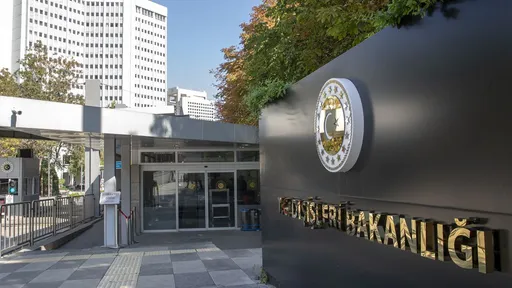
It maintains a substantial diplomatic presence in Mogadishu, facilitating coordination across development, security, and institutional cooperation.
This operational proximity is visible in concrete ways. The Somalia–Türkiye Training and Research Hospital in Mogadishu is structured as a joint facility, integrating Somali medical personnel and transferring managerial capacity rather than functioning as a detached aid enclave.
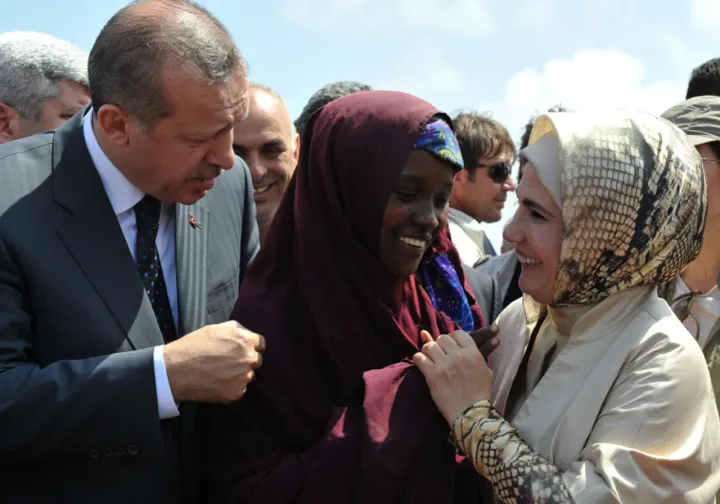
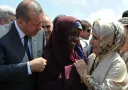
During humanitarian emergencies in 2011, the Turkish Red Crescent and Türkiye’s Disaster and Emergency Management Authority mobilised through pre-established logistical and institutional networks, demonstrating how an embedded presence enhances rapid response and reinforces public confidence.
In the education domain, the Türkiye Maarif Foundation’s structured schooling initiatives, alongside scholarship pathways in Türkiye, contribute to long-term human capital formation.


Somali graduates of Turkish universities are increasingly part of a new professional generation whose transnational experience is strategically important for Somalia’s future governance and institutional depth.
At the same time, Türkiye has complemented these efforts with security-sector capacity-building.
Through its training infrastructure in Mogadishu, Türkiye has worked to professionalise Somali security forces and support the development of a national security architecture.
Training of Somali forces, commando brigades, and special police units is conducted within Somali command structures, with a focus on professionalisation and institutional coherence.
The restoration and sustained operation of direct air links between Mogadishu and Istanbul by Türkiye’s national flag carrier, Turkish Airlines, reconnected Somalia to global markets and humanitarian supply chains at a time of relative isolation.
Cooperation in the management of Mogadishu’s port and airport has supported operational continuity while contributing to Somali public revenue frameworks.
More recently, bilateral cooperation has extended to offshore energy exploration activities conducted in coordination with Somali authorities and within Somalia’s recognised maritime jurisdiction.
The deployment of Turkish seismic survey and drilling vessels reflects a technical partnership aimed at assessing potential hydrocarbon resources under Somali sovereignty.
While exploration remains a long-term, capital-intensive process, such cooperation can enhance fiscal capacity, strengthen institutional oversight in the maritime domain, and contribute to economic self-sufficiency.
Taken together, Türkiye’s approach reflects a policy principle that is often overlooked in fragile environments: stability is not produced through episodic intervention, but through sustained partnership that reinforces sovereignty, strengthens institutional capacity and supports nationally anchored development trajectories.
Leadership diplomacy: The Ankara Declaration
Türkiye’s contribution in the region is not limited to development and security cooperation. Ankara has also demonstrated diplomatic leadership in managing regional tensions.
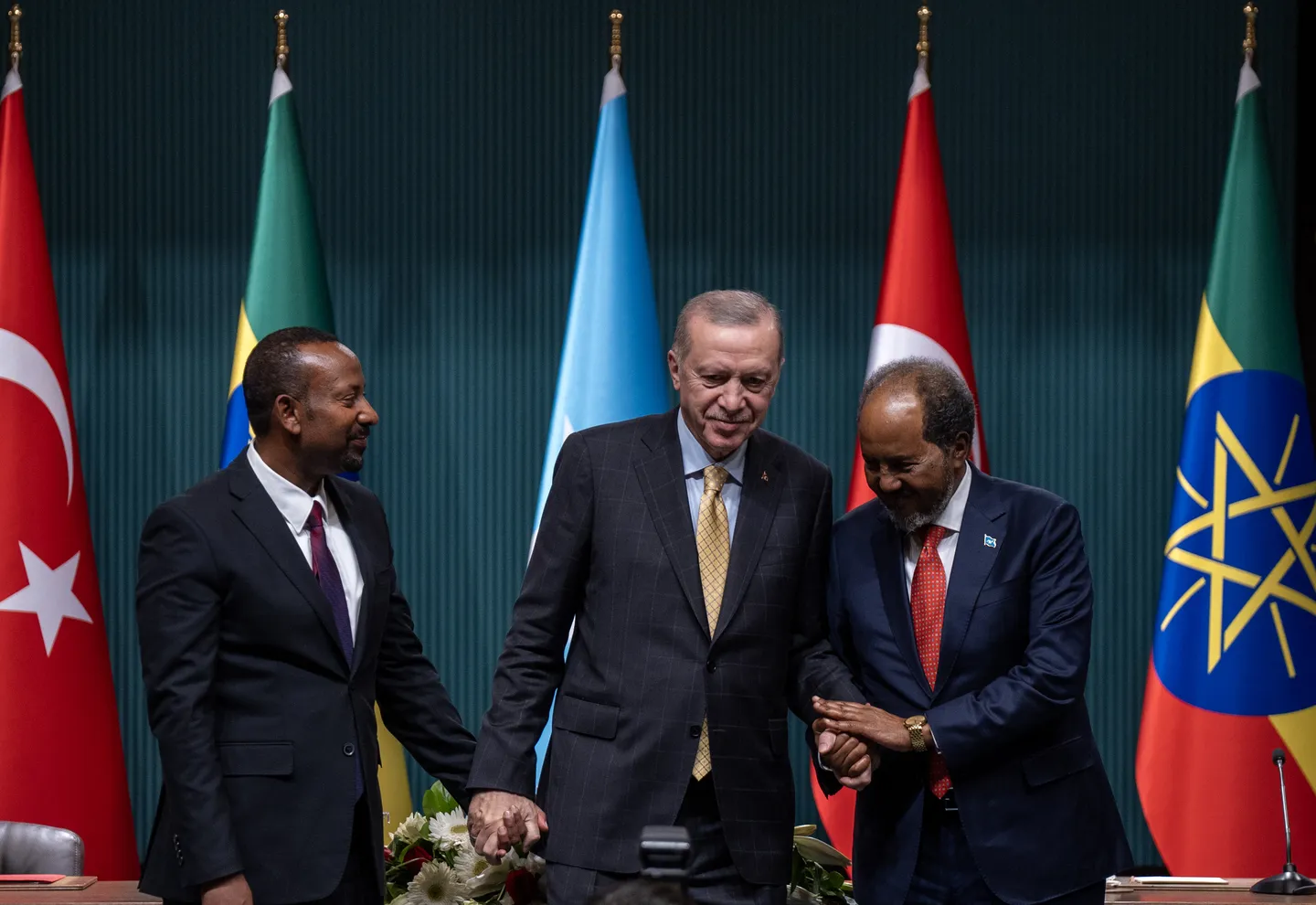
The 2024 ‘Ankara Process’, launched as tensions escalated between Ethiopia and Somalia, underscored Türkiye’s ability to facilitate dialogue and reduce the risk of destabilising escalation.
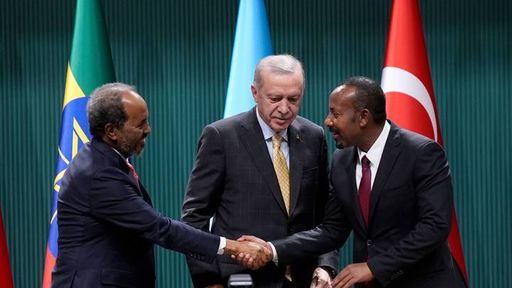
High-level engagement between President Recep Tayyip Erdogan, Somali President Hassan Sheikh Mohamud and Ethiopian Prime Minister Abiy Ahmed, supported by sustained contacts between foreign ministers and senior security officials, created a structured channel for dialogue at a time when rhetoric risked escalation.
The dialogue resulted in the Ankara Declaration, marking what was described as a “historic reconciliation” between Somalia and Ethiopia.
This matters because regional stability is inseparable from Somalia’s internal trajectory. States facing institutional constraints do not consolidate in isolation; they consolidate in regional environments that can either amplify pressure or support recovery.
Türkiye’s diplomatic engagement — supported by sustained high-level contacts — shows that Ankara’s approach is not merely operational but strategic: it combines institution-building on the ground with active diplomacy to support a more stable neighbourhood.
Somalia is one of the clearest examples of what a credible partnership looks like in today’s international system.
Türkiye’s engagement underscores that durable stabilisation in a sensitive context depends on the integrated alignment of public service delivery, institutional support, security capacity-building and diplomatic facilitation within a coherent strategic framework.
This combination is what makes Türkiye’s engagement in Somalia genuinely integrated.
In a world where global attention is fragmented and many external actors treat fragile states as instruments of competition, Somalia demonstrates the value of an alternative framework – partnership that strengthens sovereignty rather than diluting it; engagement that builds capacity rather than dependency; and diplomacy that seeks stability through dialogue rather than escalation.
The Turkish model in Somalia is not simply a case study.
It is a strategic lesson in how stability can be built — patiently, practically and with respect for national agency — in a multipolar world.