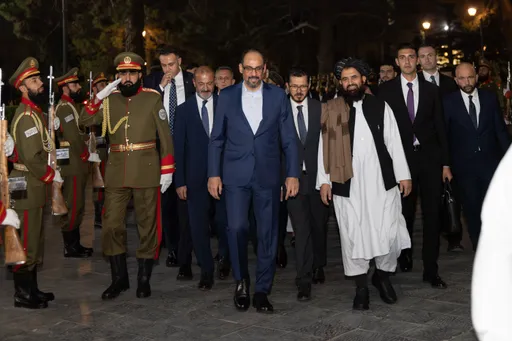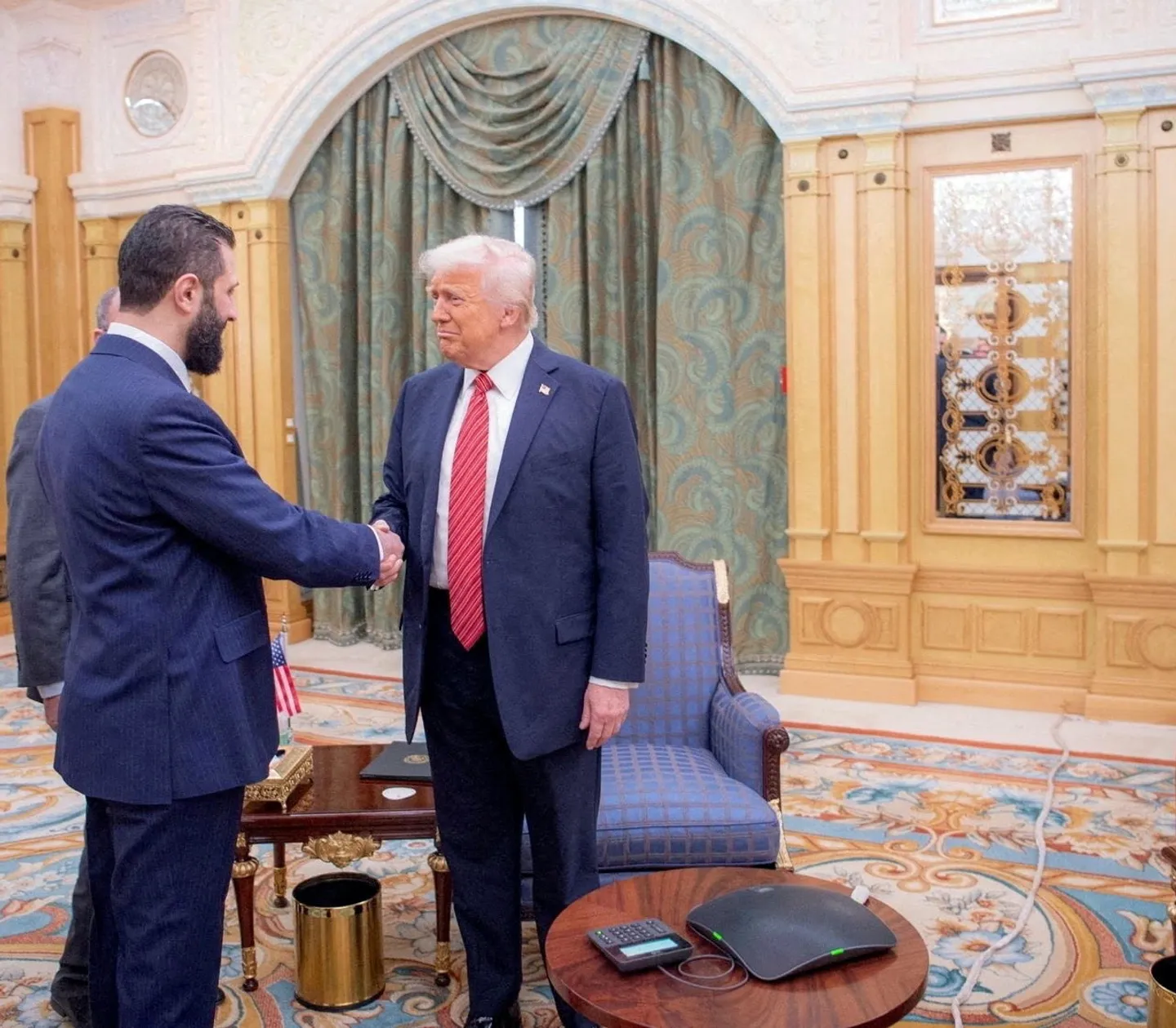
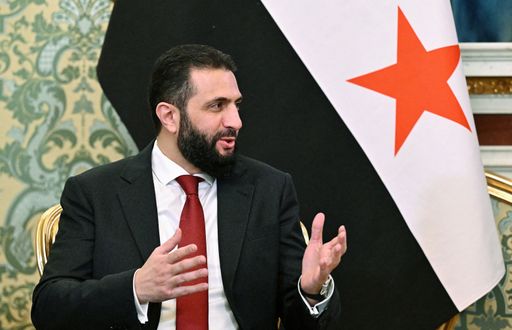
Syrian President Ahmed al Sharaa has departed the White House after nearly two hours of talks with US President Donald Trump, marking the first visit by a Syrian leader since the nation gained independence nearly 80 years ago.
The historic meeting took place on Monday.
Earlier, the White House said in a statement that “the president of Syria arrived at the White House... The meeting between President Trump and President al Sharaa has also started."
Unusually for the normally camera-friendly Trump, both the arrival and the meeting of the Syrian president were taking place behind closed doors without the media present.
Al Sharaa's meeting with Trump was expected to focus on the removal of sanctions imposed by the US during the former Bashar al Assad regime rule that crippled the Syrian economy, efforts to formally bring Damascus into the anti-Daesh coalition and potential talks on normalisation with Israel - one of Trump's stated goals.
No formal readout of the meeting was immediately issued by the White House.
The Trump administration has taken a series of measures to alleviate diplomatic and economic pressure on Syria and its leader as the country enters a new chapter in its history after over 13 years of brutal civil war, including the lifting of some sanctions.
Trump began the process of lifting US sanctions on Syria following a meeting with Sharaa in May in Saudi Arabia.
After that sit-down, the US president described his Syrian counterpart as a "young, attractive guy, tough guy, strong past," signalling a dramatic departure from decades of enmity that had defined US-Syrian relations under Assad.




US Special Envoy for Syria and Ambassador to Türkiye Tom Barrack said last week in Bahrain that Sharaa is expected to sign a document with Trump for Syria to join the anti-Daesh coalition.
Caesar Act sanctions
Meanwhile, the US has partially suspended imposition of Caesar Act sanctions on Syria for 180 days, the Treasury Department announced on Monday.
The suspension replaces a May 23 waiver, which also granted a 180-day exemption from mandatory Caesar Act sanctions, and represents "our commitment to continued sanctions relief for Syria," according to an advisory from the Treasury’s Office of Foreign Assets Control (OFAC).
The suspension halts the imposition of Caesar Act sanctions except for certain transactions involving the governments of Russia and Iran, or transfers of Russian-origin or Iranian-origin goods, technology, software, funds, financing, or services, according to the advisory.
The 2019 Caesar Syria Civilian Protection Act has been a central element of US policy pressuring the former Assad regime, which was ousted last December.
The sanctions block international investments and economic transactions involving the Syrian government and its affiliates.