 Ozan Ahmet Cetin
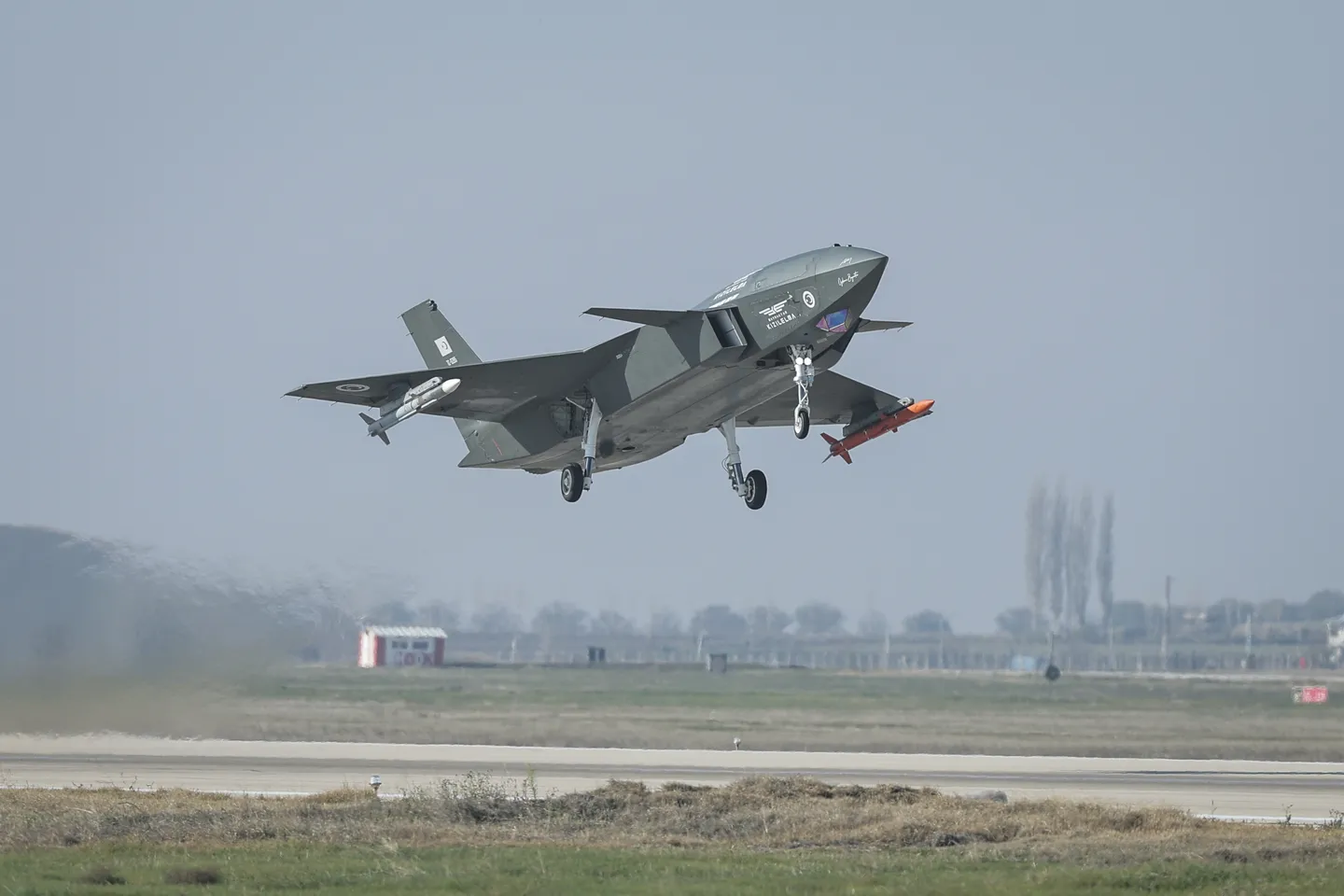
In a historic first for combat aviation, Türkiye’s Bayraktar Kizilelma unmanned combat aerial vehicle (UCAV) has successfully engaged and destroyed an aerial target using an indigenous beyond-visual-range air-to-air missile.
The live-fire test, conducted late last month over the Black Sea near Sinop, marked the first publicly demonstrated instance of an unmanned fighter jet shooting down a high-speed, jet-powered target with a radar-guided missile.
This milestone elevates UAVs from their traditional roles of surveillance and ground strikes into the most contested realm of airpower: air-to-air combat and air superiority.
The demonstration of a fully domestic kill chain, from detection by homegrown AESA radar to target destruction by an indigenous missile, indicates a new era of sovereign capability for the country. It also represents an inflection point in global airpower, challenging long-held assumptions about the roles and limits of unmanned systems, evolving airpower doctrine, and the balance of power in the region and beyond.
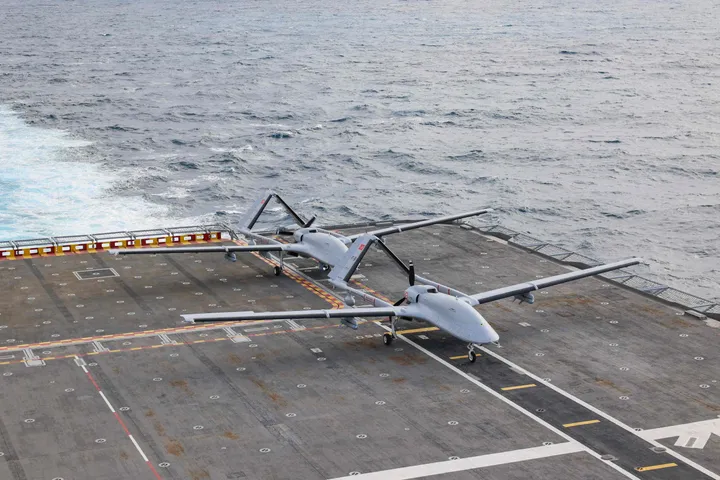
For decades, unmanned aircraft were largely relegated to intelligence, surveillance, reconnaissance (ISR) and limited strike roles. Early systems like the US MQ-1 Predator and MQ-9 Reaper drones, or Türkiye’s own Bayraktar TB2, excelled at spotting and attacking ground targets but played no part in controlling the skies.
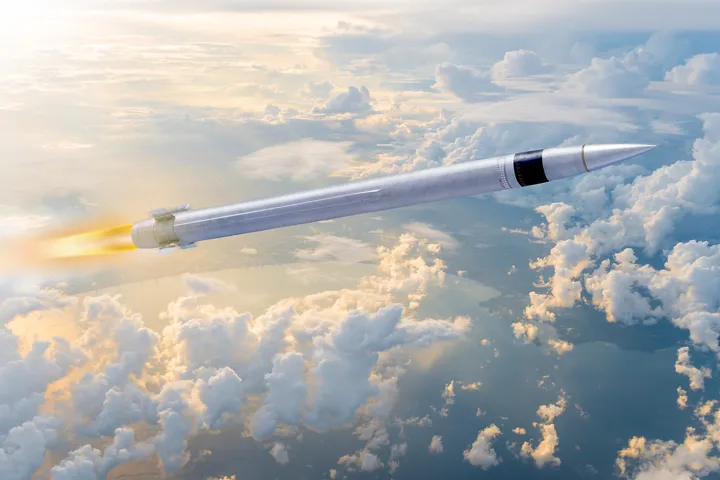
The Bayraktar Kizilelma, by contrast, is built from the outset as a UCAV capable of air-to-air engagements. Its recent missile test validated this design philosophy: it tracked a fast, jet-powered drone using its onboard radar and neutralised it at range with a domestically developed beyond-visual-range (BVR) missile.
Crucially, Kizilelma is the first UCAV known to have launched and guided a radar-guided air-to-air missile to a successful kill. This achievement places Türkiye ahead of several high-profile rival “loyal wingman” projects, many of which remain in developmental or simulated test phases. Notably, it achieved this ahead of initiatives like Australia’s MQ-28 Ghost Bat, which is slated for a similar live fire test with an AIM-120 AMRAAM next month.
The test demonstrates that advanced UAVs equipped with fire-control radar and long-range missiles can threaten and neutralise enemy aircraft. This enables air forces to consider unmanned platforms for missions such as defensive counter-air patrols, border interceptions, and operations in highly contested airspace, roles previously dominated by crewed fighters.
Indigenous kill chain
One notable aspect of the Kizilema test is that every link of the kill chain was domestic. Kizilelma is built by Baykar; its MURAD AESA radar by ASELSAN; and the Gokdogan air-to-air by TUBITAK SAGE. This indigenous triad gives Türkiye freedom to deploy, modify, or export the capability without foreign approval.
Many states face restrictive licensing regimes when acquiring advanced missiles or sensors, but Türkiye’s indigenous ecosystem avoids these constraints and increases its appeal as a supplier to countries seeking advanced airpower but unable to procure Western manned fighters.
Baykar already sells drones widely, with the TB2 operating in dozens of countries. If Kizilelma matures into an export-eligible system, it may reshape regional power balances, just as the TB2 did during the Second Karabakh War and other conflicts. Baykar’s cooperation with Italy’s Leonardo on co-production suggests that Kizilelma might fit within European or NATO force structures as well.



The advent of an unmanned fighter like Kızılelma carries profound implications for force structure and costs. Modern fourth- or fifth -generation crewed fighters are notoriously expensive to procure and operate not only in unit cost, but also in the training, maintenance, and infrastructure required for human pilots and their safety.
UCAVs offer a path to reduce these burdens. Baykar has emphasised Kizilelma’s goal of performing tasks typically assigned to manned fighters at reduced operational cost and risk. This enables militaries to increase their combat mass, fielding more aircraft for the same budget, while preserving their most advanced crewed platforms for specialised missions.
A force built around a high-low mix of manned and unmanned fighters could execute distributed, attritable operations that were prohibitively risky. Commanders can assign UCAVs to the most dangerous intercepts, patrols, or suppression missions without the political and human consequences of losing a pilot.
Such prospects reinforce the idea that tomorrow’s air forces might field not just a few elite fighters, but swarms or formations of UCAVs capable of cooperating with crewed aircraft or on their own. The net effect could be more coverage and firepower for the same cost.
Profound implications
This has profound implications for doctrine. The introduction of credible air-combat UAVs adds a new layer to deterrence and complicates adversary planning. From a deterrence standpoint, an unmanned fighter fleet can patrol borders or contested airspace persistently, which signals that any incursion could be met by interceptors that do not put friendly pilots at risk.
This may enhance deterrence as the threshold for engagement might be lower. A country might be more willing to commit drones to confront hostile aircraft early and often, knowing that the political cost of a lost UAV is less than that of a downed pilot.
In essence, UCAVs introduce ambiguity. The old habit of assessing an adversary’s airpower by tallying crewed fighters no longer works the way it once did.
This will likely cause a doctrinal and procurement ripple effect. Going forward, when air forces draft their strategy or shopping lists, they must consider unmanned combat aircraft as potential core assets.
Kizilelma’s test will likely influence debates far beyond Türkiye. Other major powers have similar projects, including the US XQ-58A Valkyrie, China’s stealthy GJ-11 UCAV, and Russia’s S-70 Okhotnik, but none have yet publicly demonstrated an air-to-air kill by an unmanned system. Türkiye’s success may spur a sense of urgency among these players to prove or accelerate their own programmes.
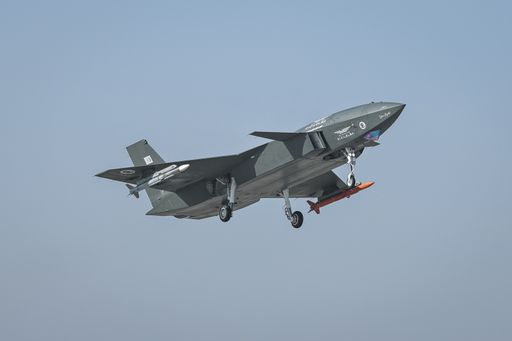
The Kizilelma’s milestone signals that unmanned aircraft have crossed a threshold from supporting roles to frontline combatants in the race for air superiority.
Over the coming years, doctrines, training programmes, and force compositions will be rewritten as air forces integrate formations of unmanned fighters operating alongside, or ahead of, the human pilot.
Türkiye’s accomplishment is more than a breakthrough; it’s a strategic marker for the future of warfare.