 Aysegul Colak
"We need a reform of the EU-Türkiye Customs Union," declared Hendrik Wust, minister-president of North Rhine-Westphalia.
Speaking in Ankara on September 28, 2026, the Christian Democratic Union (CDU) leader opened a mission to reset bilateral ties.
Marking the 65th anniversary of the 1961 labour recruitment treaty, Wust praised Turkish workers who built post-war industry.
In Ankara and Istanbul, Wust paired cultural dignity with economic self-interest. Discussions focused on export contracts, energy security, and corporate mobility.
Dusseldorf recognised that German industrial renewal requires deep partnership with Türkiye over ideological friction.
Home to 500,000 Turkish nationals, North Rhine-Westphalia accounts for one-third of Germany's Turkish diaspora and generates 20 percent of bilateral trade.
Accompanied by Serap Guler, the CDU Minister of State at the Federal Foreign Office, Wust pursued clean-energy agreements and visa facilitation.
In doing so, Wust offered a credible conservative alternative.
While Friedrich Merz, the German Chancellor and federal CDU leader, clings to anti-migrant rhetoric and border militarism, Wust’s Ankara diplomacy shows that conservative statecraft depends on commercial pragmatism, respect for the diaspora, and strategic partnership with Türkiye.
Why copying far-right rhetoric failed in Berlin
In Berlin, Friedrich Merz faces growing political isolation after adopting far-right talking points.
An INSA survey on September 12 found that only 14 percent of voters view Merz as the right leader, while CDU/CSU support fell to 19 percent nationally. That collapse followed regional defeats, in which nativist slogans alienated mainstream voters.
On September 20, the CDU fell to 4.9 per cent in Mecklenburg-Western Pomerania. Conservatives lost every seat in Schwerin, the state capital.
Far-right Alternative for Germany (AfD) finished first in Schwerin with 38.2 percent. The Social Democratic Party (SPD) secured 35.5 percent.
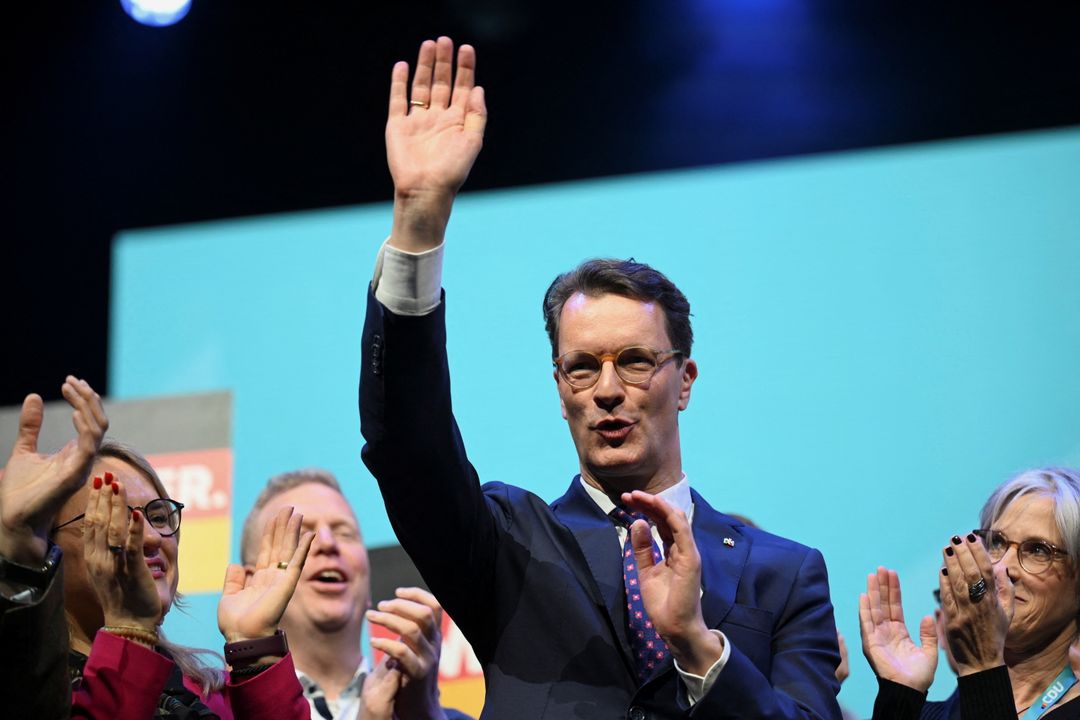
Daniel Peters, the CDU state chairman, resigned on September 21 after receiving no support from Berlin, leaving the party out of parliament.
That regional defeat proved that copying nativist rhetoric failed completely. Voters seeking aggressive anti-immigrant policies preferred the radical original over a conservative imitation.
Extremists capitalised on the Chancellery’s weakness. In the Bundestag, the AfD filed a criminal complaint against Merz after he denounced the party's remigration agenda as "ethnic cleansing."
Although stationary Schengen controls caused friction across Europe, conservative concessions validated far-right talking points instead of halting populist momentum.
Conservative statecraft requires partners, not scapegoats.
For Germany’s 3.5 million Turkish diaspora, political rhetoric targeting immigrants leaves minority communities exposed to discrimination.
In Istanbul, Dusseldorf secured a clean energy corridor with Turkish partners on September 30.
German energy major Uniper Global Energy SE and Biotrend Enerji signed an agreement to develop biomethane exports, upgrading waste-to-energy assets to deliver 1.4 terawatt-hours of clean gas per year, replacing lost Russian pipeline volumes for Ruhr heavy industry.
Economic ties between Germany and Türkiye remain indispensable. Bilateral commerce exceeds 50 billion euros annually, with North Rhine-Westphalia generating 20 percent of that volume.
The state also hosts more than 1,300 Turkish-owned enterprises, positioning Türkiye as a vital nearshoring partner as German manufacturers de-risk supply chains.
Consular visa delays have long penalised Turkish business executives.

Burdensome Schengen appointment backlogs prevented corporate leaders from attending industrial trade fairs in Germany, turning consular delays into an economic self-infliction for European industry.
To unblock commerce, Wust and Serap Guler announced the Business Fast-Track visa mechanism in Istanbul on September 30.
Expanding an August 2025 pilot that served 400 firms, the program expedites visas for members of Türkiye's Foreign Economic Relations Board (DEIK).
Partners also concluded eight commercial agreements.
Beyond commercial deals, Wust recognised that durable partnership requires honouring sixty-five years of shared history.
At Tarabya in Istanbul, Wust presented the Mevlude Genc Medal to Ilkay Gundogan, the former captain of the German national football team, on September 29.
The legacy of Mevlude Genc, the honoured Turkish-German peace activist, continues to matter in North Rhine-Westphalia.
After neo-Nazi arsonists murdered five Turkish women and girls in Solingen, an industrial city in the state, in 1993, her call for reconciliation inspired the state award.
Presenting the honour celebrated Gundogan's contribution to intercultural understanding, quietly moving German conservatism past its historic denial that the country is an immigrant society.
Building on this diaspora bridge, the 1995 EU-Türkiye Customs Union, now being modernised, represents the broader economic prize.
The thirty-year-old accord covers industrial goods but excludes services, public procurement, and green technology.
Calling reform overdue, Wust affirmed that the Turkish economy is an indispensable part of the European value chain.
A practical diplomacy that delivers real results
However, advancing sub-national diplomacy to break federal gridlock drew fierce domestic criticism.
Frederick Cordes, the general secretary of the SPD in North Rhine-Westphalia, accused Wust of running a rogue shadow foreign policy driven by personal chancellor ambitions.
Federal CDU hardliners aligned with Merz argued that sub-national leaders undermined federal diplomatic authority.
However, sub-national commercial diplomacy directly defends German industrial interests where federal leadership fails.
Coordinating with federal diplomats, Dusseldorf opened commercial avenues for German exporters.
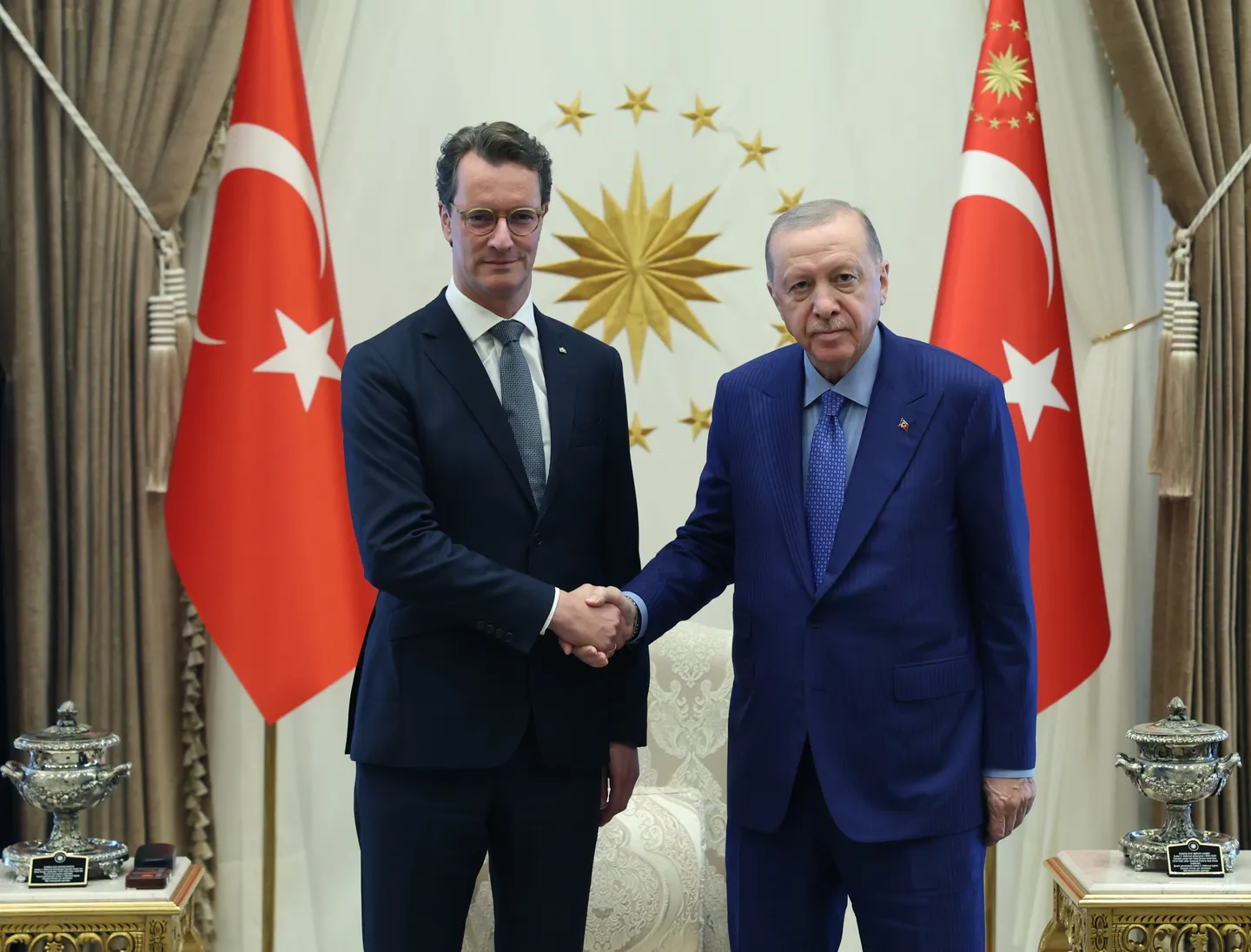
President Recep Tayyip Erdogan welcomed Wust at the Presidential Complex in Ankara for a ninety-minute meeting on September 28, a deliberate diplomatic move that set the terms of engagement for Germany’s future political leadership.
In Istanbul, Wust engaged opposition figures and civil society, completing a balanced diplomatic trifecta.
The mission combined access to power in Ankara, dialogue with pluralistic society, and concrete contracts for German factories.
Commercial pragmatism and strategic partnership with Türkiye offer a reliable foundation for German industrial revival.
While border militarism and anti-immigrant rhetoric crashed conservative standing in Berlin, Wust demonstrated an alternative course in Ankara.
Berlin cannot pursue industrial de-risking while treating Türkiye and its diaspora as political liabilities; economic sovereignty requires recognising them as indispensable strategic assets.