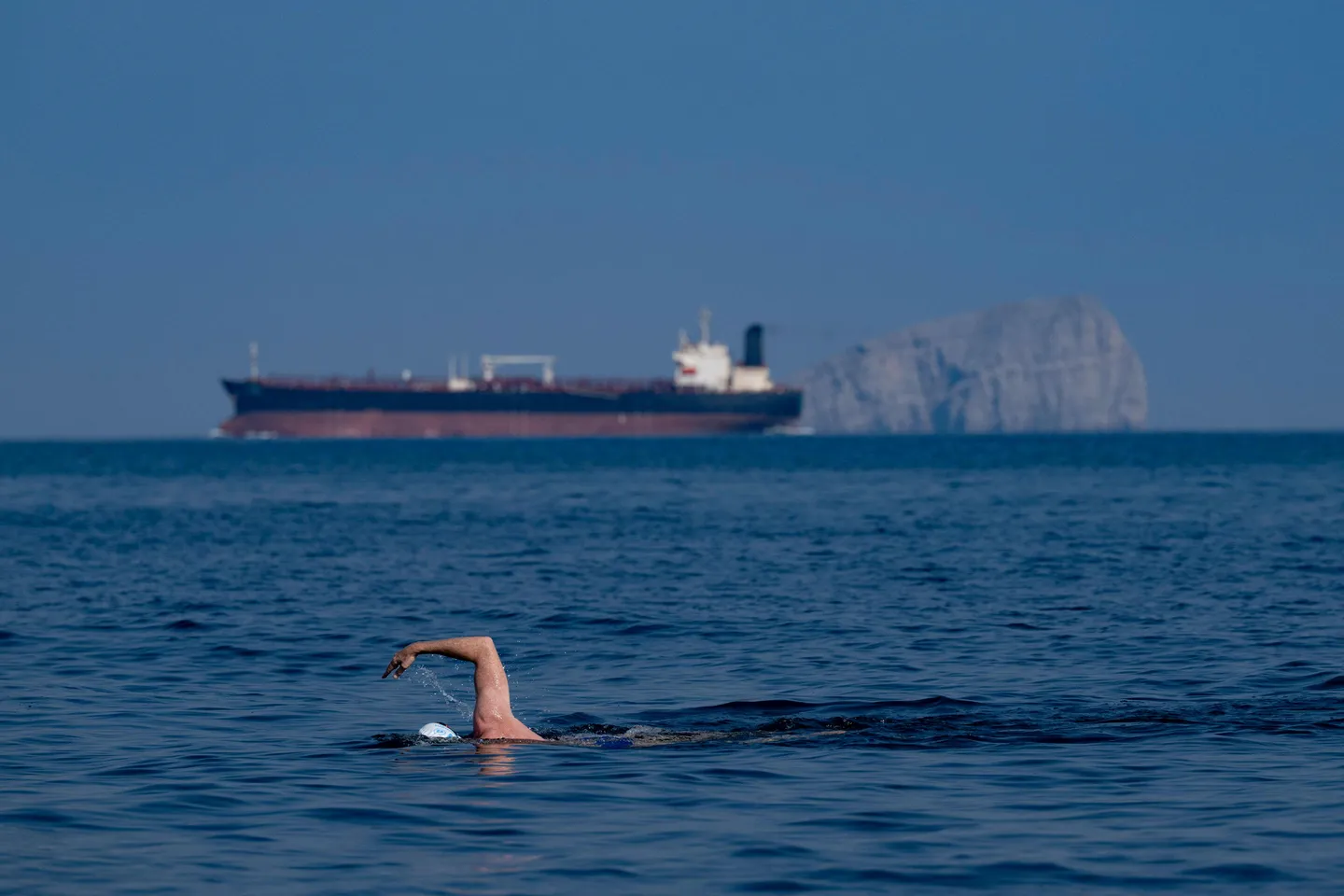
A British endurance swimmer who swam in waters in the Strait of Hormuz to highlight the "devastating environmental consequences" of the US-Israel war on Iran has called for the waterway to be reopened and the pollution in it to be cleaned up.
"Oil tankers, gas carriers and other merchant ships are being attacked, day after day. The environmental consequences of this war will last for generations," Lewis Pugh wrote in a post on his website.
Pugh, 56 and the UN Environment Programme's "patron of the oceans", swam in parts of the strait close to Oman's coastline over three days in the past week to publicise his message.
On Monday, when he was just half an hour in the water, an oil tanker was struck a few kilometres away. Other attacks occurred during his swims that left vessels ablaze.
He completed a total 15-kilometre swim, starting from the Musandam Peninsula and rounding part of the Cape of Hormuz, both located in Oman.
Iran sits on the other side of the strait, which is 39 kilometres across at its shortest span.
The stalemated war began with coordinated US-Israeli attacks on Iran on February 28, 2026.
Iran subsequently responded by targeting maritime shipping, deploying sea mines, and launching strikes against US assets across the Gulf.
The US military, meanwhile, has been escorting ships through a channel of the strategic strait, which carried one-fifth of the world's oil before the war, and maintains its own counterblockade of Iranian ports.
Negotiations between the US and Iran to end their war have stalled.
Decades of consequences
Pugh said that another casualty of the war is nature, which receives less attention, warning that the environmental consequences "will last for decades."
"The Strait of Hormuz is far more than a vital shipping route. It is one of the most beautiful places I have ever visited," Pugh said.
"Dolphins, sea turtles and dugongs live in these waters. It is one of the great natural wonders of the world," he said.
Pugh has previously undertaken high-profile swims in Antarctica, the North Pole and the Red Sea to advocate for rivers clean enough to swim and fish in safely.
"My message is simple: Stop the fighting, Open the Strait, Clean up the pollution," he added.