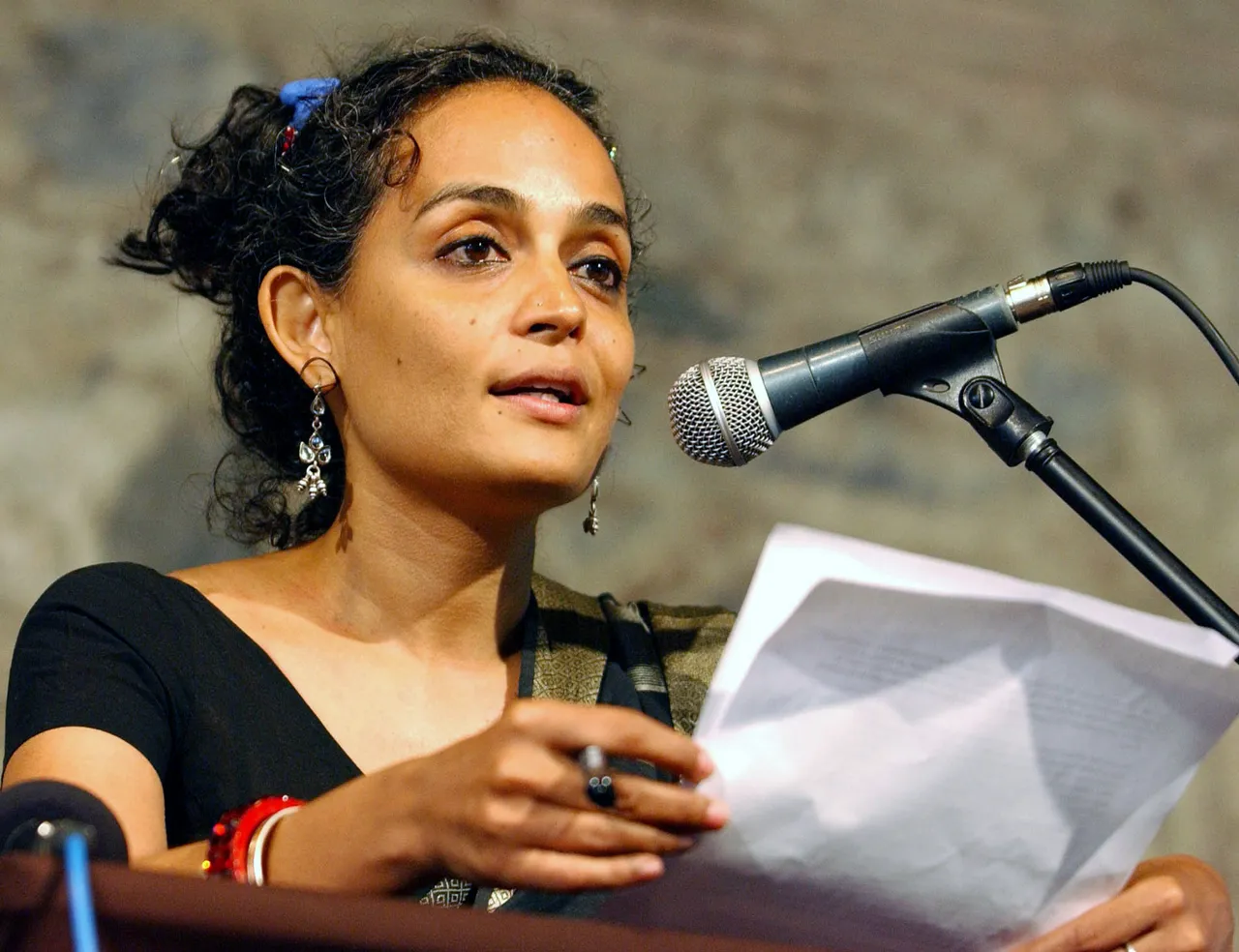
Award-winning Indian writer Arundhati Roy has withdrawn from the Berlin Film Festival over jury president Wim Wenders's comments that cinema should "stay out of politics" when asked about Gaza.
Roy said in a statement on Friday that she was "shocked and disgusted" by responses from Wenders and other jury members to a question about the Palestinian territory at a press conference on Thursday.
Roy, whose novel "The God of Small Things" won the 1997 Booker Prize, had been announced as a festival guest to present a restored version of the 1989 film "In Which Annie Gives It Those Ones", in which she starred and wrote the screenplay.
However, she said that the "unconscionable" statements by Wenders and other jury members had led her to reconsider, "with deep regret".
When asked about Germany's support for Israel at a press conference on Thursday, Wenders said: "We cannot really enter the field of politics," describing filmmakers as "the counterweight to politics."
Fellow jury member Ewa Puszczynska said it was a "little bit unfair" to expect the jury to take a direct stance on the issue.
Roy said in her statement that "to hear them say that art should not be political is jaw-dropping."
She described the situation in Gaza as "a genocide of the Palestinian people by the State of Israel".
"If the greatest filmmakers and artists of our time cannot stand up and say so, they should know that history will judge them," she said.
"It is a way of shutting down a conversation about a crime against humanity even as it unfolds before us in real time — when artists, writers and filmmakers should be doing everything in their power to stop it," she said.
Roy is one of India's most famous living authors and is a trenchant critic of Prime Minister Narendra Modi's right-wing government, as well as a firm supporter of the Palestinian cause.
Restored versions of two films by late Egyptian directors, "Sad Song of Touha" by Atteyat Al Abnoudy and "The Dislocation of Amber" by Hussein Shariffe, have also been withdrawn from the festival over its stance on Gaza.
"The Berlinale respects these decisions," a spokeswoman said in a statement sent to AFP.
"We regret that we will not welcome them as their presence would have enriched the festival discourse," she said.

Shying away from politics
The Berlinale traditionally has a reputation for topical, progressive programming, but so far this year's edition has seen several stars shy away from taking a stance on the big political issues of the day.
US actor Neil Patrick Harris, who stars in the film "Sunny Dancer" was asked on Friday if he considered his art to be political and if it could help "fight the rise of fascism".
He replied that he was "interested in doing things that are apolitical" and which could help people find connection in our "strangely algorithmic and divided world".
This year's Honorary Golden Bear recipient, Malaysian actor Michelle Yeoh, also demurred when asked to comment on US politics in a press conference on Friday, saying she "cannot presume to say I understand" the situation there.
This is not the first edition of the festival to run into controversy over Israeli genocidal war in Gaza.
In 2024, the festival's documentary award went to "No Other Land," which follows the dispossession of Palestinian communities in the Israeli-occupied West Bank.
German government officials criticised "one-sided" remarks about Gaza by the directors of that film and others at that year's awards ceremony.
Israel’s genocide in Gaza has left at least 72,000 people dead in Gaza and wounded more than 171,400, according to conservative estimates by Palestinians.
Analysts suggest these figures may be an underestimation, with the total death toll possibly reaching around 200,000.