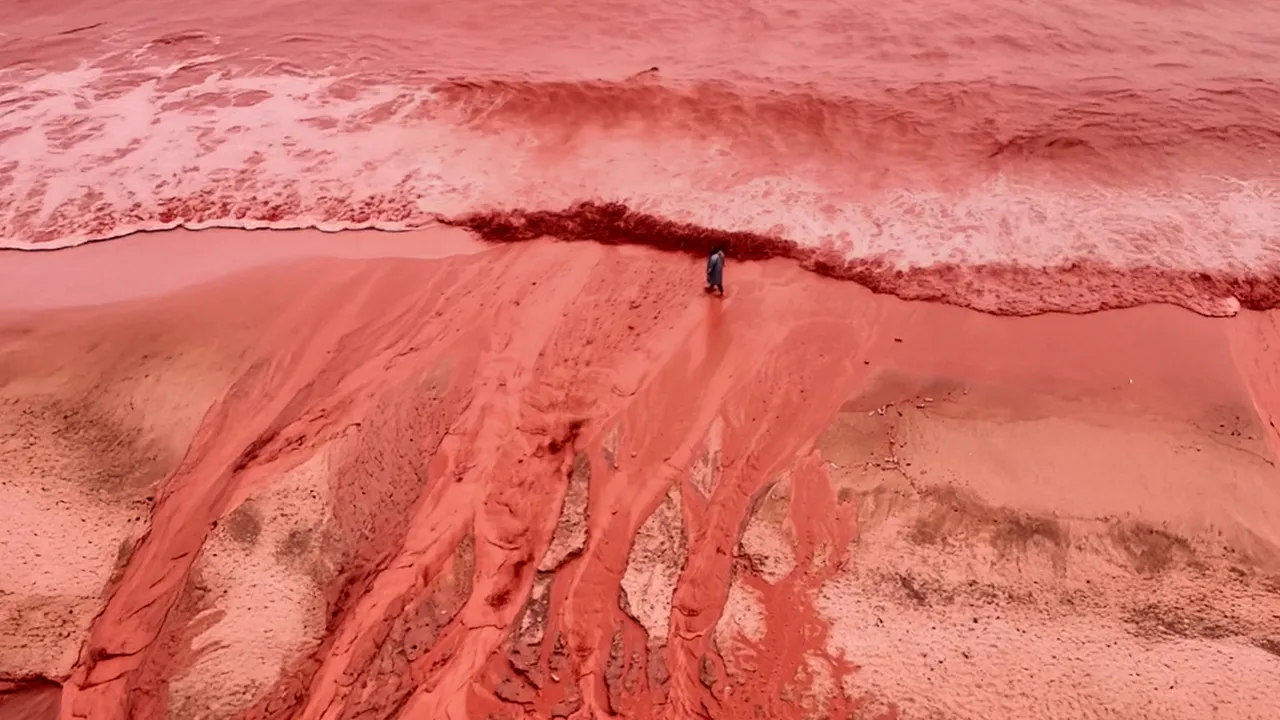
Rainfall on Iran's Hormuz Island briefly transformed the coastline of its famed Red Beach into a striking natural scene this week, as runoff flowing over the shore turned the water shades of deep red, intensifying the island’s iron-rich soil and washing it into the sea.
When rain falls, as it did starting on Tuesday, streams of red soil flow toward the shoreline, colouring both the beach and the surrounding water and creating a sharp contrast with the blue waters of the Persian Gulf.
The phenomenon regularly attracts tourists, photographers and social media attention.
Beyond its visual appeal, the red soil — locally known as gelak — is exported in limited quantities and used in the production of cosmetics, pigments and some traditional products.








Hormuz Island lies in the Strait of Hormuz, about 1,080 kilometres south of Iran’s capital, Tehran. Rainfall is relatively rare on the arid island, and happens mainly during the winter and early spring.
The island has become a popular destination with visitors drawn to its unusual landscapes.