 Kazim Alam
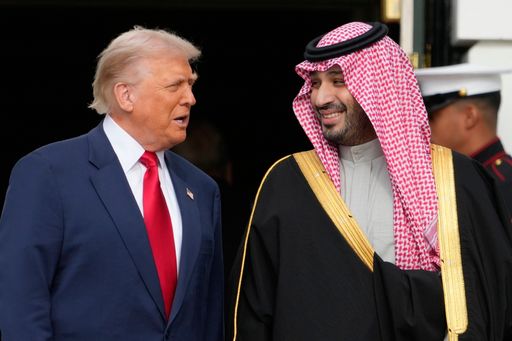
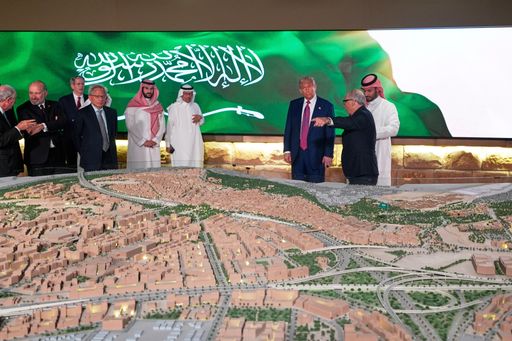
The high-profile visit of Saudi Crown Prince Mohammed bin Salman to Washington DC after a gap of seven years sealed the status of the Middle Eastern kingdom as a major non-NATO ally of the US.
The visit also resulted in a multibillion-dollar arms package and a strategic defence pact aimed at fortifying Riyadh’s arsenal against regional foes.
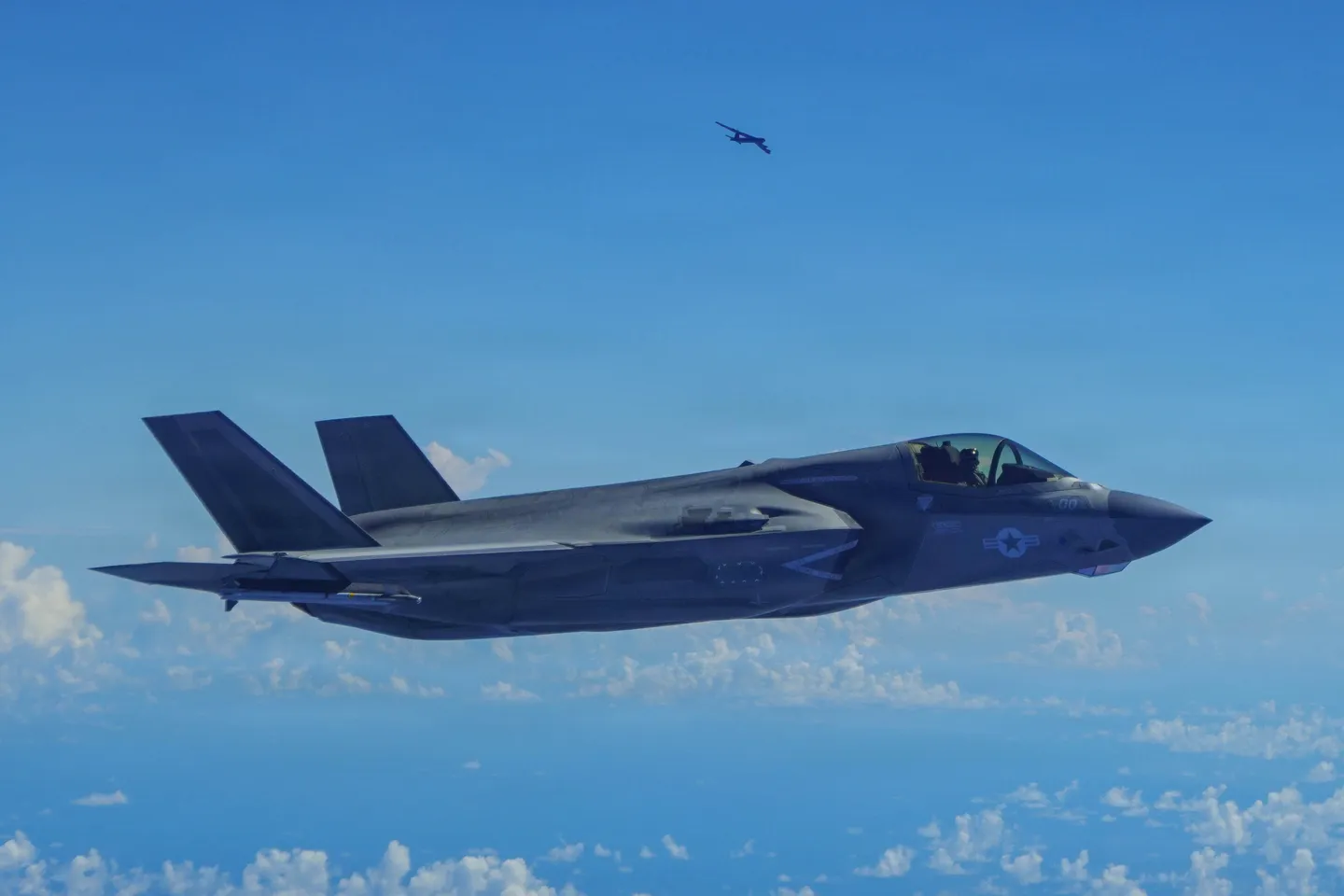
The arms deal for the largest buyer of US weapons includes a long-sought prize: entry into the exclusive club of F-35 operators, the most advanced made-in-America stealth fighter previously limited in the Middle East to Israel alone.
“We’ll be selling F-35s,” President Trump said, referring to the kingdom’s status as a “great ally” alongside Israel.
The greenlighting of the deal by Trump, despite warnings by the Pentagon about Chinese espionage risks, has ignited a debate about the deal’s future.
Tel Aviv has also shown displeasure, albeit in a restrained manner, demanding that the deal be linked to the establishment of formal diplomatic relations between Israel and Saudi Arabia.
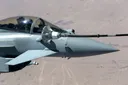
The crown jewel of the US defence contractor Lockheed Martin, the F-35 is no ordinary warbird. With stealth coatings that render it nearly invisible to radar, advanced sensors, and electronic warfare suites that jam enemy defences, the jet is known to have redefined modern air combat.
Israel deployed F-35 squadrons in its 12-day war against Iran earlier this year to hit nuclear sites.
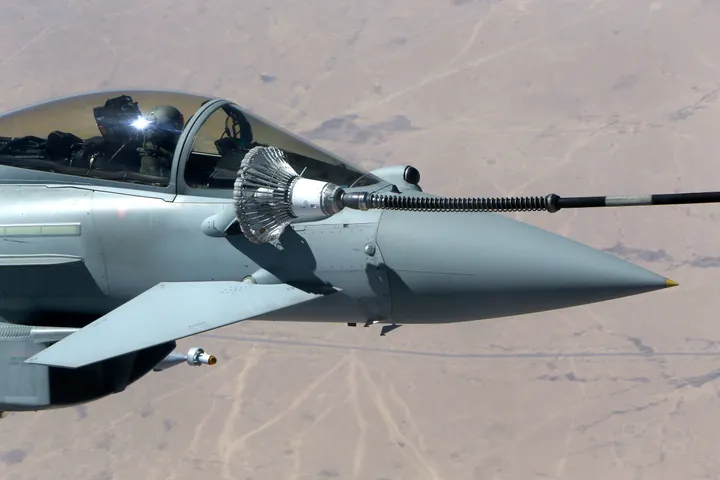
Saudi Arabia, which has at times found itself overwhelmed by drone and missile attacks by Yemen-based Houthis and Iran, hopes to acquire up to 48 F-35s to modernise its ageing fleet of US-made F-15s and European Typhoons.
The price of a single F-35 ranges from $80 million to $110 million, depending on its variant and additional features.
Gokhan Ereli, the coordinator for Gulf Studies at the Ankara-based Center for Middle Eastern Studies (ORSAM), sees the acquisition as a game-changer for Riyadh's deterrence capabilities.
“If Saudi Arabia receives these aircraft, it will gain air superiority not only against Iran but also against other actors in the Gulf and the Middle East,” he tells TRT World.
He likened the tactical edge to Israel's recent dominance over Iran, where F-35s breached Iranian airspace undetected.
Even possessing F-35s could be a deterrent for Iran not to attack Gulf nations, he says.
Ryan Bohl, a senior Middle East analyst at the RANE Network, a global risk intelligence company, tells TRT World that the deal will further disadvantage Iran against Saudi Arabia’s air force.
But he cautions that Iran's arsenal of cheap drones, ballistic missiles, and cruise barrages can still overwhelm even F-35s in a saturation attack.
“If the Iranians begin a swarm attack or marry that with a large-scale ballistic and cruise missile strike on Saudi Arabia, then the F-35 isn’t necessarily as much of a game-changer against Iran's current arsenal,” Bohl says.
Mauro Gilli, a professor of military strategy and technology at Berlin's Hertie School, tells TRT World that Israel and Saudi Arabia had a similar objective with respect to the Iranian threat for years.
“Now, however, the Iranian threat is mostly gone. So the question is: how will the power balance in the region evolve?”
He says that “not much would change” with Saudi Arabia’s acquisition of F-35s as long as Riyadh and Tel Aviv do not engage in hostilities.
Israel’s qualitative military edge
At the heart of the debate over the F-35 sale lies Israel’s “qualitative military edge” or QME, a US legal commitment since President Reagan’s years (1981-89) to ensure Tel Aviv’s technological superiority over neighbours.
This is the reason that F-35s sold to Riyadh will likely be the lower variants, trailing both technologically and numerically the fleet of the same jets operated by Israel.


Ereli of ORSAM says that Israel will continue to retain a battlefield-tested advantage against Saudi Arabia.
“While a Saudi-Israeli parity may exist on paper, Israel's tactical superiority will continue. This is because Israel has been operating these fighter jets for a long time and has tested them on the battlefield,” he says.
Replying to a question during his meeting with the Saudi crown prince in the Oval Office, Trump dismissed the QME concerns, saying both Saudi Arabia and Israel deserved to have “top of the line” variants of the F-35.
Bohl, however, predicts that Israeli pushback could delay deliveries of the coveted warbirds.
“It’s not clear how the current deal will manage Israel’s QME. The Israelis have said that they oppose the deal for that very reason,” he says.
Israel does not appear to be using its leverage to stop the deal in part because of the “relatively frosty relations” between the current Israeli government and the Trump administration, he says.
Israeli officials have already urged that the deal be conditioned on Saudi Arabia joining the Abraham Accords, a set of agreements aimed at normalising diplomatic relations between Israel and Arab countries.
“If that's the case, then it may be years before the Saudis ever take delivery of the F-35s, if they do so at all,” Bohl says.
Meanwhile, Saudi Arabia remains adamant that any normalisation of relations with Israel must follow an agreement providing a “clear path for a Palestinian state”.
The China threat
Another spectre that looms large over the F-35 deal is that of technological leakage to China, Riyadh’s top trading partner and a growing military collaborator.
A US Defense Intelligence Agency report stated that Beijing's security ties with Saudi Arabia as a possible tool for espionage, potentially compromising the F-35's sensors and networks.
According to Gilli, operating an F-35 gives a country access to the jet’s advanced sensors and electronic warfare capabilities.
These capabilities include the system that dodges enemy radars, thus permitting the aircraft to enter foreign airspace without any real threat.
Ereli views Saudi-Beijing bonds as a persistent concern for the US, but not a deal-breaker.
“In all of the US defence and security equipment relations with the Gulf countries, there is a concern that such technologies could be shared with – or ‘captured’ by – China,” he says.
But given the need for Congressional approval for the sale of advanced technologies like the F-35, as well as Saudi Arabia's heavy investments in defence and other critical sectors within the US, Ereli says such technology leakage is no more than a “remote possibility”.
He says that opposition Democratic lawmakers in the US will still attempt to block the sale.
But Bohl downplays the hype, saying the US will “almost assuredly” demand certain safeguards as part of the deal.
“It may be that F-35s can only be deployed at certain air bases where those safeguards are possible," he says.
Bohl says Saudi Arabia’s human rights record remains of concern to key Congress members, while many others worry about maintaining Israel’s QME.
“All of those dynamics create a bumpy road for Congress,” he says.