 Kazim Alam
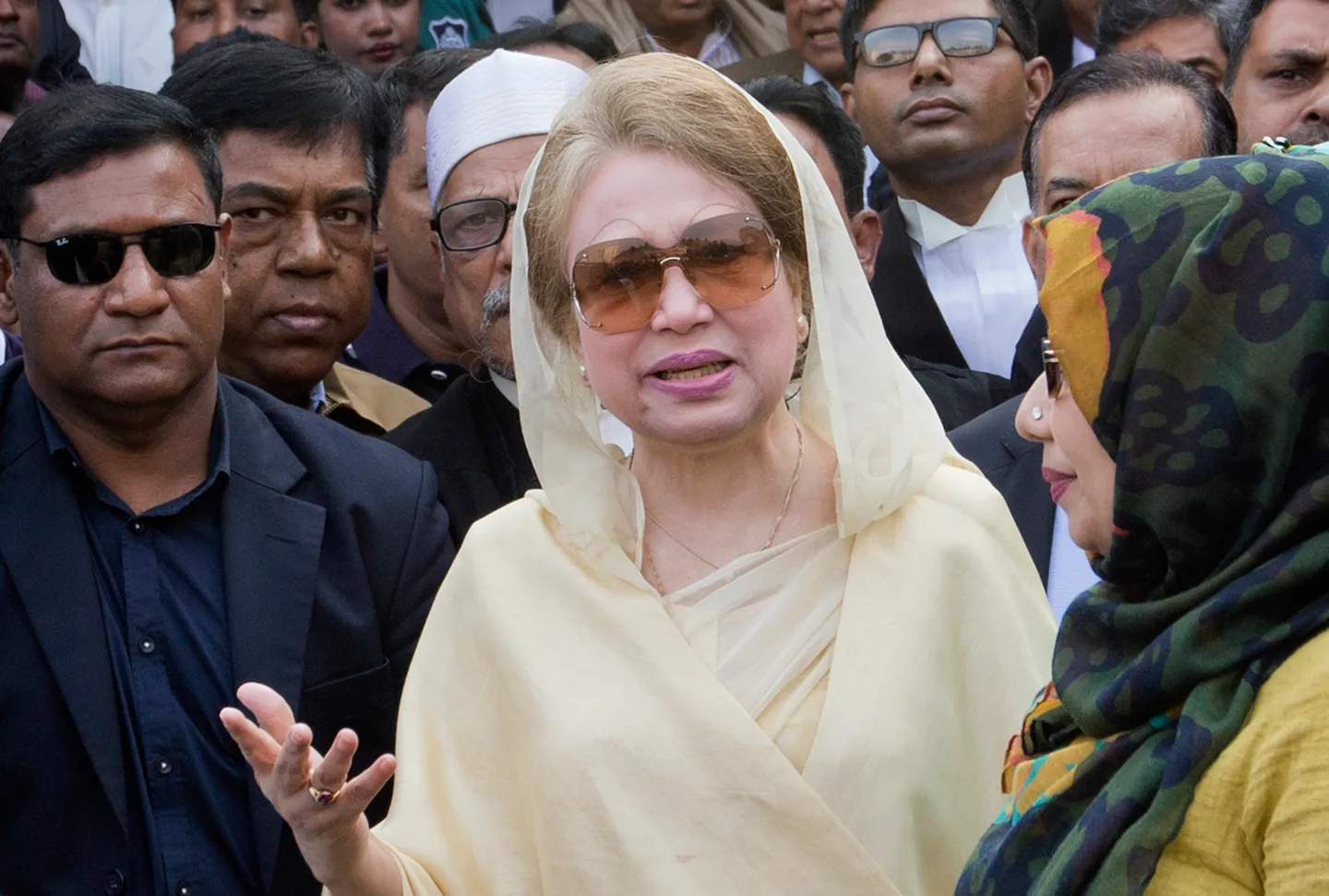
Khaleda Zia, the 80-year-old chairperson of the Bangladesh Nationalist Party (BNP) and two-time premier of the South Asian nation of 175 million people, is fighting for her life as she is reportedly being flown from Dhaka to London for medical treatment.
Her deteriorating health comes at a critical moment for Bangladesh as its interim government, led by Nobel laureate Muhammad Yunus, has announced general elections in February 2026.
The upcoming election will be the first since August 2024 when the student-led Monsoon Revolution toppled the government of Sheikh Hasina’s Awami League, a long-time rival of Zia’s BNP.
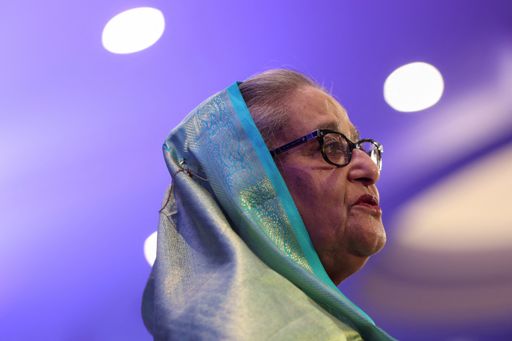
Hasina, now in exile in India and sentenced to death for crimes against humanity, saw her party effectively disappear when the election commission suspended its registration in May 2025.
With the Awami League’s electoral fate sealed, the front-runner in the upcoming elections appears to be Zia’s BNP, a long-time counterweight to Hasina’s party in Bangladesh's duopolistic political landscape.
But many questions arise as Zia's serious illness casts a shadow over the future of her party, which she has led since founding it with her husband, Ziaur Rahman, a general who served as Bangladesh's sixth president from 1977 until his assassination in 1981.
Analysts question whether the BNP’s popularity can endure without its matriarch and when her son and acting party chairman, Tarique Rahman, will end his 17-year exile in London to return to Dhaka and lead the party from the front—a question that remains unanswered.
Zia Chowdhury, a Dhaka-based journalist, tells TRT World that Bangladesh may possibly face the risk of a “hollowed-out” political landscape with the Awami League banned and the BNP’s future in limbo.
Such a scenario will result in the non-representation of a large number of Bangladeshi people in the political setup, he says.
He highlights the risks associated with a weakened BNP, which enjoys a “real nationwide presence”.
“If it can’t function, political conflict may increasingly unfold through the streets rather than parliament,” he says.
“A fragmented opposition creates space for fundamentalist groups and petty strongmen to mobilise, producing more localised violence and fewer institutional channels for dissent,” he says.
Tarique Niazi, a sociology professor at the University of Wisconsin, tells TRT World he remains optimistic about the BNP’s future.
“The BNP survived Hasina’s 15 years of tyrannical rule,” he says.
“(Zia) and her party remained unbowed and unbent. Will it survive after Khaleda? Absolutely,” he insists.
Anchored in “inclusive nationalism”, he says the BNP's roots run “deeper and wider” in Bangladeshi society, outgrowing individual leaders, like India's Congress party or Pakistan’s Muslim League party, which thrived even after the deaths of their iconic leaders such as Jawaharlal Nehru and Muhammad Ali Jinnah.
For decades, Bangladesh’s democracy has been defined by a stark binary: the Awami League’s “Bangali nationalism,” which champions the rights of ethnic Bengalis only, versus the BNP’s “inclusive nationalism,” which extends citizenship to all who call Bangladesh home, Niazi says.
This two-party diarchy has alternated power under the first-past-the-post system, where a razor-thin majority claims total victory, banishing the loser to irrelevance.
“Bangladesh, electorally, has been a fifty-fifty nation for decades,” Niazi notes.
He calls for a proportional representation system where the party with 49.9 percent of votes will also have the equivalent representation in parliament.
Dynastic symbolism
Zahed Ur Rahman, a Dhaka-based academic and political commentator, tells TRT World that the symbolism of both the Zia and Sheikh families in Bangladesh remains critical.
Each of the two parties underwent severe turmoil and were divided into several groups after the assassination of their respective founders, he says.
“When Khaleda Zia and Sheikh Hasina assumed leadership, both parties’ internal cohesion was restored, and they thrived,” he says.






For example, after the 1981 assassination of her husband, the BNP splintered into factions. Only her ascension restored unity, eventually propelling it to power in 1991.
Similarly, her son Tarique Rahman, convicted in absentia on corruption charges under Hasina's rule but acquitted in December 2024, assumed de facto control from exile and masterminded the BNP's survival through 15 years of repression.
"In the initial years, he helped his mother in running the party. But later, he became the de facto chief," says Rahman.
Yet, Tarique Rahman's reluctance to return to Bangladesh despite government assurances of no legal barriers has fuelled speculation.
BNP officials insist that Tarique Rahman will return to the country “soon” to lead the party, but there has been no concrete announcement so far.
Recent polls show the BNP leading with 30 percent support, but internal nomination disputes over 40 seats have sparked protests, eroding party unity.
Niazi says the BNP and the Awami League are the “lifeblood of the country’s political power structure”.
“Both have long sworn fidelity to the two-party system. Tragically, Hasina, in her last stint in power (2009-2024), turned out to be a wrecking ball for this diarchy,” he says.
A proportional representation system would have nipped Hasina’s autocratic ambitions in the bud, cleansing society of extremism, populism, and demagoguery, he adds.
Nascent forces step in
The National Citizens' Party (NCP), born from the student uprising and led by young figures like Nahid Islam, carries the momentum of the 2024 uprising, says Chowdhury.
The new political group appeals to educated youth disillusioned with dynastic politics, he adds.
Its anti-authoritarian image promises reform, but it lacks rural organisation and risks appearing too close to the interim authorities, Chowdhury says.
Polls peg NCP support at just six percent, third behind the BNP (30 percent) and Jamaat-e-Islami (26 percent).
Rahman is sceptical about the NCP's future, though.
“The NCP does not have any chance in short or mid-term to utilise the post-Hasina vacuum in politics,” he says, adding that the social and political capital acquired during the uprising has declined significantly.
Calling the emergence of the NCP an expression of public disaffection, Niazi says populist trends often give birth to a third party.
“It has the potential to become the third prong of democratic Bangladesh, should it demonstrate staying power at the ballot box over several election cycles,” he says.
Jamaat-e-Islami, reinstated by the Supreme Court earlier this year after Hasina's August 2024 ban, is another political force that looms large in the Bangladeshi political landscape.
With millions of members and grassroots networks, it leverages the religious identity in a Muslim-majority nation.
“Jamaat-e-Islami and its allied networks are poised to benefit... by emerging as an influential, disciplined force in a fragmented landscape,” Chowdhury says.
Its organisational strength and nationwide social networks give it leverage in any coalition arithmetic, he says.
Yet, its “polarising legacy” and alleged association with past episodes of violence “limit how far they can expand”, he adds.