Kazim Alam
The streets of Dhaka remained eerily calm after Bangladesh’s International Crimes Tribunal (ICT) delivered a death sentence to former prime minister Sheikh Hasina on November 17 for crimes against humanity committed during the 2024 Monsoon Revolution.
There were no street protests, no sit-ins, no rallies by Hasina’s sympathisers demanding that her death sentence, awarded in absentia, be rescinded.
For a leader whose party once boasted millions of cadres and ruled the country for 15 uninterrupted years, the silence was deafening.
Abul Hasan, an international affairs analyst from Bangladesh currently based at Russia’s National Research University Higher School of Economics, tells TRT World the absence of protests was because of the disintegration of the Awami League (AL), Hasina’s party that ruled Bangladesh from 2009 to 2024 with an iron fist.
“After she fled to India, almost all leaders, even in rural areas, either left the country or hid themselves due to their past transgressions,” he says.
The interim government has banned many party activities, and grassroots workers now risk arrest if they attempt to mobilise, Hasan says.
“Her 15 years of rule, particularly the last five or six years, resembled a totalitarian regime,” he says.
The former prime minister granted herself absolute decision-making power, while allowing “direct access to foreign actors in almost every key sector”.
The Awami League of Sheikh Mujibur Rahman, Hasina’s late father and the founder of the country, played a key role in splitting Pakistan’s eastern wing into present-day Bangladesh in 1971.
She gained formal control of her father’s party in 1981 and led it to multiple electoral wins.
The AL’s last stint in power began in 2009 and lasted for 15 years amid widespread allegations of rigged elections in 2014, 2018 and 2024.
But a mass protest movement led by students toppled the AL government last August, forcing Hasina to seek exile in India, a long-time supporter of her regime.
Zia Chowdhury, a Dhaka-based journalist who reports on human rights issues, tells TRT World that the AL government turned Bangladesh into a “police state” through intelligence agencies and the Rapid Action Battalion, a paramilitary force sanctioned by the US on account of “serious human rights violations”.
“I think people are no more interested in politics that enables anarchy,” he says.
It became “quite tough” for the handful of AL sympathisers to regroup amid dwindling support in society for the Hasina government, he adds.
A large number of AL supporters fled the country following the change in government last year to avoid accountability, while thousands languish in jail for taking part in the killing sprees during the 2024 uprising, Chowdhury says.
“Democracy was undermined even within the AL. That culture did not help the party groom potential leaders,” Chowdhury says.
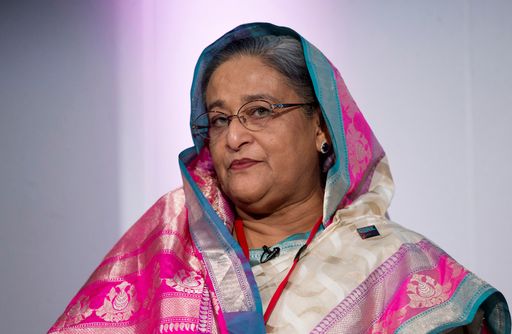
Reign of terror
Tarique Niazi, professor of sociology at the University of Wisconsin, tells TRT World that Hasina leaned heavily on the security services packed with party loyalists to perpetuate her authoritarian rule.
“When the ICT, which she founded to prematurely dispatch her enemies to their graves, sentenced Hasina to death, Bangladesh listened to the verdict in deafening silence,” he says.
“She turned her party into a vehicle of patronage. This is how she kept her cronies and hirelings bought and bonded,” Niazi says.
Niazi says Hasina sustained power by turning the AL into “a gravy train” for party loyalists who functioned as her enforcers.
“Her party faithfuls served as vigilantes, who kept the public square cleared of her opponents,” he says.
“She wrecked democracy. Her autocracy was widely detested,” he adds.
As opposed to the two-time premier Khaleda Zia of the opposition Bangladesh Nationalist Party, widely considered pro-Pakistan, Hasina’s main foreign benefactor has always been New Delhi.
India has mostly enjoyed warm relations with Bangladesh since it midwifed the latter’s birth 54 years ago. But bilateral ties improved to unforeseen levels after 2009 when Hasina returned to power in Dhaka, with the two countries forging a deep economic and security partnership.
Hasina and Indian Prime Minister Narendra Modi, who has been in power since 2014, enjoyed a “very close personal relationship” that originated from their similar positions on issues like the handling of opposition and Islamic religious parties.
New Delhi played an oversized role in Bangladesh’s internal affairs under the Hasina government, even though smaller nations in the region view New Delhi as an affluent elder sibling they love to hate.








The close relationship between the two countries eventually led to strong public resentment in the shape of an India Out campaign.
Analysts say the entire edifice of support for Hasina crumbled almost overnight in the summer of 2024 when students’ fury over job quotas reserved for AL supporters pushed the party’s patronage train off track.
“Hasina’s 15-year government was an exercise in brutality,” Niazi says.
“The dam of their pent-up frustration burst onto college campuses across the country,” he adds.
Security forces responded with lethal force, killing hundreds of mostly young protesters, but failed to quell the uprising.
By August 5, Hasina had fled to India aboard a military helicopter.
Dhaka has formally sought the ousted premier’s extradition after the award of the death sentence.
The death sentence handed down last week by the very tribunal that Hasina herself created in 2009 to target political rivals was, in Niazi’s words, “largely a pacifier to those who immensely suffered under her misrule”.
There is little chance that the sentence will be enforced, as Hasina remains in exile, he says.
But Niazi insists that AL supporters consciously chose silence because defending a discredited leader over a largely symbolic sentence would be a wasteful expenditure of their residual political capital.
“Their silence is nonetheless good for them and the country,” he says.
“They didn’t have to squander their political capital on an inconsequential sentence, and subject the country to unnecessary disruption,” he adds.
Some pro-India commentators, however, have referred to the absence of protests as evidence that the sympathisers of Hasina have been intimidated into submission.
“It is plausible to think that Hasina’s supporters feel squeezed right now,” Niazi says, but quickly adds that power in Bangladesh is “fairly widely distributed” between the interim government, security forces, opposition parties, and the street power of students.
Had AL cadres wanted to protest, he insists, “quite a few” people would cheer them.
The fact that they stayed home was a choice, not a result of coercion, he says.
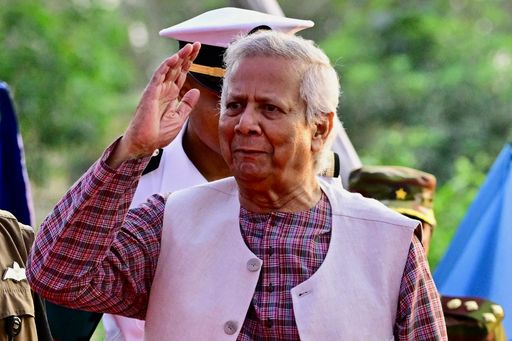
In the rearview mirror
Going forward, analysts see no realistic path for the 78-year-old Hasina to return to power.
Niazi cites “biological imperatives” and cognitive decline.
Meanwhile, Hasan predicts that a united domestic opposition and an unfavourable regional environment could keep her in exile for “at least 15-20 years”, if not permanently.
India, despite an extradition treaty, is unlikely to hand her over, Hasan insists.
The future of the AL itself remains equally uncertain.
Hasan says the party’s survival hinges on the continued leadership of the Hasina family, possibly her sister Sheikh Rehana or, in a long shot, descendants of other prominent AL leaders.
Without the family aura, he says, the party’s prospects are bleak.
Niazi is more optimistic about the eventual renewal of the AL, but only if the next generation, particularly Hasina’s US-based son Sajeeb Wazed, abandons dynastic arrogance and embraces genuine democratic reform.
“It is about time the AL gave up on its monopoly over the Sheikh and let him and his legacy be nationally owned,” he says, while referring to Hasina’s father.
“The AL… needs to renew its commitment to egalitarianism, and the banishment of economic exploitation.”