 Ziyad Motala
Abdul El-Sayed's victory over Haley Stevens is not merely another Democratic primary result. However small the margin, it is a political watershed, marking another significant defeat for a political formula that has dominated Washington for decades.
Vast financial resources, establishment endorsements, corporate media narratives, and the routine weaponisation of anti-semitism have long been used to silence criticism of Israel and to discipline Democratic politicians.
In Michigan, that machinery failed.
The symbolism could hardly have been more potent. The American Israel Public Affairs Committee (AIPAC) and its allies reportedly spent tens of millions of dollars to secure Haley Stevens' victory.
The objective was not merely to elect Stevens. It was to demonstrate that no Democrat could challenge unconditional support for Israel without facing political annihilation.
Instead, that unprecedented financial assault ended in a stunning defeat. Even in a purple state, money discovered its limits. For years, AIPAC's spending carried an aura of inevitability.
Candidates feared not merely defeat but political extinction. The result suggests that aura is beginning to fade. Financial influence still matters enormously, but it simply no longer guarantees political obedience.
Michigan does not stand alone. It follows New York, where Zohran Mamdani and a remarkable slate of progressive candidates swept aside establishment-backed opponents despite a familiar barrage of attack ads, donor pressure, and predictable attempts to portray criticism of Israel as political extremism.
Colorado delivered the same message when Melat Kiros unseated the thirty-year incumbent Diana DeGette, another victory that defied the weight of establishment support and big-money politics.
Viewed together, these elections are not isolated upsets. They are unmistakable evidence of a profound shift in the Democratic electorate.
Old orthodoxies on Israel
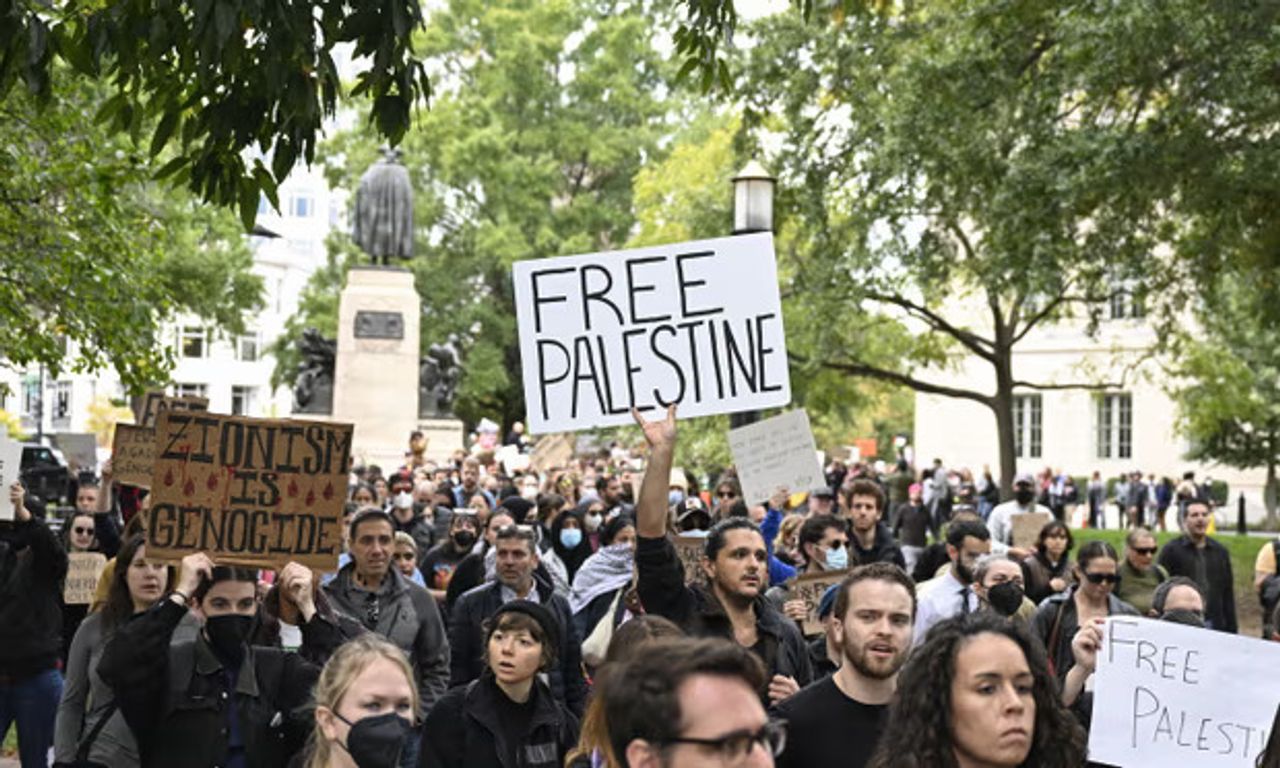
A new public consciousness is emerging, ever more willing to reject old orthodoxies on Israel, ever more resistant to the influence of donor power, and now prepared to challenge a party establishment that has long assumed it could dictate the boundaries of acceptable political opinion.
That consciousness has now demonstrated that it possesses not merely a voice but the electoral strength to reshape the Democratic Party itself.
That this latest victory occurred in Michigan rather than deep-blue New York matters enormously. It suggests that this political realignment is no longer confined to progressive enclaves.
It is moving into the American electoral mainstream, including battleground states where conventional political wisdom long held that the old political playbook was invincible.
The common thread running through these campaigns was impossible to ignore. El-Sayed, Mamdani, and other progressive candidates repeatedly posed a question that resonated because it exposed an uncomfortable truth.
Why is there always unlimited funding for wars, bombs, military aid, and unwavering support for a state engaged in genocide, yet never enough funding for universal health care, affordable housing, decent public education, or a living wage for Americans struggling simply to survive?
Millions of voters recognised the contradiction because they live with its consequences daily.
Party leaders lined up behind the preferred candidate. Mainstream media amplified carefully crafted narratives, critics were accused of anti-semitism and the candidate was forced onto the defensive.
The established playbook succeeded so consistently that Washington came to regard it as immutable political law. The old alliance between wealthy donors, party leadership, lobbying organisations, and corporate media has proved less formidable than it once appeared.
For decades, each reinforced the other, creating the impression that dissent could always be marginalised and ultimately defeated. That formula failed once again, this time in one of America’s most competitive battleground states.
The most remarkable feature of this political transformation is not merely that progressive candidates are winning. It is that accusations once capable of ending political careers have lost much of their potency.
The charge of anti-semitism has too often been cynically weaponised to shield the conduct of the Israeli state from legitimate criticism. Increasingly, Americans are refusing to accept the proposition that condemning Israel's actions amounts to hostility towards Jewish people.
Real anti-semitism remains a genuine evil that deserves uncompromising condemnation. What has been discredited is the cynical deployment of the accusation to shield a foreign government's conduct from political scrutiny.
They understand the distinction. Opposition is directed not against Jews or Judaism, but against a state that millions today recognise as an ethno-racial project, governed by an increasingly fascist leadership engaged in genocide.
Americans have proved perfectly capable of distinguishing between a people and the conduct of a state, even if much of the Democratic hierarchy continues to insist otherwise.
The Democratic establishment appears incapable of comprehending the magnitude of this shift. It learned little from Kamala Harris's defeat.
Rather than asking why so many younger Americans and voters of conscience abandoned the Democratic Party over Gaza, party leaders convinced themselves that the problem lay elsewhere.
They dismissed moral outrage as an electoral inconvenience instead of recognising it as a defining political issue.








‘A moral test of leadership’
The failure has become a recurring theme in the victories of progressive candidates across the country. The Democratic leadership assumed Gaza would remain a peripheral foreign policy issue.
Millions of voters instead treated it as a defining moral issue. From New York to Colorado and now Michigan, progressive candidates understood what the party establishment did not: for a growing segment of the electorate, Gaza was not simply another foreign policy debate.
It became a moral test of political leadership.
Chuck Schumer and other Democratic leaders rallied behind Haley Stevens just as they mobilised against Zohran Mamdani and other progressives in New York.
Their endorsements no longer carry the authority they once held. Today, they sound less like guidance from respected leaders and more like instructions issued by an amoral political class that no longer understands its own electorate.
This was not simply survival against overwhelming odds. It was repudiation. Tens of millions of dollars, establishment endorsements, coordinated attack advertisements, and the familiar apparatus of political intimidation failed to overcome an electorate whose moral compass has shifted. New York was not an anomaly.
Colorado was not an anomaly. Michigan confirms they were the beginning of a political realignment.
The establishment media bears no small share of responsibility for this political miscalculation. Long after much of the American public had moved on, establishment journalists continued to recycle the same tired ideological script.
Jake Tapper and Dana Bash at CNN, along with countless others, dutifully asked progressive candidates whether Israel had a right to exist, whether they condemned Hamas strongly enough, and whether they supported Israel's security.
The questions rarely changed because the assumptions behind them remained the same. Almost never were candidates subjected to equally relentless questioning about apartheid Israel, illegal occupation, starvation, collective punishment, or genocide.

Flow of information
The journalism of the legacy media has proved less an exercise in scrutiny than in policing the boundaries of permissible debate.
Those boundaries no longer exist. The gatekeepers have lost the gates. Americans steadily bypass the corporate media altogether.
They receive information through social media, podcasts, independent journalists like Zeteo, YouTube, and TikTok.
The concentration of media ownership no longer guarantees the concentration of public opinion. That reality explains why governments and powerful interests have become increasingly determined to regulate, acquire, or control the very platforms through which alternative information flows.
The extraordinary effort to force TikTok into new ownership in the United States reflects an understanding that the battle is no longer merely about technology. It is about who controls the flow of information and who gets to shape political reality.
Nothing illustrates that fear more vividly than comments made only days ago by former Israeli prime minister Naftali Bennett.
He did not describe Hamas, Hezbollah, or Iran as Israel's greatest strategic threat. He singled out Qatar, arguing that it represented Israel's most dangerous adversary because it owns Al Jazeera. That statement deserves careful reflection.
The fear is not military power. It is information. It is facts. It is truth reaching audiences that were once insulated from uncomfortable realities.
Authoritarian systems have always feared armies. Political orthodoxies fear informed citizens even more. This is why the election matters far beyond Michigan.
Like Mamdani, Kiros, and the growing number of other candidates who have recently defied the governing class, El-Sayed also challenged an information ecosystem that, for decades, shaped political reality long before voters reached the polling station.
However, none of this suggests that AIPAC or other powerful lobbying organisations have suddenly become irrelevant. Their financial resources remain immense, and their influence in Washington remains formidable.
What the election exposed, however, is that donor influence has begun colliding with something it cannot easily purchase: public conscience.
The Democratic Party elite, like political establishments everywhere, almost always mistake endurance for permanence. They assume that because a political formula has worked for decades, it will continue to work indefinitely.
History repeatedly proves otherwise. Institutions rarely collapse because they suddenly lose power. They decline because they fail to recognise that the assumptions sustaining their authority have quietly dissolved beneath them.
The genie is out of the bottle, and neither financial influence, media concentration, nor the routine weaponisation of anti-semitism will force it back inside.