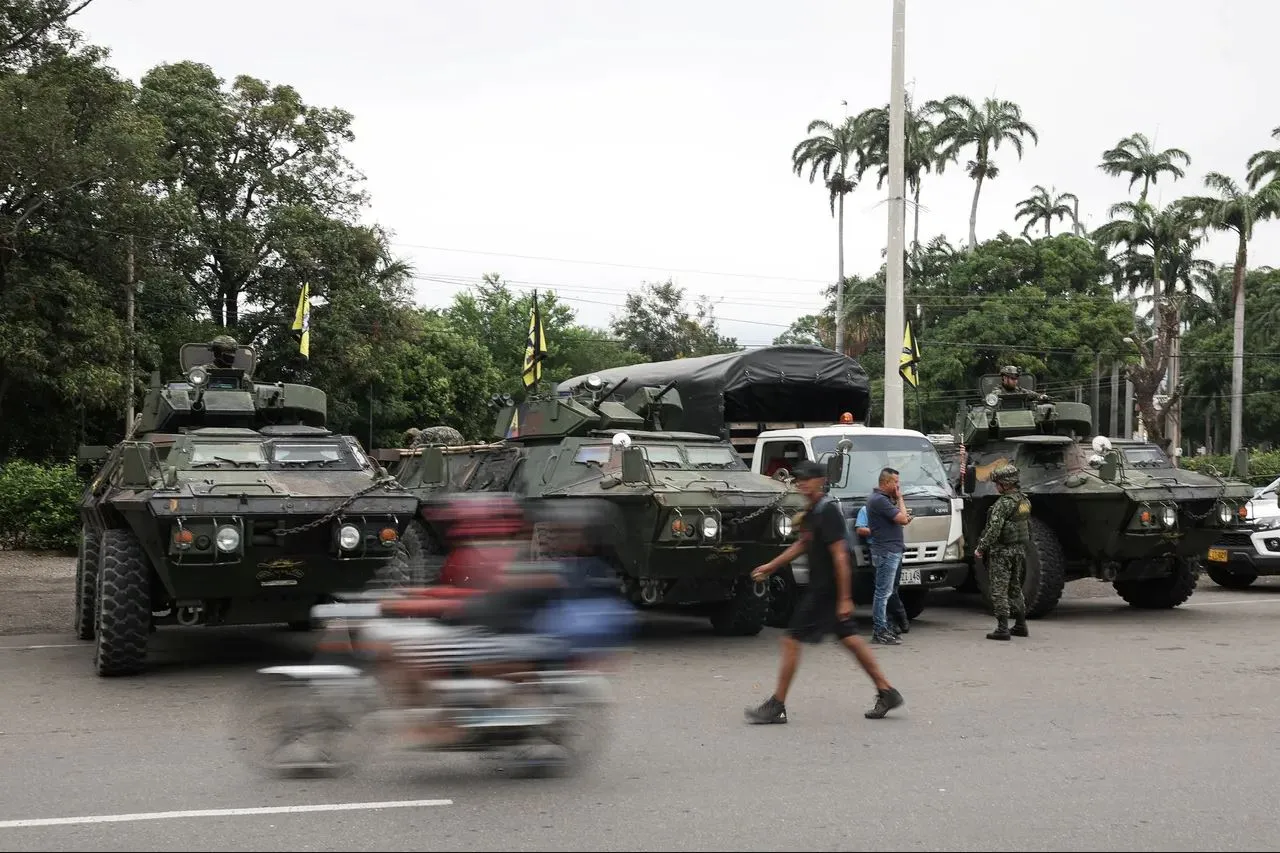
Washington’s attack on Caracas on Saturday once again places Latin America in the face of a pattern that has been repeated for decades: Washington's direct intervention in the internal affairs of the region.
From military invasions and coups d'etat to covert operations and economic pressure, the US has shaped the political direction of numerous Latin American countries, almost always under the argument of "security", "democracy", or the "fight against communism", and with deep and long-lasting consequences for their societies.
Here are the main US interventions in Latin America over the past 75 years:
Bay of Pigs, Cuba
On April 15 1961, B-26 aircraft sent by the United States bombed Cuban bases to annihilate the Revolutionary Air Force and facilitate the landing at Playa Giron of the so-called Brigade 2506, made up of exiles and mercenaries who had been trained by the CIA, the US intelligence agency, in Guatemala and Nicaragua.
The following day, the then-president of Cuba, Fidel Castro, declared the socialist character of the revolution that had brought him to power in January 1959, and on April 17, Brigade 2506 — made up of some 1,500 armed men and supported by aircraft and ships of the US Navy — attempted to land at Playa Giron, in Cuba's Bay of Pigs, about 180 kilometres southeast of Havana.
The attack sought to overthrow Castro and install a government that had been formed in Miami, but it was repelled and crushed by the Cuban Army after 72 hours of fighting, in which 200 people on both sides were killed and 1,200 attackers were captured. After being tried and convicted, they were exchanged in 1963 for food and medicine from the United States.
The Bay of Pigs invasion took place in the context of the Castro government's rapprochement with the Soviet Union. The failure of the US operation represented a serious setback for then-President John F Kennedy, while also marking the beginning of strained relations between the two countries.
Dominican Republic
On April 28 1965, then-US President Lyndon B Johnson sent 20,000 Marines to the Dominican Republic to quell the civil conflict the country was experiencing after Juan Bosch — who had come to power following the death of dictator Leonidas Trujillo in 1961 — was deposed by the military.
Washington's aim was to "prevent the country from falling into the hands of communism" and from creating "a second Cuba" in the Caribbean.
The US installed General Antonio Imbert Barrera at the head of the government, and in September 1966 Washington's troops left the country, shortly before presidential elections were held in which Bosch was defeated by Joaquin Balaguer. Balaguer had been part of Trujillo's administration and would remain in power until 1996.
Grenada
On October 25 1983, nearly 2,000 US Marines, along with a symbolic force of 300 soldiers from other small Caribbean countries — Jamaica, Antigua, Barbados, Dominica, Saint Lucia and Saint Vincent — invaded the Caribbean island of Grenada to overthrow the military regime that had seized power six days earlier, on October 19, after executing Prime Minister Maurice Bishop, three of his ministers and numerous civilians.
That coup had overthrown a government established in 1979, also by force, and had installed an administration supported by Cuba and recognised by the US and the United Kingdom.
The US President at the time, Ronald Reagan, justified the intervention — called "Operation Urgent Fury" — by citing the need to protect the lives of the thousand US citizens living on the island and to restore democratic institutions, while also claiming that an airport was being built for military use by the Soviets and Cubans.
The invasion was condemned even by the European allies of the US.
Most US troops left the country on November 1 1983, after a provisional government was established, and elections were held in 1988. Since then, the country has remained a parliamentary democracy.
Panama
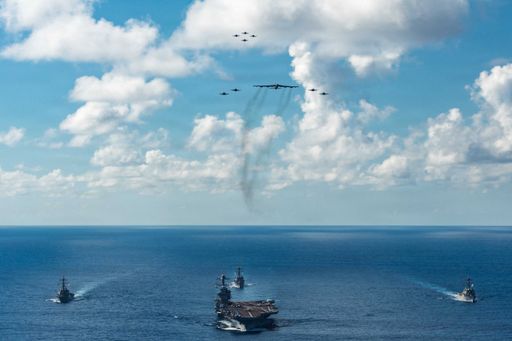
On the night of December 20 1989, with George Bush in the White House, 26,000 US soldiers entered Panama to dismantle the country's army and capture Manuel Antonio Noriega, accused of drug trafficking, in an operation known as "Just Cause".
More than 500 people died, 314 of them military personnel and the vast majority Panamanians, according to data declassified by the Pentagon in 2019, although humanitarian organisations put the number of Panamanian civilians killed at between 500 and 4,000.
Noriega, who ruled the country between 1983 and 1989 and had been collaborating with the CIA, surrendered 13 days later to US troops surrounding the Apostolic Nunciature in Panama, where he had taken refuge after the invasion.
Transferred to Miami on January 4 1990, Noriega was tried and sentenced in the US to 40 years in prison for drug trafficking, later reduced to 20. After serving two years of the sentence in France, he was extradited to Panama in 2011, where he faced sentences totaling more than 60 years in prison, and where he died in May 2017.
The Inter-American Commission on Human Rights (IACHR) condemned the events in 2018 and demanded that the US compensate the victims and launch a full investigation.
Haiti
On September 19 1994, more than 23,000 US troops peacefully occupied Haiti to facilitate the transition to democracy and the return of Jean-Bertrand Aristide, the island's first president voted into power in democratic elections (1990), who had been overthrown on September 30 1991 by a military coup led by General Raoul Cedras.
The arrival of the troops came hours after a US delegation led by former President Jimmy Carter reached an agreement with Cedras for the entry of US forces into Haiti, the departure of the coup government, Aristide's return, and the calling of future elections.
Aristide returned to Haiti on October 15 and resumed his mandate. At the end of March 1995, US forces transferred command of the peace operation to the UN, and in June legislative and municipal elections were held, which the opposition denounced as favoring Aristide's party.
Nearly a decade later, in February 2004, the United States again deployed Marines in Haiti, this time as part of an international coalition authorised by the United Nations, following an armed uprising that led to Aristide's departure.
This intervention sought to stabilise the country and create favourable conditions for the formation of a transitional government and the arrival of a UN peacekeeping force (MINUSTAH).
Nicaragua
Nicaragua, the most populous country in Central America, became a key point during the so-called Banana Wars at the beginning of the 20th century.
Although Nicaragua had achieved independence in 1838, its volatile political landscape — defined by clashes between liberals and conservatives — created an opening for US influence.
In 1912, following a request from conservative leaders, US troops invaded the country, maintaining a military presence until 1933. For two decades, Washington wielded disproportionate power over Nicaragua's political and economic life.
Ulysses S Grant, who would later become president of the United States, described it as "one of the most unjust ever waged by a strong nation against a weaker one", a shadow that still lingers over this chapter of history.