 Murat Sofuoglu
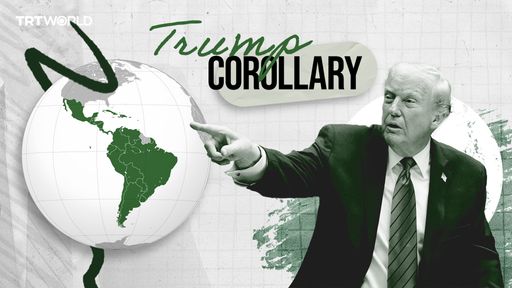
In early December, the new American National Security Strategy document made an explicit commitment to what was referred to as the Trump Corollary – a 21st-century twist to the Monroe Doctrine of 1823, an American geopolitical conviction that the US should dominate the Americas.
Less than a month later, the Trump administration put the words into action.
On January 3, the US launched Operation Absolute Resolve in Venezuela, leading to the capture of President Nicholas Maduro, his wife Cilia Flores and the death of at least 40 people in the Latin American nation with the world’s biggest oil reserves.
Trump’s attack on Venezuela – coming after weeks of sabre-rattling and strikes of alleged drug-running vessels – has sent alarm bells ringing across the world, with condemnations coming from both friends and foes of the US.
The late-night operation has also left many unanswered questions – what will happen to Venezuela without Maduro at the helm? Will the US be able to enforce regime change that it has worked for? And how will the rest of Latin America react to the stunning assault on a sovereign nation’s elected leader?
Alexander Stoan, a researcher at York University specialising in Latin America, for one, says the socialist Venezuelan state is intact till now despite the well-made plans in Washington.
“The core of the political order that shapes ‘chavizmo’ continues to survive and govern Venezuela,” Stoan tells TRT World, referring to the left-wing populist political ideology popularised by the late Venezuelan president Hugo Chavez.
Chavismo, called chavism or chavezism in English, advocates social welfare programmes, nationalisation of industries, including the oil sector, and strong opposition to neoliberal economic policies.
Chavez survived several coup attempts against his rule, including a US-backed abortive military intervention in 2002.
Maduro, a former bus driver and later a union leader, succeeded Chavez as the country’s president in 2013.
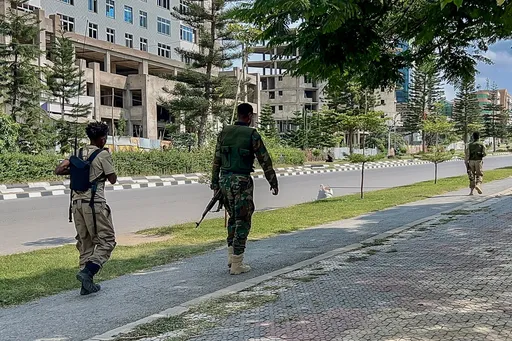
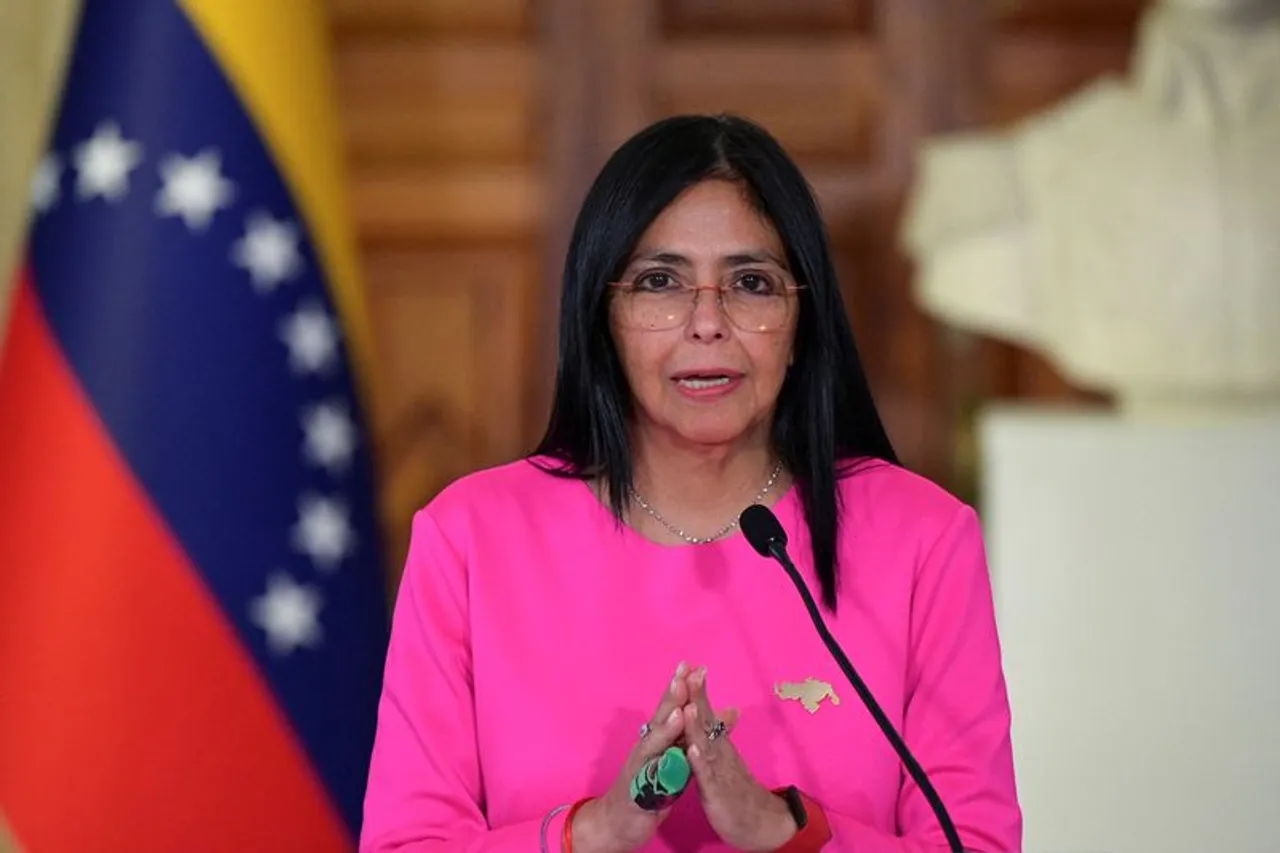
Following the capture of Maduro, Venezuela has adopted a defiant stand, led by the country’s Vice-President Delcy Rodriguez, who assumed the interim presidency, and Interior Minister Diosdado Cabello, who was seen in the streets mobilising public support.
Will Chavismo survive?
Experts point out that despite Maduro’s capture by the US, Venezuela’s socialist rule stands on a platform that is propped up by others and not just one leader.
Venezuela has the backing of socialist-ruled Latin American states like Cuba and Nicaragua, and anti-Western states like the communist party-ruled China and Russia.
“Cabello, Rodriguez and those around them are hardliners. The social forces swarming the streets of Caracas in unity with the armed forces are not pleased at the ease with which US imperialism kidnapped their head of state. Right now, there is huge pressure on the government to continue resisting the demands of the US,” says Stoan.
On social media, numerous Chavista governors have also come out to confirm they are in control of their various states, he adds.
“We will never again be a colony of any empire,” said Rodriguez during a televised address to Venezuelans, referring to Spanish colonisation of large parts of Latin America, including the oil-rich state.
The US has also conducted many military occupations across Latin America from Mexico to the Dominican Republic, Cuba and most lately, Panama.

Venezuela’s Defence Minister Vladimir Padrino Lopez also called on citizens to unite to resist the US “invasion”, putting up resistance to “fight for freedom”.
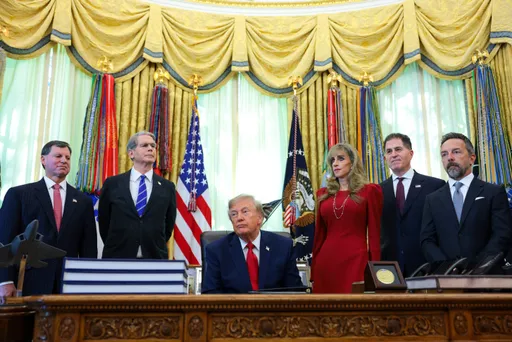
While Trump asserted that Rodriguez is willing to comply with his requests for US access to Venezuela’s oil sector and the installation of a Washington-friendly government, she called Operation Absolute Resolve “barbaric”, signalling no intention to come to terms with the American leadership.
“The stiffest resistance will come from the Cuban military intelligence people, along with the allies of Diosdado Cabello, military and civilian. It will not be the entire state,” predicts James E. Mahon Jr, a professor of political science at Williams College and an expert on Latin American politics.
Some US officials claimed that the Cuban intelligence was providing security to Maduro. In an interview after the capture of Maduro, Trump made a similar suggestion. “Many Cubans lost their lives. They were protecting Maduro. That was not a good move,” he said.
Dan Steinbock, an international expert on geopolitical conflicts, however, is unsure if the Venezuelan resistance can prove “consequential” in the face of full US military coercion, continued maximum economic pressure supported by covert operations in the shadows.
“As evidenced by Trump's new national security strategy, all Latin American countries are now potential US resource targets. Ironically, the US is undermining the rules-based order it claims to represent,” Steinbock tells TRT World.
Taking out Maduro violently could signal a US incentive to push the lower ranks of chavismo into accepting Trump’s maximum demands: privatisation of the oil industry and an end to the Venezuelan state’s alleged connections with drug trafficking, according to Stoan.
While the US targeted several military bases, including the Fort Tiuna complex which hosts the country’s defence ministry, the Trump administration – which has long promised to bring peace to the world – did not want its operation to look like an invasion, according to analysts. Maduro and his wife were captured in Fort Tiuna.
“As long as Trump is unwilling to invade in this way, this gives the Chavista government both space and time to regenerate,” says Stoan, referring to a possibility of Caracas reaching a settlement with Washington.
“For Venezuelans, the conflict remains frozen. Stuck between the imperial pressure of the US and a political leadership that is more incentivised to capitulate.”
While there is a settlement possibility, experts also see the possibility of civil strife if tensions escalate further between the Chavista government and the Trump administration.
“It opens up the possibility of a transition, but also the risk of civil war, from street fighting in cities to chavista rural guerrilla bands,” Mahon Jr tells TRT World.
Can the US run Venezuela?
Despite Trump’s public claim to “run” Venezuela for the time being, experts see real obstacles in implementing US rule or installing a puppet regime in Caracas. Even some anti-Maduro opposition figures are opposed to this idea.
Pedro Burelli, a Venezuelan opposition figure and former director of the country’s state-owned oil company, called Trump’s proposal to run Caracas a “bizarre” idea, though he supported the US operation to capture Maduro.
“The term ‘bizarre’ doesn’t even begin to describe what we just heard,” Burelli wrote on X, calling Trump’s Venezuela plan an “unacceptable situation”, adding that while the country’s economic situation is dire, “it is not about to surrender to absurd whims”.
However, even Trump admitted during his post-operation press conference that Venezuela can not be run by Nobel Peace Prize winner and opposition leader Maria Corina Machado, because she does not command any “respect” from the people.
“Given the nature of the strike being a raid and that the people left in control of Venezuela are still chavistas, we should take Trump’s claim to run Venezuela about as seriously as you would hearing a rapper saying, ‘we run these streets’,” says Stoan.
Despite this, Trump will still be able to say “he got his Maduro with minimum bloodshed and maximum ruthlessness,” the academic adds.
While Mahon finds a regime change “more likely now than before”, he thinks it matters who will place opposition leaders like Edmundo Gonzalez, who ran against Maduro in the last election, “on the throne”.
“What if there is no indigenous military force behind them, because those in favour of transition have been imprisoned, exiled, or otherwise cowed by the Cuban military intelligence forces in Venezuela? Will it be the US Marines?”
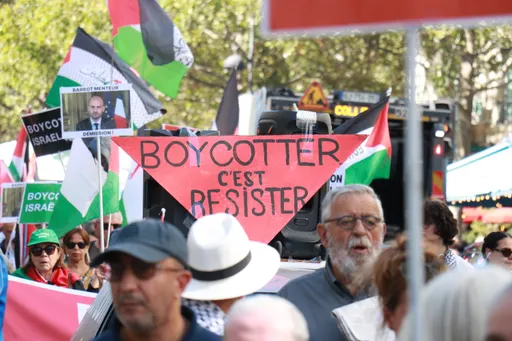
Trump’s desire to run Venezuela has not found much support across global audiences. France, a Western ally, condemned the US operation as China demanded an immediate “release” of Maduro and his wife. Russia called the US operation “armed aggression", while expressing "firm solidarity with the Venezuelan people.”
Many Latin American states – including Mexico, Brazil, Chile, Colombia and Cuba – also condemned the US attack on Venezuela.