 Murat Sofuoglu
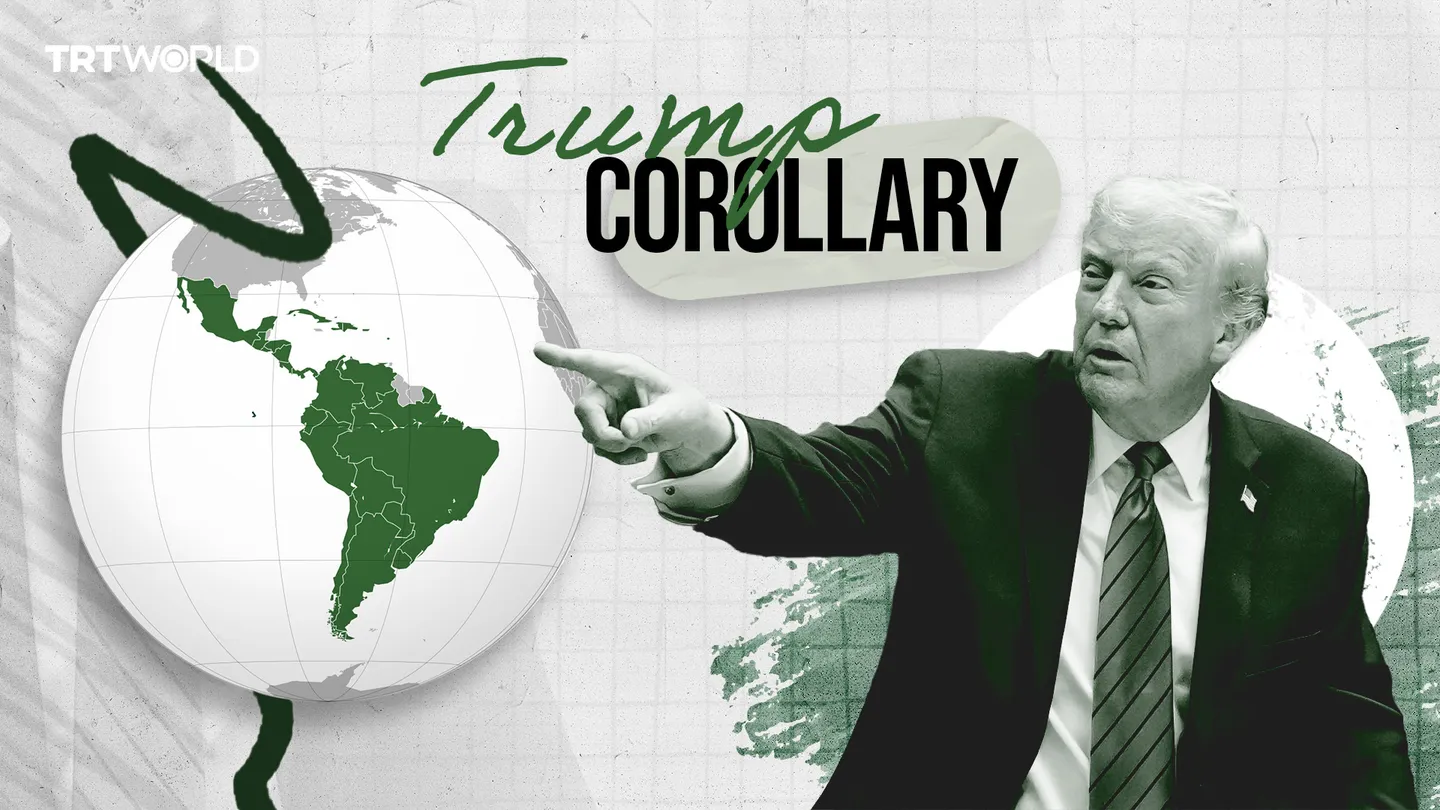
The Trump administration’s newly published National Security Strategy document offers many bold perspectives on various conflicts and regional issues, but one stance called ‘Trump Corollary’ provides some intriguing clues about how the president’s inner circle views the US's global position and its future.
While the authors of the security document reiterated America First positions page by page, from opposition to illegal immigration to strengthening US financial instruments like the dollar and the empowerment of Washington’s military might, they also highlighted the primacy of the Western Hemisphere for the US more than anything else.
Given the critical importance of the Americas for US security, which the document identifies as the top priority in the section titled 'What Do We Want In and From the World?', Washington will enforce “a ‘Trump Corollary’ to the Monroe Doctrine” of 1823.
It is an ancient foreign policy principle advocating American dominance in the Western Hemisphere.
While experts agree that the Trump Corollary is an ambitious US stance, they interpret its core message—whether it appears as an aggressive or defensive doctrine—differently.
Alfonso Insuasty Rodriguez, coordinator of the Inter-University Network for Peace, finds both the document and its Trump Corollary as “an open return to imperial power”, treating Latin America “once again as a strategic backyard”.
“The document reaffirms the Monroe Doctrine under a new seal, the ‘Trump Corollary’, which seeks to restore US exclusivity in the continent by expelling China, Russia or any extraregional actor,” Rodriguez, who is also the director of the GIDPAD research group at the University of San Buenaventura, tells TRT World.
Trump’s geopolitical strategy focuses on transforming “regional champions” into enforcers of the US agenda, ranging from migration control to militarised action against cartels, industrial near-shoring, and restricting ties with external powers, according to the professor.
“We want a hemisphere that remains free of hostile foreign incursion or ownership of key assets, and that supports critical supply chains; and we want to ensure our continued access to key strategic locations,” the document said, disclosing its intention to condition economic assistance on geopolitical alignment with US-controlled supply chains.
“This is an imperial redeployment aimed at redefining Latin American politics through sanctions, economic incentives and adjusted military presence to ensure strategic obedience. The region is defined not by its sovereignty but by its utility for US security,” Rodriguez says.
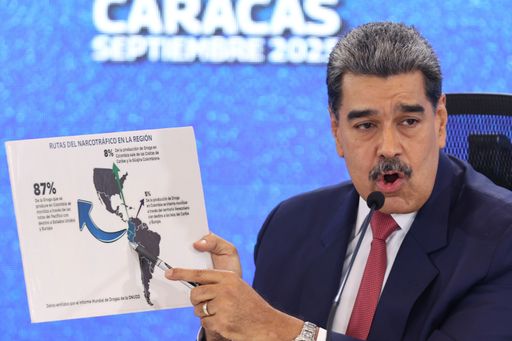
In recent months, the Trump administration has clearly expressed its ambitions for Latin America by deploying its air and naval forces in the Caribbean near Venezuelan shores in the largest military buildup in decades.
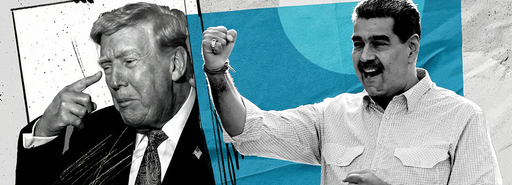
It threatened the Maduro government with removal and warned that Venezuela’s neighbour and ally, Colombia’s President Gustavo Petro, would be next.
Beyond the Trump Corollary, the main message of the NSS doctrine is Washington’s plan to reshape the international system to maintain its primacy, according to Rodriguez.
“It is a strategic offensive, and the Global South—Latin America, Africa, the Middle East and parts of Asia—re-emerges as terrain for dispute, disciplining and reconfiguration.”
A defensive doctrine?
Despite the document’s aggressive tone, its repeated “we want” statements, and the historically expansionist legacy of the Monroe Doctrine—which helped justify US interventions from Mexico to Cuba, the Dominican Republic, and beyond—some security experts interpret the Trump Corollary differently.
“The shift is that this revival of Monroe thinking comes at a moment of relative US fatigue and contested primacy, not at the height of unchallenged dominance,” Andreas Krieg, a defence analyst, tells TRT World, referring to the damaging legacy of US wars from Iraq to Afghanistan and China’s rising global influence.
“Re-stating a hemispheric doctrine now signals that Washington is looking for a defensible core: a sphere where it still expects deference and where it is willing to pay serious costs to maintain preeminence. That is as much a confession of limits as it is a statement of ambition,” Krieg says.
The security document clearly states that the US should not attempt to control the entire international system, focusing instead on its “vital national interests” related to its geopolitical, economic, financial, and similar stances.
The document also delivers a strong criticism of American elites’ “misguided and destructive” globalist policies, questioning the post-Cold War US foreign policy belief that “permanent American domination of the entire world was in the best interests of our country”.
The document’s anti-globalist stance and its opposition to “forever wars” might also be connected to one of the core ideas of the Monroe Doctrine: that the US should not intervene in European conflicts outside the Western Hemisphere, advocating neutrality toward them.
“There is a hard-headed case for the Trump Corollary,” Krieg says, referring to the fact that American power and resources are limited as the NSS document concedes, arguing against trying to police every theatre across the globe.






“In that light, prioritising the region that contains your borders, main migration routes, nearby sea lanes, and the Panama Canal has a certain realism to it,” he says, referring to the Latin American landscape.
William Earl Weeks, a retired history professor and author, advocates for the Corollary to refocus on the US’s immediate security threats rather than wasting lives and resources on imposing "democracy" in distant countries.
“Makes sense to me. Put another way: I support drone strikes against narco terrorist smugglers, not against wedding parties in Afghanistan or Iraq, a la Obama,” Weeks tells TRT World.
How will Latin America react?
Whether the Trump Corollary is an aggressive or defensive approach, its success depends not only on how the US implements it but also on how regional actors and their international partners, from China to Russia and the EU, respond to it, experts say.
“The problems start when you ask what ‘assert and enforce’ means in practice in 2025,” says Krieg, referring to the region’s crowded geopolitical actors from China to Russia and the EU.
China is South America’s top trading partner and a major financier for infrastructure, energy, and mining projects from Brazil to Argentina and Chile, while the EU remains the leading foreign investor across Latin America and the Caribbean, particularly in telecommunications and renewable energy sectors.
On the other hand, Russia also plays a role in the region, supplying air-defence systems and security cooperation to Venezuela, Cuba, and Nicaragua, the three allied states with leftist governments.

While the Trump Corollary as an organising idea has some logic by saying that Europe and parts of Asia must carry more of their own security burden, treating the Americas as “the inner ring of US defence and prosperity”, its execution will be quite difficult in Latin America’s crowded political environment, according to Krieg.
“It will run into a web of existing economic ties, regional nationalism, and rival great-power footholds. That does not make it impossible, but it does mean that “assert and enforce” will end up being selective, uneven, and often constrained by others’ choices,” he says.
Most leftist Latin American political movements and many nationalist conservatives see any explicit “corollary” to Monroe as confirmation that US policy, with its long record of interventions from Cuba and Central America to Chile, has not changed in real terms, he adds.
More diversification
Similar to Western sanctions on Moscow, which have prompted Russia to strengthen its alliances with countries like China and India, the two nations with significant energy demand, US pressure through the Trump Corollary might also motivate regional actors to pursue greater diversification to counter potential American punitive measures.
Latin American actors are “likely to push harder for external balancers—China for trade and infrastructure, Russia for arms and diplomatic support, maybe Europe for investment and symbolic distance from Washington,” Krieg says.
But pragmatic regional governments from Mexico to Brazil and key Caribbean states might also try to utilise the Trump Corollary as a positive leverage for their long-term interests, offering cooperation on migration enforcement, counter-narcotics, and requesting in return market access, investment, debt relief, and restraint on unilateral sanctions, according to the analyst.
“The fact that many of them now have serious trade and investment relationships with China and the EU only strengthens their hand,” Krieg underlines, but he also reminds that middle powers like Mexico and Brazil “will unlikely sign up to a simple ‘US first, everyone else out’ formula”.
While Mexico is deeply connected to the US economy through the United States-Mexico-Canada Agreement (USMCA), a free trade deal that replaced NAFTA, it also views Chinese goods and capital as means to boost its own growth.
Brazil, one of the original founders of BRICS, which is a non-Western alliance, has diversified its global partners in recent decades, working hard to deepen its strategic autonomy.
The current Lula da Silva government has significant disagreements with the Trump administration, from its Caribbean strikes on alleged drug boats to pro-Israeli stances.
“The Trump Corollary gives both an incentive to keep the US close and a reason to hedge, so that they are not left exposed if Washington swings between engagement and pressure,” says Krieg, adding that smaller Central American states will probably respond to the US stance with mixed reactions.
“So the hemisphere is unlikely to line up neatly behind the Trump Corollary. The more Washington tries to turn it into a monopolistic claim—on ports, telecoms, critical minerals, or security partnerships—the stronger the push for diversification will be. The more it can live with messy pluralism yet still draw a few red lines, the more manageable this doctrine becomes.”