 Zeynep Conkar
“I left one prison and entered another.”
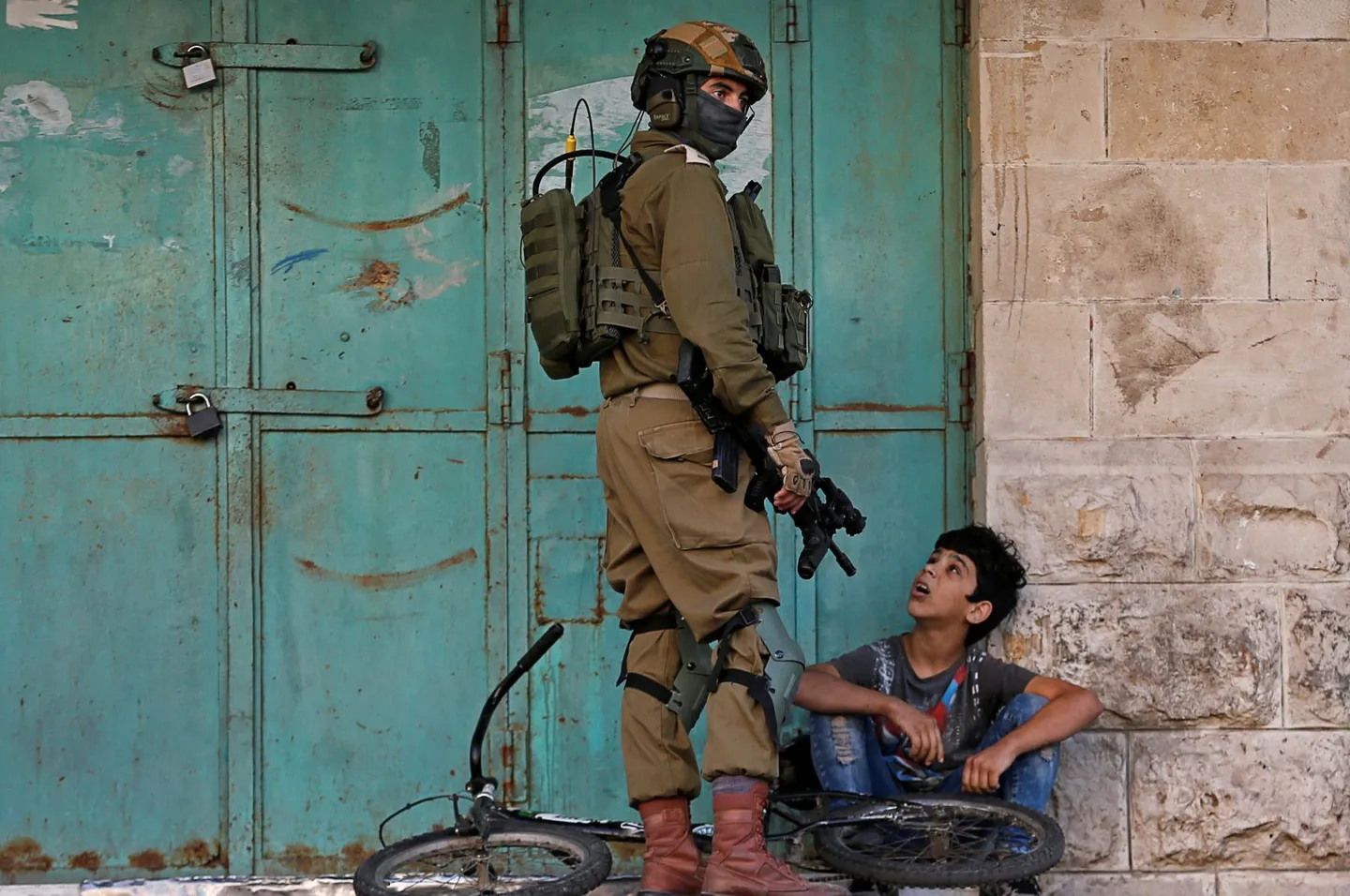
For Ahmad, 19, leaving Israeli detention did not mean leaving prison behind. The fear and trauma of his 15 months in detention followed him home.
He was arrested on August 6, 2024, at 16, and released on November 3, 2025, at 18.
Now back in Balata Camp in the occupied West Bank, Ahmad says that fear continues to shape his daily life.
“If the army enters the city, I instantly disappear from the area. I’m afraid of going back to prison. I’m afraid of what is inside, of the hardships I experienced in there,” he tells TRT World.
Since October 7, Palestinian children in the occupied West Bank have faced a sharp rise in detention by Israeli forces, within a system that has long subjected Palestinian minors to arrest, interrogation and prosecution under Israel’s military courts.
Around 370 Palestinian children were being held in Israeli prisons as of early August, most of them in Megiddo and Ofer. Israeli forces detained 276 Palestinian children in the first six months of 2026 alone, according to the Palestinian Centre for Prisoners’ Advocacy.
But the numbers say little about what happens after the prison gates open.
For children who have spent months or years behind bars, release can mean returning to interrupted education, disrupted routines and strained relationships while carrying the physical and psychological effects of detention.
Even a few days in detention can leave a lasting mark.
When five days are enough
For brothers Omar, 13, and Faisal, 14, detention lasted just five days.
They were held at Megiddo Prison before returning home to their family. But those five days have continued to affect their sleep, friendships, education and work, while leaving them afraid to move freely outside their home.
Before his arrest, Omar had left school but was planning to return. He also worked at a local shop. Since his release, he has done neither.
“My mental health has deteriorated since I was released from prison. My friends stopped spending time with me. I had conflicts with many of them, and eventually they started avoiding me,” Omar tells TRT World.
He says the shop owner became afraid that Israeli forces might return to the area and damage the shop because of him, leaving Omar without work.
He also continues to experience pain after being struck in the head with the butt of a rifle before reaching the prison.
“The impact affected my head, and ever since then, I have experienced pain whenever I rest my head on a pillow.”
His fear of being detained again has also changed how he moves through his neighbourhood.
“Whenever I go outside into the neighborhood, I am afraid that the army might come and arrest me again, or that soldiers might come on foot and take me away,” Omar says.
“I am constantly afraid. I have stopped going outside and now I spend most of my time at home.”
Faisal describes a similar struggle, particularly at night.
“After I was released, my life became even worse,” Faisal tells TRT World.
“Every night, I struggle to sleep because I keep remembering what happened, the beatings, the humiliation, and the experiences I went through in prison.”
He says some friends have distanced themselves from him and that returning to ordinary life has become one of his biggest challenges.
“The hardest part has been trying to return to my normal life and reconnect with my friends and people around me. I feel like I have not been able to make my life normal again,” he adds.
A system that follows children home


What Omar, Faisal and Ahmad have been through occurs against a wider system in which Palestinian children can be detained without charge or trial.
Under administrative detention, Israel can hold Palestinians for renewable periods without charge or trial, based on undisclosed evidence.
Israel Prison Service data showed that 191 Palestinian minors were held under administrative detention in March 2026, a record high since the organisation began monitoring child administrative detainees in 2008.
Even those figures do not capture the full scale of child detention.
Israel Prison Service data cover prisons under its administration but exclude children held in military detention and interrogation centres. The number of children detained from Gaza remains unclear.
Palestinian children from the occupied West Bank are prosecuted under Israel’s military court system, while Israeli settler children living in the same territory fall under civilian juvenile law. Under Israeli military law, the age of criminal responsibility is 12.
Article 37 of the Convention on the Rights of the Child requires detention to be used only as a measure of last resort and for the shortest appropriate period.
A UNICEF review of Israel’s military detention system concluded that the ill-treatment of Palestinian children appeared to be “widespread, systematic and institutionalised” throughout the process, from arrest through prosecution and sentencing.
For Ahmad, the consequences of that system did not end when he was released.
He arrived home on a Monday but said it took him until Thursday to sleep properly.
“I couldn’t sleep. I didn’t know whether I was dreaming or awake, whether I had actually gone home or not.”
Even eating felt unfamiliar. After months in conditions where food was scarce, Ahmad says his body had become unaccustomed to eating normally.
“There was barely any food. It was a completely different life inside,” Ahmad says.
During his 15-month detention, he was held in Damon, Ofer and Megiddo prisons. He described beatings, stress positions and repeated exposure to gas, and said he suffered from scabies for four months without receiving medical treatment.
Some of his most disturbing memories, however, are of what he saw around him.
“When I entered the prison’s section for child prisoners, I saw the scene inside and thought, ‘Where have I come?’”
“For an entire week after I entered, I was in a state of shock. I couldn’t talk to anyone about what I had seen,” Ahmad says.
Outside prison, reminders of those experiences are difficult to avoid. Ahmad says he leaves conversations when people begin discussing the Israeli army or other prisoners.
“Anyone who starts talking about the army, I get up and leave the gathering,” he says. “And if someone brings up a story about a prisoner, I distance myself from those conversations. I tell them, ‘I don’t know.’”
Faisal, meanwhile, still thinks about friends who remain in prison. Even while working and spending time with his cousins, the possibility of being detained again remains on his mind.
“I am afraid that they will arrest me again while I am at work. I keep thinking that I just want to go home after work, but I am afraid that they might arrest me again,” Faisal says.
None of the children interviewed for this story has received support to help them process what happened.
They are trying to return to school, work, family and ordinary life. But for children who have learned that a street, a checkpoint or even a knock at the door can lead back to prison, freedom does not necessarily feel like freedom.
For Ahmad, that uncertainty has shaped how he thinks about his future.
“All I think about is how to leave. I want to live a normal life without fear and anxiety. I want to feel safe.”
For Palestinian children released from Israeli detention, the question is therefore not simply whether they have been allowed to go home.
It is whether they can ever feel at home again.