 Zeynep Conkar
Ayman Ghrayeb left home on the morning of November 17 after telling his family he would only be gone for a few hours.
He was heading to al-Fasayil in the Jordan Valley in the occupied West Bank, a community he had visited countless times before to support families facing illegal settler violence.
By that evening, he had disappeared. His phone was off. His location was unknown. And his family entered the longest and most terrifying days of their lives.
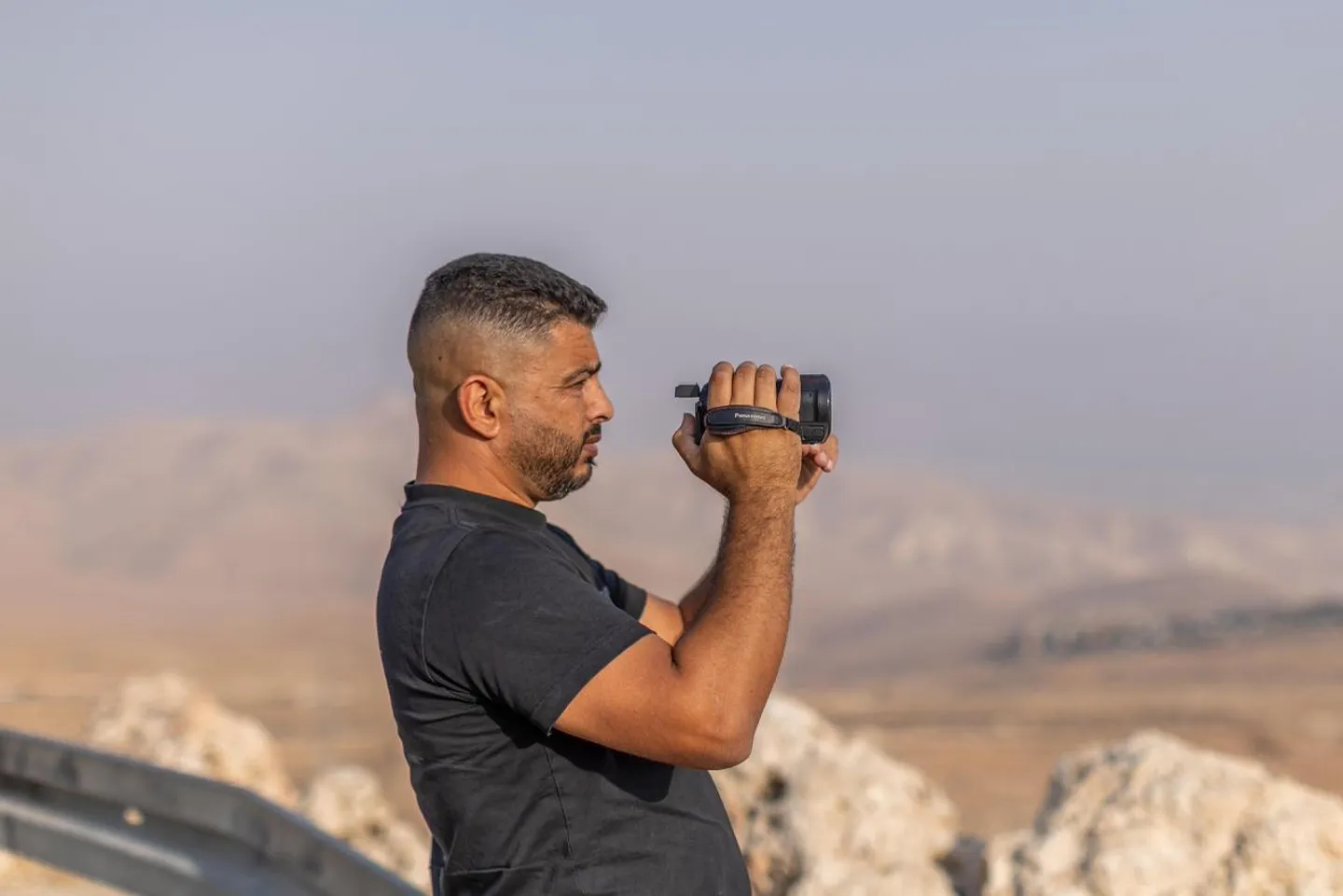
The 42-year-old peace activist and father of four has long documented the hardships Palestinian communities are facing under escalating settler attacks.
“Those initial days of not knowing where he was or what condition he was in were some of the hardest moments we have ever experienced,” his brother, Belal, tells TRT World.
It would later emerge that Ayman had been secretly held by Israeli forces at the Samra military base with no legal detention facilities, kept outdoors, handcuffed, exposed to the cold, deprived of food, and beaten so severely he required hospitalisation twice.
Israeli authorities then arbitrarily converted the detention of the non-violent activist into six months of administrative detention, meaning imprisonment without charge, without trial, and on unspecified evidence.
“Israel routinely extends Palestinian detention for 144 hours (six days) before issuing an administrative detention order,” Belal says.
This measure is apparently an administrative tactic designed to give the Shabak, the Hebrew name of the Shin Bet intelligence agency, more time to prepare a ‘secret file’ that is used to justify administrative detention and circumvent the absence of actual evidence that could be presented in court.
The Israeli surveillance apparatus also prepares for a closed military court session within this time period, in which secret materials are shown to the judge but withheld from the detainee and their lawyer.
“Our greatest fear now is that Ayman will be held for a long period under administrative detention, without any legal process and despite the absence of charges,” Belal adds.
Under Military Order 1651, which governs the occupied West Bank, the Zionist authorities have amended the rules so that, in some cases, a detainee may be held up to 144 hours before a decision on an administrative detention order is formally issued.
This extension replaced an earlier shorter period (e.g. 72 hours) to give authorities more time to prepare the “secret files” often used to justify detention.
In practice, this 144-hour period becomes a de facto “holding window,” during which detainees may be held without charge, often without access to proper legal representation or public evidence.

To silence a documenter
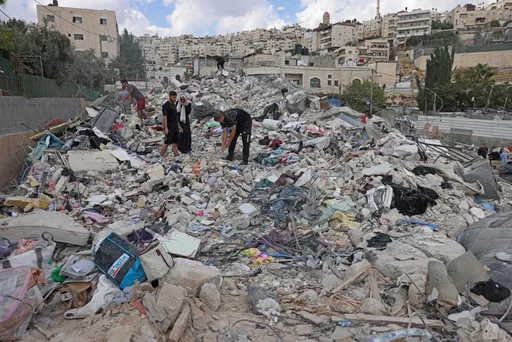
Ayman’s arrest comes amid the displacement of more than 100 Palestinian communities over the past two years, many of them in the Jordan Valley.
Many such non-violent activists are regularly harassed by the Israeli occupation's Shabak and several have been placed under administrative detention.
Most recently, another prominent activist, Rabia Abu Naim, from the village of al-Mughayyer, and the coordinator of the Zaytoun 2025 olive harvest campaign, was detained during a nighttime raid of his home and placed under six months of administrative detention.
Abu Naim’s detention contradicted the Israeli military prosecutor’s admission that he had not been involved in any armed activity.
Among others, Belal too has been subjected to several arbitrary arrests over the years, none of which resulted in formal charges.
This time, everything about Ayman’s detention points to planning, his family argue. Before Israeli soldiers even transferred him to the military base, two Shin Bet officers called him directly during his field detention.
“According to a friend who witnessed the scene, they told Ayman they were ‘fed up’ with his activism and that ‘this time, he will be sent to prison’,” Belal says.






“For two days, we heard nothing,” Belal says. “We did not know if he was injured, alive, or even still in the Jordan Valley.”
On November 19, the legal aid group HaMoked informed the family that Ayman was in the Samra base, held under brutal conditions.
When the family finally heard from him six days later, he described being left outdoors, bound, starving, and beaten repeatedly. At one point, he said, a soldier struck him violently in the ribs while he was handcuffed. He required two hospital visits in just a few days.
Six days after his initial arrest, Ghrayeb was interrogated for the first time on non-specific suspicion of so-called "incitement".
The questioning appeared to be a mere formality, according to his lawyer Riham Nasra, as she was notified even before he was questioned that he would be placed under administrative detention based on "secret evidence and undisclosed suspicions".
“Choosing administrative detention instead of filing charges is a clear indicator that his detention is politically motivated, particularly since his work consists entirely of public, transparent documentation and human rights advocacy on social media,” Belal adds.
A tool of political control
The Jordan Valley has become one of the most aggressively targeted regions for uprooting Palestinian communities.
Attacks, land confiscations, livestock theft, and the destruction of homes and water sources have accelerated sharply over the course of Israeli genocide in Gaza.
“For many families, Ayman’s presence made them feel seen. Settlers knew that when he was there with his camera, someone was watching the crimes they commit,” says Belal.
Ayman’s friends and family had long feared this moment. For years, he was stopped at checkpoints, threatened during field visits, and repeatedly questioned about the videos he shared.
“Over the years, he told us many times that his filming and his presence in the Jordan Valley made him a constant target,” says his brother.
“He knew they wanted to stop him. But he also felt a responsibility to continue documenting what these communities were going through,” he adds.
His absence now leaves those communities more exposed. Settler extremists recognised the significance of his disappearance immediately. After news of his detention surfaced, social media accounts linked to the violent ‘Hilltop Youth’ group celebrated it, calling administrative detention a “temporary solution”.
One user openly called for his execution, writing that “a single bullet costing less than two shekels” would solve the issue. Another demanded he be expelled to Gaza, adding, “With Ben-Gvir in charge, we no longer need to worry.”
The impact on his family has been devastating. His youngest daughter, Rina, had celebrated her first birthday just two weeks before he was taken. “Our mother lives in constant fear, and his children, especially Rina, cannot understand why their father suddenly vanished,” Belal says.
Their deepest worry is the open-endedness of administrative detention. The initial order lasts six months, but it can be renewed indefinitely. Ayman may not see a judge any time soon. He will not be shown the evidence against him. His release is entirely unpredictable.
“We simply want him to be treated humanely and given his basic legal rights. And we want the world to know why he is being punished: because he showed the truth.”
For people in the Jordan Valley, Ayman’s absence has changed a lot for the worse.
“We strongly believe that international attention is essential to protect Ayman and other activists,” Belal says.
“That attention may be the only thing keeping them alive.”