 Karya Naz Balkiz
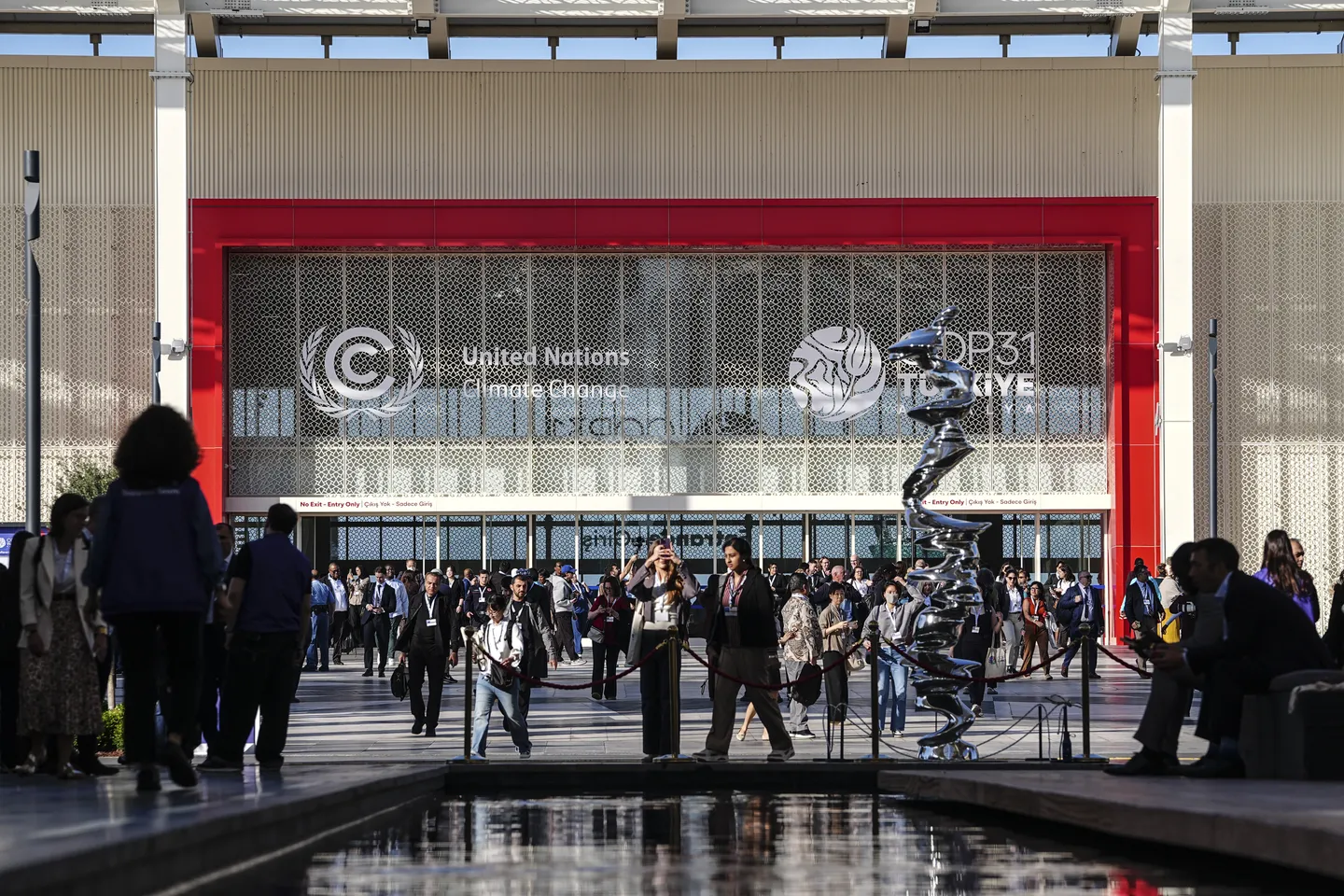
Walking into the COP31 venue on the first day of the summit, I had one phrase on my mind: “Dogrusunu bildigimiz yalanları dinlemeye geldik.” A common Turkish meme slang. “We have come to listen to the lies which we know the truths to.”
This was my first COP (Conference of the Parties), and the first held with the acknowledgement that global warming is on course to overshoot the 1.5°C threshold. For many observers arriving in Antalya, the expectation was that crossing that threshold would serve as a wake-up call for urgent collective action.
After two weeks of negotiations that stretched more than 50 hours into overtime before ending without an overarching agreement, it became clear once again that COP is rarely just about the climate.
Beneath the negotiations and promises of mitigation and adaptation lies a tug-of-war between the Global North and the Global South over who pays for the crisis and who sets the terms of the transition.
‘Dead in the water’
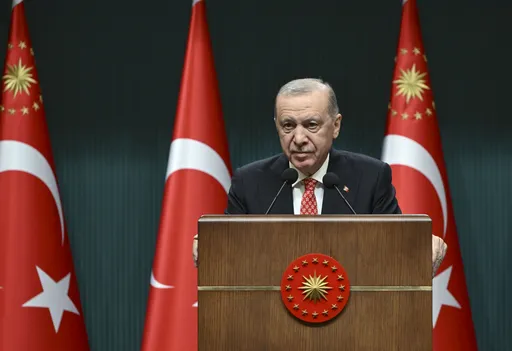
The first week of the summit began with cautious optimism. Türkiye, as this year’s co-host alongside Australia, insisted on maintaining the 1.5°C threshold as a guiding principle.
There was momentum, from consensus on building climate-resilient cities to discussions on carbon removals and elevating the share of electricity in the global economy to 35 percent by 2035 (the “35 by 35” target).
But the missing agenda items cast a shadow over the summit.
Last year at COP30 in Belem, Brazil, parties agreed to scale up climate adaptation finance for vulnerable countries, aiming to triple it by 2035, yet left the pledge without a concrete roadmap or specific dollar figure.
Before the Antalya summit even began, the European Union drew a red line: it was unwilling to take on new financial commitments. In an interview, the bloc’s Climate Commissioner Wopke Hoekstra said new climate finance commitments at COP31 were “dead in the water” for the EU.
“Let’s not fall into the trap to have endless new rounds on financing,” Hoekstra said.
Alongside other wealthy nations, the bloc also pushed back against establishing an institutional body with dedicated funding for the Just Transition Mechanism.
For developing countries, particularly small island states on the front lines of the crisis, those missing details were precisely what they came to COP31 to secure: a mechanism that can translate funding commitments into tangible financial support.
Walking through the summit halls, I spotted Whitney Melinard, an Indigenous activist from the Caribbean island of Dominica, wearing her community’s traditional attire. She is Kalinago. Her people resisted Spanish, French, and British colonisation, and now live in a country acutely exposed to intensifying storms without the financial cushion to confront and recover from them.
“We are looking for climate finance that is adequate enough to cover what we're going through, or, really, to lessen the burden, because we stand to lose a lot: our lives, our livelihoods, our futures. And that's really heavy,” she told me.
“I think at this point, we're looking for transparency and honesty, and to just hope that our voices are actually not just being heard, but included in the text.”
Roughly 90 percent of Dominica’s population lives in coastal villages, making Hoekstra’s phrase, “dead in the water,” land with grim literalness for delegates from low-lying states.
No deal
Here lies a glaring double standard: having spent over two weeks stonewalling progress on the Belem adaptation pledge, the EU capped COP31 by positioning itself as a champion of climate ambition, blocking a final cover agreement alongside the UK, several Latin American nations, and vulnerable island states.
EU negotiators maintained that failing to reaffirm the COP28 pledge to "transition away from fossil fuels” would amount to taking a step back – a standard they did not apply to their own refusal to deliver on the financing needed to make that transition possible.
Meanwhile, while overall EU emissions and coal use have declined, the bloc has continued pouring billions into expanding liquefied natural gas (LNG) import terminals and backing new gas-fired power capacity since 2022, moves that critics say lock in fossil fuel dependence even as Brussels lectures the rest of the world to phase them out.
Australia, serving as COP31’s President of Negotiations, faced similar scrutiny.
Even as it remains the world’s third-largest fossil fuel exporter behind Russia and Saudi Arabia, Canberra included language on transitioning away from fossil fuels in its initial draft text.
Critics said this allowed Canberra to claim credit for putting the transition on the table, knowing that subsequent drafts would erase fossil fuels altogether in favour of carbon-capture targets favoured by the gas industry.
The US, the world's largest historical emitter, did not even send an official federal delegation to COP31.
For many lower-income and oil-dependent developing nations, the standoff highlighted a stark asymmetry: wealthy economies have the financial capacity to transition away from fossil fuels, whereas developing countries argue they cannot diversify their economies without predictable climate finance, debt relief, and clean-energy investment.
Entering the second week, I had the chance to sit down with Selwin Hart, Special Adviser to the Secretary-General on Climate Action and Assistant Secretary-General for the Climate Action Team. I asked him about how fair it was to expect developing nations to pursue a different path than developed countries, which have for decades become wealthier off of fossil fuels.
“Unfortunately, the developed countries did not cut emissions fast enough. So we are now in a situation where everyone must make an extra effort,” Hart replied, while recognising that developed countries do have a historical responsibility to cut their emissions faster and finance vulnerable nations.
He then shared a figure that underscored the gap between climate pledges and capital flows: “Since the finalisation of the Paris Agreement (COP21), just one out of every five dollars invested in clean energy has gone to developing and emerging economies outside of China. And these countries represent two-thirds of the world's population.”
That’s just 20 percent of clean energy investment since 2015.
It also helps explain why the cover text of COP30 was accepted despite excluding any mention of fossil fuels: it at least promised financing.
The presence of fossil fuel lobbyists remained a flashpoint inside the venue.
Reports show more than 100 fossil fuel-linked corporations and industry groups, including ExxonMobil and TotalEnergies, were accredited at COP31, drawing criticism from climate advocates who questioned their influence in a forum meant to protect vulnerable nations.
Towards the end of the summit, I ran into Mohammed Usrof from Khan Yunis, Gaza, founder of the Palestinian Institute for Climate Strategy. I recognised him from a press statement alongside Greta Thunberg and asked him about the significance of Palestinian representation at the summit amid ongoing Israeli military attacks in Gaza.
“It's not just Palestine that's colonised,” he said.
“We see people suffering from all over the world, and ecosystems collapsing, because of the fact that these fossil fuel companies do not just extract from Palestine, but extract from all over the world.”
The question of ‘hope’
When we spoke with Sabelo Mbokazi, Head of the Labour, Employment and Migration Division at the African Union Commission, he drew our attention to the costs of climate change not only in terms of its impact on people's lives and livelihoods, but also on the cultural, social and ancestral ties that bind communities to their land.
“Let’s think about a family that is forced to move because they’ve been affected by extreme weather events. When they move, they leave behind the environment that they know. They leave their culture behind,” he said, noting that displacement means leaving behind a sense of belonging; abandoning communities, schools, and ancestors’ cemeteries.
Despite the gridlock inside the negotiating rooms, the corridors of COP31 were filled with delegates wearing traditional dress, not merely as a cultural display, but as a visible reminder of the communities they were there to defend. It was almost like modern-day armour.
Stepping away from the technical talks and plenary disputes to speak with those participants was the most revealing part of covering the summit.
There was one question I found myself asking everyone I met: “Did you come here with high hopes?” My own expectations were low. Then I met Ruth Cross Kwansing, Kiribati’s Minister of Women, Youth, Sport and Social Affairs, who also serves on the UN Commission on the Status of Women.
Her country, like Tuvalu and the Marshall Islands, consists mostly of low-lying coral atolls in the Pacific Ocean, rising only three to four meters above sea level and putting them on the immediate front lines of sea-level rise.
Even 1.5°C was enough to destabilise their home, Cross Kwansing explained, listing coastal inundation, collapsing seawalls, surging tides, power outages, and contaminated freshwater lenses.
“There is no war in history that was ever fought without reinforcing the front lines,” she added, describing delegates staying up late and going without sleep to ensure the urgency of mitigating overshoot stayed on the agenda.
“So we have to have hope, right? We always have to have more in these conversations.”
Standing across from someone whose country’s survival is at stake, who carried this burden with grace and a smile on her face, the difference in perspective was unmistakable: scepticism is a luxury for those who are not on the front lines.
“Think about how far a woman has to travel to collect water for all of her family’s needs, about what happens when electricity and water is cut off,” she said.
“You know what happens when the stresses happen in the family and community? Gender-based violence increases because when tensions happen, it’s palpable for everybody.”
Yet she emphasised that women are not just the victims, but also heroes driving the response, pointing to women stepping forward as negotiators, problem solvers, and organisers securing community funding.
“When the screws turn, I think that’s when you start to see people becoming really innovative and pushing out of their comfort zone to be able to start solving problems. And that’s what we’re seeing.”
After meeting her, I realised that many of the delegates I had been passing in the corridors were the best of humanity: people who brought news from the front lines and came to fight for our shared home. Their fate is our collective future; they are simply living it before the rest of us.
Pacific Climate Advocate Shiva Gounden offered a different perspective when I asked him the same question about hope. He paused, counting his fingers as he tallied how many COPs he had attended, then answered: “Hope might not be the right word, but the world needed urgency, and currently, it is not showing it in this process.”
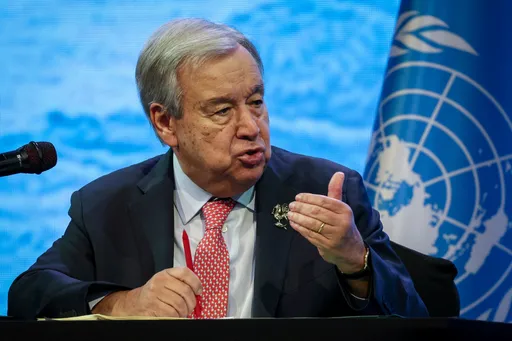
In his last address to COP31, UN Secretary-General Antonio Guterres warned that civil society must apply counter-pressure against entrenched lobbies “for governments to understand that things must change, and that we must win the battle against climate change.”
“Dialogue. Consensus. Action.” Those words hung on banners throughout the venue. Türkiye hosted five major international events this year, three of which I attended, and each carried the same call for diplomacy and cooperation.
This was on track to be the implementation COP. Instead, it ended by exposing just how deep the rift is between vulnerable nations on the front lines and wealthier nations further removed from the crisis, still failing to translate years of climate pledges into meaningful action.
The very first interview I conducted at COP31 stayed with me longest after the talks finally concluded.
“COP is one of the main climate conferences where the world actually comes together specifically to talk about climate change and climate change-related matters. And having that dialogue space, engaging these topics, is important on its own,” said Max Haizmann, Vice-President of the European Youth Energy Network.
Before we parted ways, he left me with one final thought: “I hope you can find some hope here.”
The unfulfilled promises of developed nations will not give vulnerable countries the means to withstand what lies ahead, and the profits of the fossil fuel industry will not save lives. But the people I met at COP will keep showing up, fighting for a liveable, resilient future for their communities, and through them, for the rest of us.