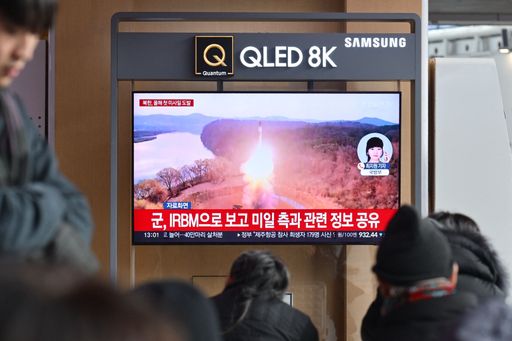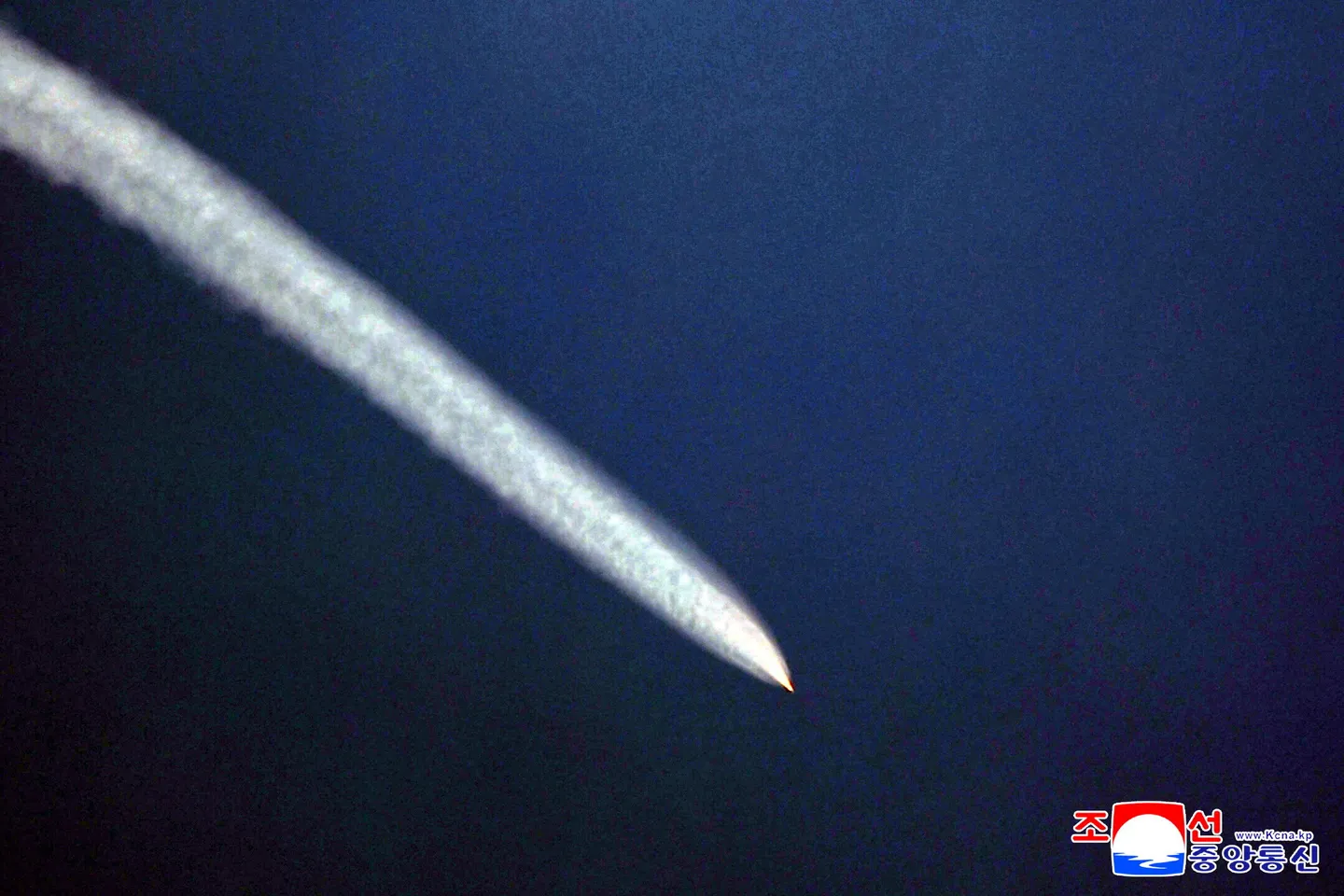
North Korea fired at least one ballistic missile on Friday, Seoul's military said, around a week after US President Donald Trump approved South Korea's plan to build a nuclear-powered submarine.
Analysts have said Seoul's plan to build one of the atomic-driven vessels would likely draw an aggressive response from Pyongyang.
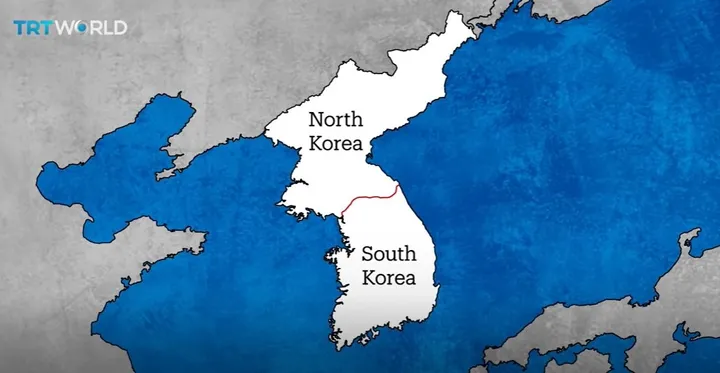
South Korea's Joint Chiefs of Staff said North Korea fired a ballistic missile towards the East Sea, referring to the body of water also known as the Sea of Japan.
The Joint Chiefs of Staff did not provide further details about the launch other than reporting its detection, Yonhap News Agency reported. It wasn’t clear what type of ballistic weapon it was or how far it flew.
The missile has already landed in the sea outside Japan's economic waters and no damage or injuries had been reported, said Japanese Prime Minister Sanae Takaichi.
The latest tensions come a day after the South Korean intelligence agency claimed on Wednesday that North Korea is ready for its seventh nuclear test and could promptly carry it out if Kim Jong Un makes a decision, according to Yonhap News.

North Korea has significantly increased missile testing in recent years, which analysts say is aimed at improving precision strike capabilities, challenging the United States as well as South Korea, and testing weapons before potentially exporting them to Russia.
"From North Korea's perspective, the possibility of sudden attacks from the East Sea will be a source of anxiety," Ahn Chan-il, a defector-turned-researcher who runs the World Institute for North Korea Studies, told AFP.
"If South Korea acquires a nuclear-powered submarine, they would be able to enter North Korean waters and preemptively monitor or intercept weapons such as submarine-launched ballistic missiles (SLBMs)."





Trump had announced that South Korea would build the submarine in the United States, where the nuclear technology is among the most sensitive and tightly guarded military secrets.
Unlike diesel-powered submarines, which must regularly surface to recharge their batteries, nuclear-powered ones can remain submerged for far longer.
'Irreversible' nuclear state
Analysts say developing a nuclear-powered submarine would mark a significant leap in South Korea's naval and defence industrial-base, joining a select group of countries with such vessels.
Only the United States, Australia, China, Russia, India, France and Britain have moved toward nuclear-powered submarines, according to media and analysis reports.
Since North Korean leader Kim Jong Un's 2019 summit with Trump collapsed over the scope of denuclearisation and sanctions relief, Pyongyang has repeatedly declared itself an "irreversible" nuclear state.
Pyongyang did not respond to Trump's offer to meet with Kim last week, and instead its Foreign Minister Choe Son Hui headed to Moscow, where she and Russian President Vladimir Putin agreed to strengthen bilateral ties.