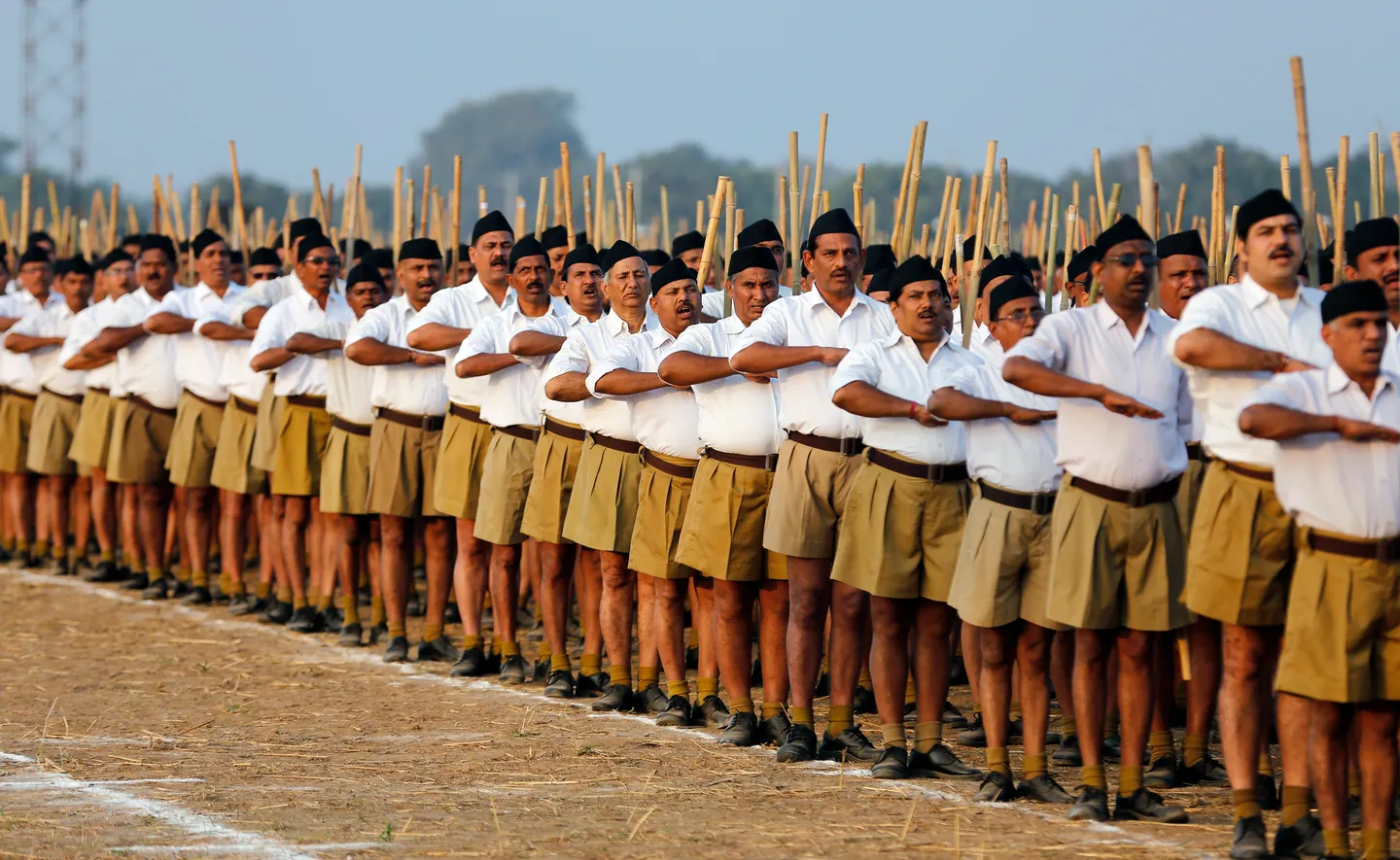
India’s RSS, the far-right Hindu group behind decades of anti-Muslim violence and the ideological fountainhead of Prime Minister Narendra Modi’s BJP party, is quietly spending big bucks to influence members of the US Congress through top lobbyists.
The move has raised questions of legality and transparency. The onboarding of lobbying firms by the group accused of fomenting hate towards Muslims seemingly lacks regulatory filings that are mandatory under US law.
An investigation carried out by independent media outlet Prism showed that the first-ever US lobbying push by the 100-year-old RSS has violated disclosure rules.
Sunil Ambekar, an RSS spokesperson, denied the accusation, saying the organisation operates in India and “has not engaged any lobbying firm” in the US.
Of late, the RSS and other Hindu groups have organised public rallies in the US, demonstrating the collective power of India's diaspora.
What is the RSS?
The RSS, or the Rashtriya Swayamsevak Sangh, is not a run-of-the-mill nonprofit founded and run by religious-minded people.
Founded in 1925 as a paramilitary outfit inspired by fascist parties in Europe, it now operates through a large network of affiliate groups in political, cultural, and religious fields.
The RSS is the flagbearer of Hindutva, an ethno-nationalist political ideology that defines the cultural identity of India in terms of Hinduism and seeks to turn it into an overtly Hindu nation-state.
Critics tie the RSS to pogroms against Muslims.
One of the RSS members assassinated India’s founding father, Mahatma Gandhi, in 1948 for being “too conciliatory” towards Muslims.
In the web of right-wing groups that draw ideological support from the RSS is Modi's BJP party, which has ruled India since 2014.
Under Modi, himself a former RSS foot soldier, India has seen rising attacks on Muslims, destruction of their properties, and erosion of their democratic rights.
Analysts say RSS-inspired ethno-religious fervour in today’s India has ‘otherised’ Muslims, who constitute nearly 15 percent of the world’s most populous country of 1.4 billion people.
RSS-aligned Hindutva ideologues often refer to Muslims as “inauthentic Indians” who are either the descendants of invaders from centuries ago or misguided converts who should embrace their Hindu past to reclaim their full status as citizens.

Shift towards lobbying
On its 100th birthday in September 2025, the RSS turned outward. It wanted US lawmakers to see it not as a hate machine, but as a nation-building force offering schools, disaster aid, and cultural pride.
Enter Squire Patton Boggs, a DC law firm with lobbying operations known for representing foreign regimes in the US corridors of power.
Early this year, the lobbying firm signed on for the RSS via an intermediary: One+ Strategies, a boutique lobbying outfit.
Squire Patton Boggs received payments of $330,000 during the first nine months of 2025 for its RSS-linked work.
As for the specific issue for which the firm was hired, it listed “US-India bilateral relations” in the lobbying registration form.
In contrast to President Trump’s first term in office (2017-21), India’s standing in the US has suffered significant setbacks over the last 11 months.





Trump has imposed a relatively high tariff (50 percent) on Indian imports, and called it a “dead economy”.
Much to New Delhi’s chagrin, Trump has repeatedly claimed that he brokered a ceasefire between India and Pakistan in May when the two countries engaged in a massive aerial battle. India denies that US mediation played any role in ending the conflict.
Question mark over transparency
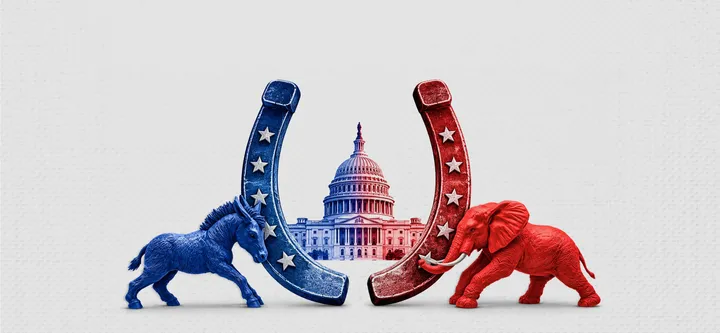
The lobbying firm made its regulatory filings for the RSS under the 1995 Lobbying Disclosure Act (LDA), a less stringent regulatory regime designed for PR companies conducting lobbying work on behalf of domestic clients.
However, US experts say that the India-based RSS hiring an American lobbying firm to influence US lawmakers is tantamount to foreign meddling.
As such, Squire Patton Boggs should have ideally registered its RSS assignment under the Foreign Agents Registration Act (FARA). That is because the RSS is a foreign entity seeking to promote and protect its interests on US soil.
Avoiding registration under FARA has indirectly allowed the RSS to benefit from lobbying work in the US without declaring itself as a foreign entity, they say.
Official records accessed by the Prism news outlet confirmed that neither Squire Patton Boggs nor any other organisation is registered as an agent for the RSS under FARA.
What may appear to be a clerical oversight actually translates into greater manoeuvrability for the RSS to lobby US lawmakers without full disclosures.
For example, the RSS may choose not to fully disclose the details of meetings with influential Americans, something FARA forces the agents of overseas clients to do in order to ensure transparency.
In its LDA filings, Squire Patton Boggs’s form skipped the "foreign entity" box, listing One+ Strategies as the client, even though the RSS cash and interests are behind the whole lobbying effort.

Experts weigh in
“Registering under the LDA and not FARA really keeps this influence campaign in the shadows,” Ben Freeman, director of the Democratising Foreign Policy programme at the Quincy Institute for Responsible Statecraft, was quoted as saying.
In other words, there is no public log of who RSS-hired lobbyists held meetings with or what they talked about.
“To me, what jumps out is that line in the registration statement where it does say their activities are US-India bilateral relations,” he said.
In the past, Hindu nationalist organisations in the US have been accused of violating lobbying disclosure laws.
For example, the Overseas Friends of the BJP-USA (OFBJP-USA) was forced to register as a foreign agent of the BJP under FARA only in 2020 when one of its members criticised Joe Biden’s presidential campaign.
The episode shone an unfavourable spotlight on the OFBJP-USA, which had to declare itself under FARA within 10 days to avoid legal troubles.
The Indian government has been spending hundreds of thousands of dollars annually for years to multiple FARA-compliant lobbying firms for “perception management”, “media relations”, and “federal government relations”.
According to James Thurber, a professor at American University and the co-editor of a book on the influence of ethnic and foreign lobbying in the US, RSS dealings with the US lobbying firm fall “within the FARA rules”.
“(The) RSS should have been registered under FARA instead,” he said.