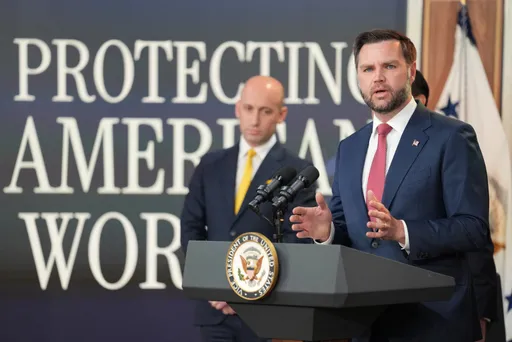
The United States federal government has been functioning only partially for the last 37 days.
The ongoing “government shutdown”, the longest in US history, follows a similar episode that lasted 35 days during President Trump’s first stint in the White House.
Triggered by congressional failure to pass a funding bill for 2026, the current shutdown began at midnight on October 1.
Experts say the shutdown is the government’s act of self-sabotage.
This unique and recurring American phenomenon has led to the suspension of federally administered “non-essential” services while putting hundreds of thousands of federal employees out of work.
The ongoing partial government shutdown surpassed the previous record of 35 days on November 4, when a Senate vote to advance a funding bill failed for the 14th time in a row.
This is the 11th US government shutdown since 1990.
What’s a shutdown?
In plain terms, the US government shutdown means a funding gap.
In most other nations, a failure to pass budgets would have usually resulted in fresh elections under the parliamentary system of government.
But the US government is different in the sense that the legislative branch (Congress) controls the purse strings, while federal agencies (the executive branch) spend the money.
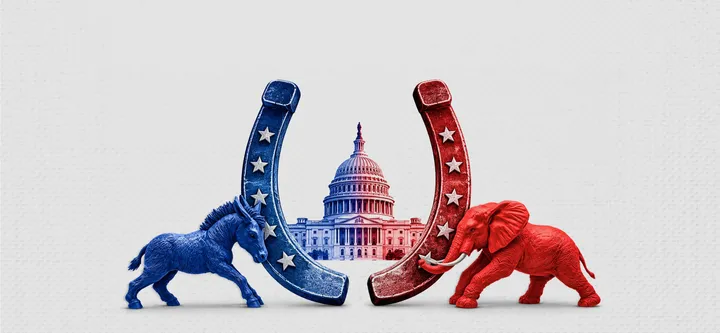
The historical divide between Republicans and Democrats in the legislative branch — the House of Representatives (lower chamber) and the Senate (upper chamber) — leads to a standoff every few years.
When the two parties fail to end the gridlock in Congress, federal agencies get stripped of the legal authority to spend taxpayer money.
In technical terms, however, a shutdown takes effect when Congress doesn't pass the 12 annual spending bills or a temporary “continuing resolution” by the end of the US fiscal year on September 30.
“Essential” functions like air traffic control, law enforcement, health, and property continue. For example, active-duty military personnel and FBI agents continue working without immediate pay.
But the rest of the federal government grinds to a halt.
Federal workers performing “non-essential” services stop going to work. Staff responsible for national parks are furloughed, while food inspectors are told to stay home. Museums are closed, and passport processing is delayed.
Why is the current gridlock dragging on?
The current crisis stems from a partisan deadlock over budget priorities. Senators from the opposition Democratic Party continue to leverage their “filibuster” power to demand concessions, especially in the healthcare sector.
A filibuster is a tactic that the opposition often uses in the US legislature to block or delay a bill simply by debating it endlessly.
Republicans say Democrats have been blocking short-term funding bills passed by the House of Representatives because the latter use the shutdown as leverage in off-year elections.
The Republican candidates took a beating in many hotly contested mayoral and gubernatorial races earlier this week.
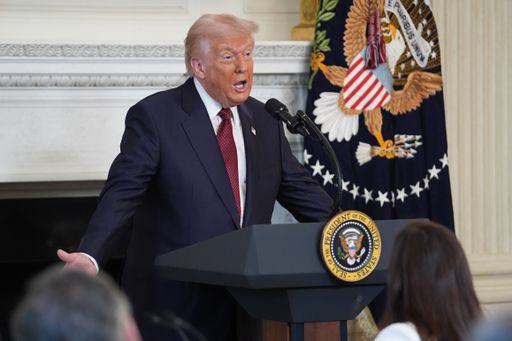
Republicans, who control the White House and the House of Representatives, insist on a “clean” funding bill that would maintain current funding levels without new provisions or policy riders.
But the problem for the Republicans is that they are short of the 60 votes that they need in the US Senate to pass the spending bill.
On the other hand, Democrats accuse Republicans of refusing good-faith negotiations, especially after the November 4 elections, when voters gave a nod to Democratic causes like California redistricting maps.






Democrats insist that any new spending bill must extend the enhanced health insurance subsidies offered under the Affordable Care Act, also known as Obamacare, named after former president Barack Obama. These subsidies will otherwise expire on December 31.
About 24 million people use Obamacare to access health insurance across the US.
In addition, Democrats have demanded that the spending bill must reverse President Trump’s recent cuts to Medicaid, a federal programme that provides health coverage to millions of Americans, including eligible low-income adults, children, pregnant women, elderly adults and people with disabilities.
Trump has fanned tensions by urging Republicans to eliminate the filibuster to bypass Democrats, calling it a tool to pass his agenda without “extortion”.
Key obstacles hindering a resolution
The foremost obstacle to a quick end to the government shutdown is the filibuster requirement. Republicans need 60 Senate votes for a funding bill, but Democrats have unanimously opposed “clean” resolutions, blocking all 14 attempts so far.
Moreover, Trump's push to “nuke” the filibuster faces strong resistance from Republican lawmakers like Alaska Senator Lisa Murkowski, North Carolina Senator Thom Tillis, and Utah Senator John Curtis.
“The filibuster forces us to find common ground in the Senate,” Senator Curtis said, adding that he remains a “firm no” if the issue were to come up.
As for the dispute over healthcare subsidies, Democrats demand the extension of Obamacare tax credits, highlighting that letting the tax breaks expire can result in monthly costs rising by 114 percent on average, or an extra $1,000 a year.
Republicans insist that Democrats are holding the federal government hostage only to reinstate “free health care” for “undocumented immigrants”.
Trump has already cut food-stamp benefits while ordering unilateral military pay reallocations, which is another factor contributing to the political stalemate.
How is shutdown hurting Americans?
When the US government shuts down, the world’s largest economy loses millions of dollars by the hour.
For example, the 2018-2019 shutdown wiped out $3 billion from the US economy as consumers postponed purchases amid delayed wages.
Essential workers are forced to survive without pay, leading a sizable segment of the population to dip into their savings or take out loans.
A 2019 law guarantees back-pay to all furloughed employees upon resumption of government business.
Roughly 670,000 federal workers have been furloughed, meaning they have stopped reporting to work. Meanwhile, about 730,000 essential workers, such as air traffic controllers, are working unpaid, leading to missed paycheques.
Forty-two million people - roughly one in eight Americans - could see cuts or delays in food assistance as soon as Saturday if the government shutdown continues.
The Supplemental Nutrition Assistance Program (SNAP), often referred to as the food-stamp programme, provides money for groceries to low-income Americans.
The programme distributes over $90 billion in benefits a year and accounts for roughly nine percent of all grocery spending in the country.
National parks and museums remain either closed or unstaffed, causing vandalism and lost tourism. Shortages of air traffic controllers have caused serious air travel delays.
The Congressional Budget Office estimates a one to two percentage-point drop in GDP in the last quarter of 2025, with up to $14 billion lost in the first month from furloughs.