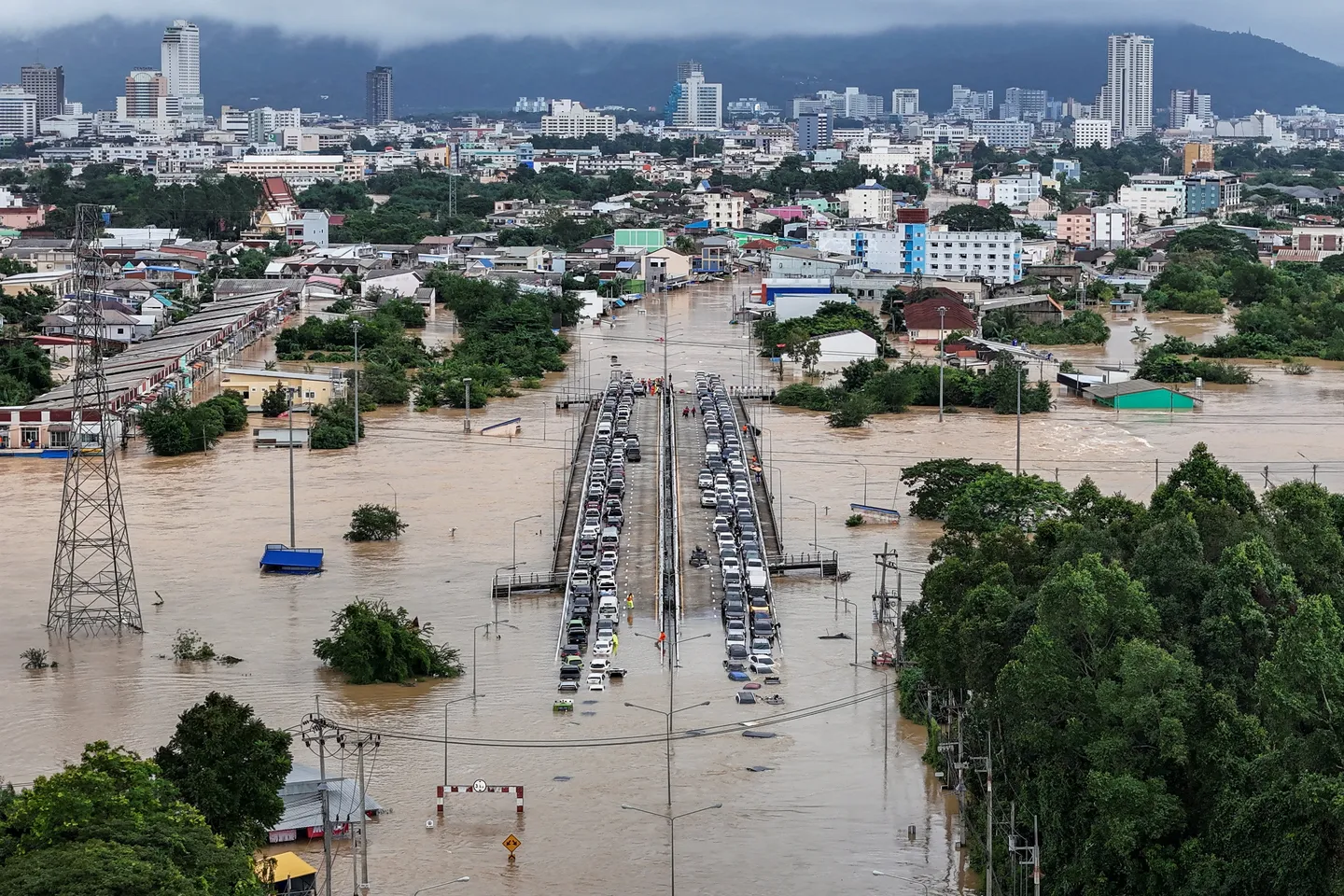
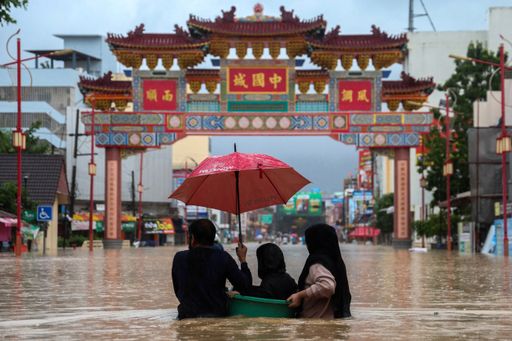
Relentless rains across Southeast Asia have continued to unleash destructive floods and landslides in both Thailand and Indonesia, leaving dozens dead and forcing thousands to flee their homes.
Authorities in both countries warn that intensified monsoon patterns and turbulent weather systems continue to threaten more communities as rescue and recovery efforts are underway.
The death toll in Thailand from flooding in the country's south is 33, a senior government official said on Wednesday.
The causes of death included landslides and electrocution, government spokesperson Siripong Angkasakulkiat said.
Meanwhile, floods and landslides killed at least eight people and injured dozens after torrential rains struck Indonesia's island of Sumatra, a disaster official said on Wednesday.
Extreme weather has lashed North Sumatra for several days, flooding parts of the Tapanuli Selatan district since Monday, according to the national disaster agency, BNPB.
"In Tapanuli Selatan, the disaster of floods and landslides has resulted in eight people losing their lives, 58 being injured, and 2,851 residents had to evacuate," BNPB spokesperson Abdul Muhari said in a statement.






The local disaster agency has deployed heavy equipment to clear debris, which has blocked road access to the district, he said.
At least three other districts in the province have also been affected by flooding and landslides, he added.
Cyclone seeds, weather formations that have the potential to become tropical cyclones, are behind the extreme weather, according to the Meteorology, Climatology, and Geophysics Agency.
The annual monsoon season, typically between June and September, often brings heavy rains, triggering landslides, flash floods and waterborne diseases.
Climate change has impacted storm patterns, including the duration and intensity of the season, leading to heavier rainfall, flash flooding, and stronger wind gusts.
At least 38 people died this month in landslides triggered by heavy rainfall in Central Java and around 13 are still missing.