Recent moves by states like Florida and Texas to designate Muslim civil rights group Council on American-Islamic Relations (CAIR) as a “foreign terrorist organisation” mark an escalation of aggressive attempts by pro-Israel politicians to sideline one of the country’s leading Muslim advocacy groups.
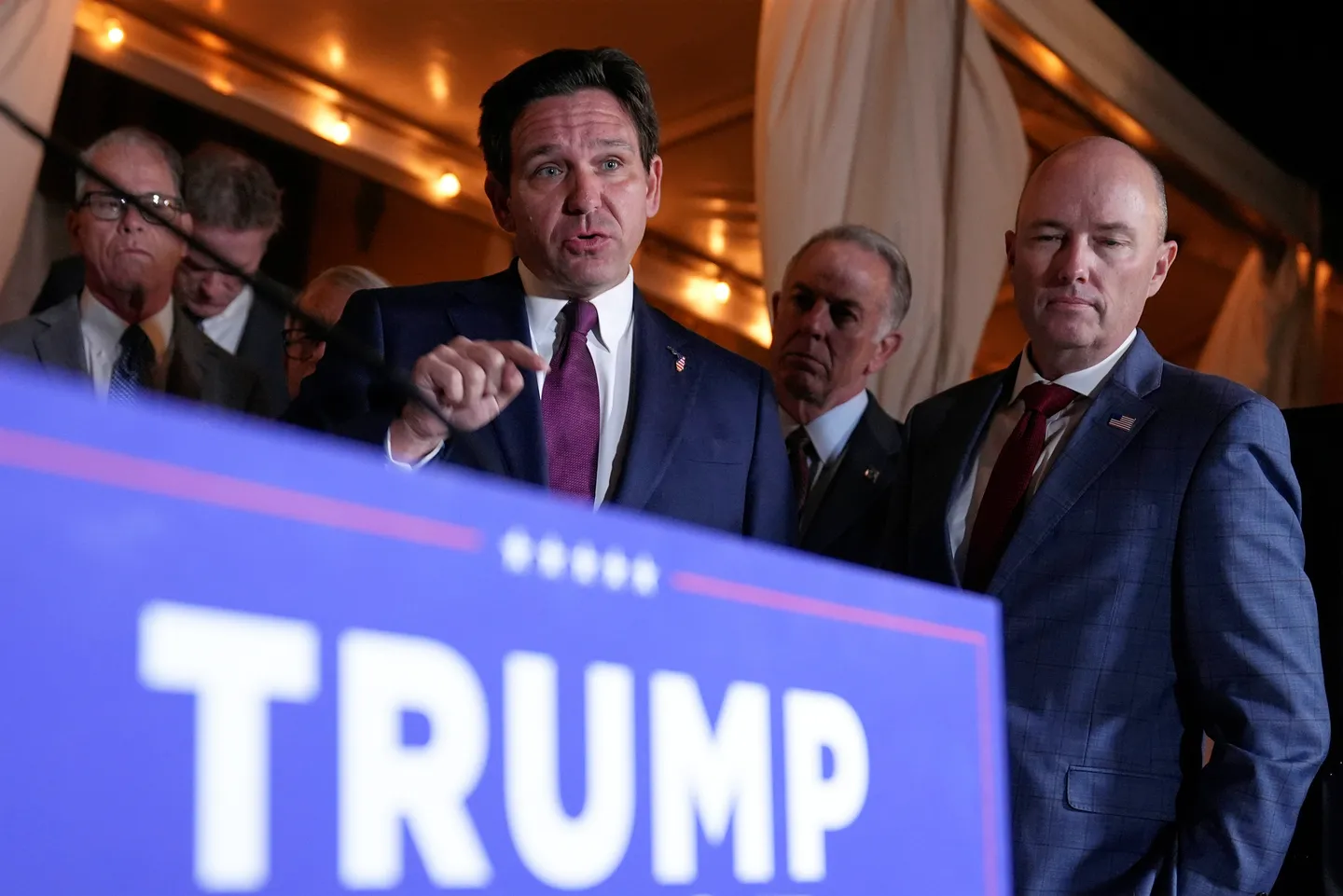
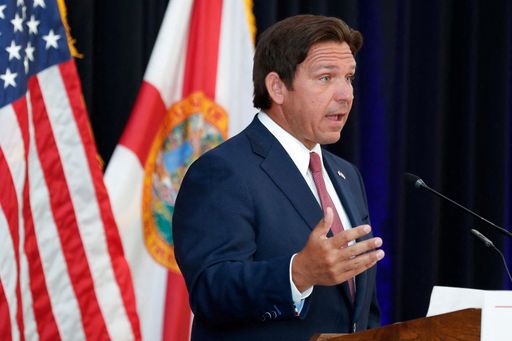
Florida Governor Ron DeSantis issued an executive order declaring CAIR and the Muslim Brotherhood a “foreign terrorist organisation.” State agencies were directed to bar the groups from public contracts, state employment or state funding.
CAIR firmly rejects the designation as unconstitutional and defamatory, and has announced plans to sue.
While the federal government does not classify CAIR as a terrorist group, these state-level actions underscore an effort to silence one of the most prominent Muslim-American voices advocating for Palestinian rights and reflect growing unease among pro-Israel politicians over CAIR’s push for justice and accountability in US policy toward Israel.
So why are groups like CAIR increasingly unnerving pro-Israel American politicians?
What CAIR is and why its political profile is rising
CAIR is one of America’s largest Muslim civil rights and advocacy organisations. For decades, it has defended Muslim Americans against discrimination, fought hate crimes, and supported community initiatives.
Founded in 1994, CAIR has 25 chapters around the country.
In recent years, particularly since Israel’s war in Gaza, CAIR has taken a more prominent role in advocating for Palestinian rights and challenging US policies that enable civilian suffering in the region. It has mobilised Muslim-American voters, raised awareness about human rights abuses, and encouraged political engagement at the local and national levels.
To politicians who strongly align with Israel, this rising influence has been seen as a counterweight to pro-Israel lobbying, a domestic, organised voice advocating for justice for Palestinians and accountability in US foreign policy.

Why pro-Israel politicians are freaking out
There are a few key factors that help explain the hardline response to CAIR, including the fact that it challenges a long-standing political imbalance on Israel and that it is empowering and mobilising a voting bloc that has historically been underrepresented in the US.
For decades, criticism of pro-Israeli policies, especially from Muslim-American or pro-Palestinian communities, has been pushed to the margins of US politics. CAIR’s growing visibility, especially in states with sizable Muslim populations, and its willingness to call out human rights violations in Gaza, disrupts a status quo that has long favoured pro-Israel narratives.

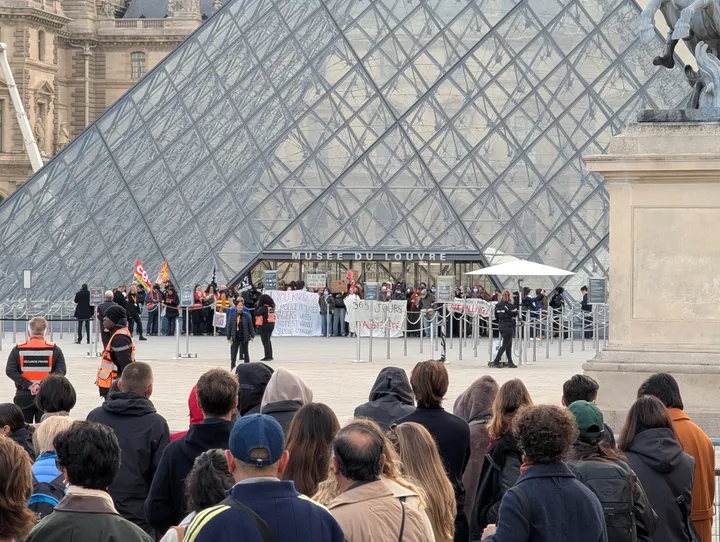





By organising voter drives, endorsing candidates, and elevating Palestinian rights in mainstream political debate, CAIR has helped mobilise Muslim-American voters on a scale not seen before.
That empowerment threatens politicians who rely on pro-Israel donor networks and who are unaccustomed to organised grassroots pressure from pro-Palestine advocates.
Although CAIR has never been charged with wrongdoing, its reference in a 2007 Holy Land Foundation court case is repeatedly invoked to smear the group as “extremist-linked.”
Reviving these outdated accusations provides a pretext for states to designate CAIR as a “terrorist” organisation, a tactic aimed at delegitimising its advocacy for Palestinian rights and discouraging public officials from engaging with it.
How AIPAC fits into the picture
CAIR is not comparable to the American Israel Public Affairs Committee (AIPAC) in terms of funding, size, or entrenched Washington influence, but the contrast between the two helps explain why CAIR’s rising profile is provoking such resistance.
AIPAC, founded in the 1950s, has long been one of the most powerful pro-Israel lobbying forces in the US, shaping congressional votes, influencing primary elections through a vast donor network, and sustaining a bipartisan political consensus that consistently backs Israeli government policy. Its model is built on major fundraising operations, close relationships with lawmakers, and a long history of defending US military aid to Israel.
Through this influence, AIPAC helps secure substantial US military and economic assistance to Israel.
Last year, a report by The Intercept revealed that AIPAC spent money on more than 80 percent of all electoral races.
“There’s nothing like AIPAC in American politics for any other country,” Walter Hixson, a retired distinguished professor of history and author was quoted as saying in a detailed piece by Anadolu explaining how AIPAC shapes American politics.
In the same 2024 electoral cycle, AIPAC, through its Political Action Committee (PAC) and super‑PAC affiliates, committed to a roughly US $100 million electoral spending campaign.
CAIR, by contrast, draws its strength from communities rather than big donors.
Its activism is rooted in mobilising Muslim-American voters, elevating Palestinian human rights issues, and supporting candidates willing to challenge US complicity in Israel’s military atrocities.