 Nadwa Arar
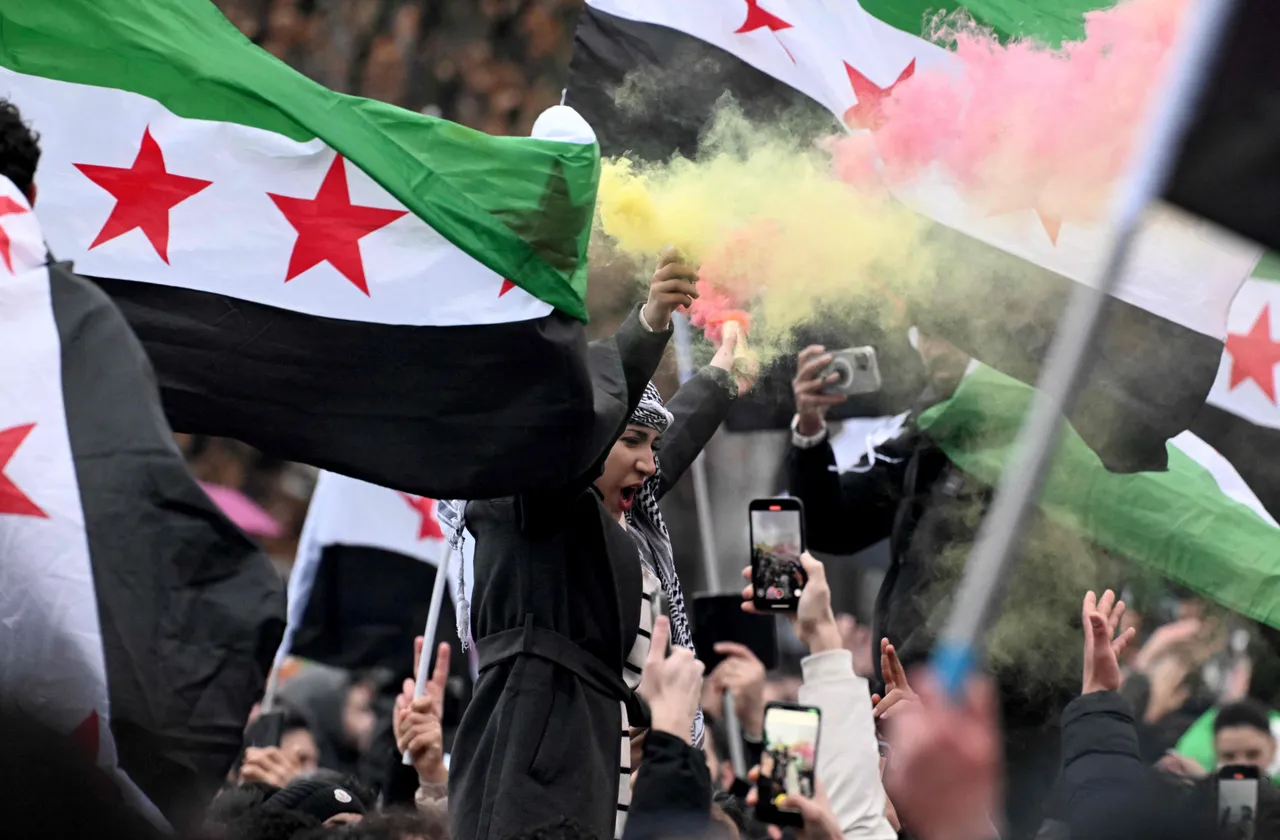
Recent political discussions in Germany have increasingly focused on the return of Syrian refugees, often overlooking the complex and precarious realities of life in Syria today.
While some political narratives frame return as a feasible or even desirable option, conditions in parts of Syria remain economically devastated after years of war.
At the same time, racism and Islamophobia, fuelled by German media—particularly the giant Axel Springer group—have been on the rise, contributing to a hostile social climate that places additional pressure on refugees.
For many Syrian refugees, returning to their country of origin is currently not a viable option.
Large numbers have lost their homes and livelihoods because of the devastating war, and economic opportunities remain limited. Without adequate financial support, returning could expose many refugees to hardship and insecurity.
Today, Syria is rebuilding from the ruins at a remarkable pace and could potentially surpass expectations, but practical solutions are needed to facilitate the return of refugees.
Germany’s parliamentary group leader of the governing conservative Union (CDU/CSU) in the Bundestag, Jens Spahn, reminded Syrian refugees that they have a responsibility and a “patriotic duty” to help rebuild their country.
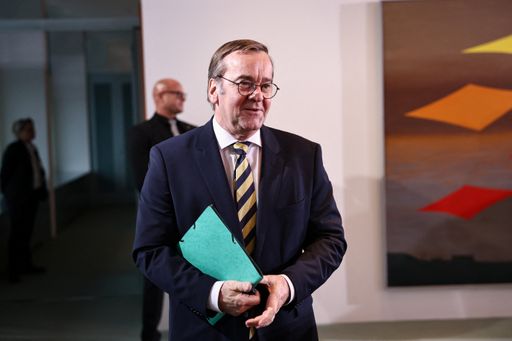
He controversially proposed paying €1,000 to each Syrian immigrant who voluntarily returns home, arguing that Syrians have become an economic burden, consuming Germany’s resources and disrupting social and religious stability.
While Germany once set a global standard for post-war reconstruction, its economy is no longer the model of strength it once was. The country has entered a period of sustained decline and shows few signs of reversing course.
Germany has one of the oldest populations in the world, placing increasing strain on healthcare systems, pensions, and public finances, and contributing to staff shortages in hospitals and care homes.
Public services have become increasingly inefficient and unresponsive. The automotive industry—once the cornerstone of Germany’s economic success—has also experienced a significant decline.
Critics argue that this downturn is not merely structural but rather the result of poor governance, entrenched corruption, mismanagement, and political favouritism and inertia within government.
Spahn himself, who now blames Syrian refugees for economic stagnation, was, during his tenure as Germany’s health minister, accused of causing billions of euros in taxpayer losses by centralising Covid mask procurement and awarding major contracts to companies with political connections.
This same man—who bears responsibility for one of Germany’s largest taxpayer scandals—now seeks to dispose of refugees cheaply.
Scandinavian countries such as Sweden and Denmark have adopted notably different strategies in response to this issue.
Both governments have introduced financial incentives—commonly referred to as repatriation grants—to encourage Syrian refugees to return voluntarily to their country of origin.
Denmark currently offers up to €27,000 per adult, while Sweden has announced a substantial expansion of its programme, with grants rising to as much as €54,000 per household from 2026.
These payments are intended to support returnees as they attempt to rebuild their lives in war-torn Syria.
History shifts again
When my father left his native Damascus in the 1950s to study medicine in Berlin, Syria was a sovereign country with a strong and stable economy, while Germany was devastated and struggling to recover from the ruins of war.
That balance was later destroyed by the authoritarian Assad regime, whose seizure of power led to decades of repression, mismanagement, and ultimately economic collapse.
Syria was systematically weakened and pushed into instability, while Germany, benefiting from democratic institutions and responsible governance after World War II, rose to become one of the world’s leading economic powers for many decades.
Today, history is shifting once again. Syria has finally broken free from dictatorship and is beginning the long process of recovery and reconstruction, supported by powerful regional partners such as Türkiye, Qatar, and Saudi Arabia.
The German economy, by contrast, is struggling and steadily losing ground both within Europe and on the global stage.
A growing number of companies are filing for bankruptcy, investment is weakening, and economic confidence has deteriorated.
Germany has also become a high-tax country for investment, making it less attractive to foreign investors.
At the same time, crime rates have risen noticeably, adding to public concern about safety and social cohesion.
Germany’s healthcare system, once regarded as one of the most reliable in the world, is also under severe strain.
Medical services have deteriorated, with long waiting times, overstretched hospitals, and alarming shortages of doctors, nurses, and even essential medications.
The country that once served as a global model for rebuilding prosperity from the ruins of war now finds itself grappling with multiple structural challenges.



Germany’s vulnerabilities laid bare
The war in Ukraine and the sudden loss of cheap Russian gas have dealt a significant blow to Germany.
Rising energy costs, combined with fierce international competition — particularly from China and the United States — have eroded the strength of key economic sectors such as manufacturing and the automotive industry.
On top of this, US President Donald Trump’s continued imposition of new tariffs on German/EU goods has placed additional strain on an already sluggish German economy.
Meanwhile, public services have become increasingly slow and inefficient, weighed down by excessive bureaucracy, labour shortages, and outdated infrastructure.
Delays in administration, transportation, and digitalisation have frustrated citizens and businesses alike, further undermining Germany’s competitiveness.
Together, these economic, social, and institutional pressures have exposed deep vulnerabilities in a system long assumed to be resilient and stable.
These problems are compounded by recurring shortages of essential medicines. Germany’s healthcare system has grown dependent on global supply chains, particularly imports from India and China, leaving it vulnerable to disruptions and delays.
Germany has taken in more than one million Syrian refugees, yet political and media discourse increasingly focuses on hostility rather than practical solutions.
Even Chancellor Friedrich Merz has drawn criticism for using inflammatory language on migration.
More than a year after the collapse of the Assad regime on 8 December 2024, Germany has yet to reopen its embassy in Damascus.
This prolonged absence has effectively obstructed the development of any serious or organised framework for voluntary returns. Many Syrian families remain trapped in bureaucratic limbo, facing unclear procedures and a lack of institutional support.
As a result, practical initiatives—such as the establishment of German-supported schools for the children of returning Syrians—have stalled indefinitely, despite clear demand and long-term benefits for both societies.
At the same time, Germany has an opportunity to pursue a more forward-looking and mutually beneficial approach.
Rather than viewing return solely as a humanitarian or administrative challenge, Germany could leverage the skills, experience, and transnational ties of Syrian refugees through targeted investments in Syria.
Countries such as India and China have demonstrated how strategic economic engagement can support stability while advancing national economic interests.
For example, Germany could invest in sectors in which it has strong expertise, such as pharmaceuticals, medical equipment, renewable energy, and advanced manufacturing.
Establishing production facilities in Syria would not only create stable, skilled employment for returning Syrians but also strengthen regional supply chains and generate economic returns for German companies.
Such investments could help reduce dependence on humanitarian aid, encourage sustainable return, and contribute to post-conflict reconstruction.
By reopening diplomatic channels and combining return policies with economic engagement, Germany could transform the current stalemate into a constructive partnership—one that supports Syrian recovery while aligning with Germany’s economic and strategic interests.
Beyond traditional battlefields
Wars, by their very nature, cannot be foreseen. Even the sharpest minds are unable to accurately predict what lies ahead.
Yet recent cyberattacks, acts of sabotage, and disinformation campaigns attributed to Russia suggest a willingness to escalate tensions beyond traditional battlefields.
Such actions indicate that Russia might not be deterred from targeting NATO countries, particularly Germany, which has strongly advocated for a European Union agreement to use frozen Russian assets to support Ukraine’s defence against Moscow.
History teaches us that miscalculations can lead to unexpected wars.
Germans, therefore, should not forget that circumstances can change rapidly—and that one day, they too could find themselves seeking refuge elsewhere.
Displacement is not a distant or abstract concept; it is a human reality that has touched many nations throughout history.
One thing, however, is clear: Syrians understand the meaning of a welcoming culture.
Having endured immense pain and suffering during their revolution and the devastating war that followed, they know firsthand what it means to lose one’s home and sense of security.