 Melis Alemdar
Two weeks before Palestinian-American filmmaker Cherien Dabis planned to start filming “All That’s Left of You”, the crew was forced to evacuate Jericho in the occupied West Bank following Hamas’ cross-border attack on Israel.
Initially planning to shoot 10 percent of the film in Greek-administered Cyprus, the crew began filming on the island as the situation in Palestine deteriorated. Production then moved to Jordan, where most of the film was shot in northern Palestinian refugee camps in the country.
With about a quarter of the film still to be completed, financial constraints delayed the final chapter, which was eventually filmed in Greece, including Athens and Rhodes.
Two years later, international releases are planned for early 2026, with the US premiere scheduled for January 9.
TRT World was granted exclusive access to preview the film ahead of its global release.
Now, as a fragile ceasefire in Gaza holds, the film covering seven decades of one Palestinian family’s displacement and resilience becomes a microcosm of the community’s historic struggles.
A contender for the 2025 Academy Award for Best International Feature Film, Dabis’s film tells the story of a Palestinian family spanning three generations, from the Nakba of 1948 to 2022.
The film, featuring four actors of the same family, highlights how historical trauma continues to influence Palestinian lives today.
‘All That’s Left of You’ starts with a flashback.
A Palestinian mother, Hanan, narrates the story and takes viewers along a family saga dating back to the Nakba, when Jewish settlers expelled hundreds of thousands of Palestinians and established the state of Israel.
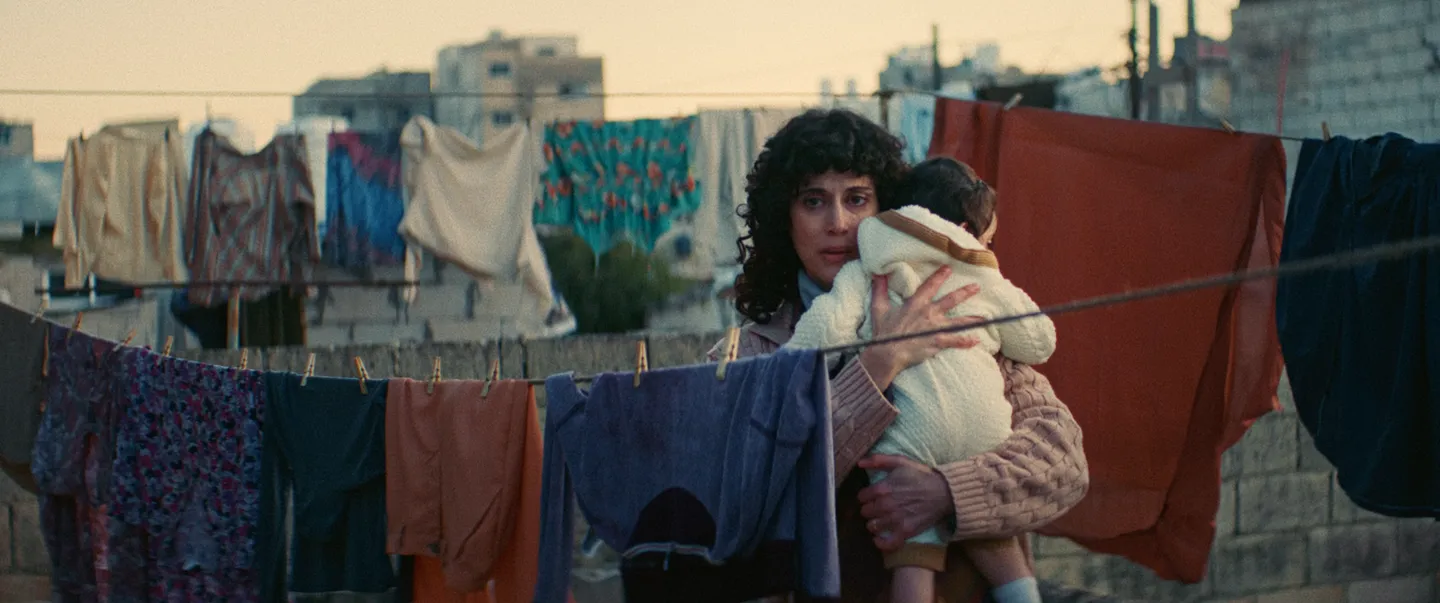
Hanan – played by Dabis herself – an elderly woman in 2022, gently but firmly speaking to the camera, says: “You don’t know very much about us. It’s OK, I’m not here to blame you, I’m here to tell you who my son is. But for you to understand, I must tell you what happened to his grandfather”.
Multiple hats
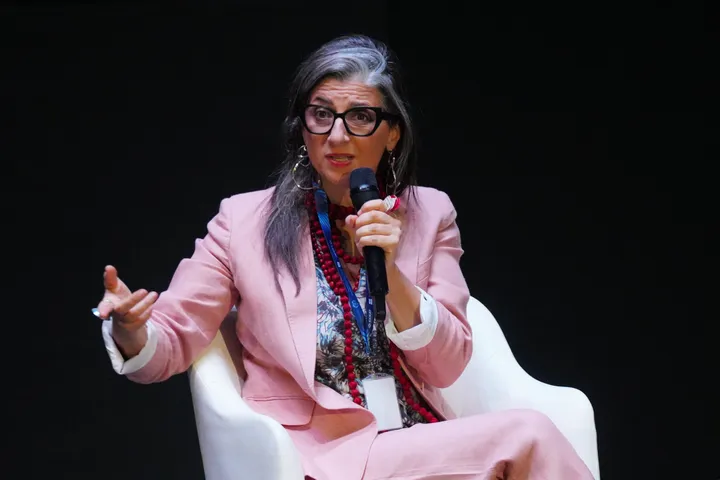
Dabis is wearing many hats in the film: she is the writer, actor and director, saying these roles are “all different sides of the same storytelling process, and one part informs the other.”
Dabis says her “deep familiarity with the script and knowledge of the director’s vision” has helped her shape her point of view of the character of Hanan.
“It streamlines the process, forces me to mine the depths of the material and my own intention and keeps me engaged in all parts of the creative process”.
Dabis, 48, tells TRT World that the film “immerses the audience in four distinct time periods, covering 76 years of one family’s history — from 1948 to 2022, and that she faced the challenge of portraying a family across decades: "There are big time jumps throughout. Sometimes we skip ahead thirty-some years".
Right after we are introduced to Hanan in 2022, the film cuts to a 1988 scene with two teenagers: Hanan’s son Noor and his friend Malik, joining an impromptu protest with demonstrators yelling “We sacrifice our souls and blood, oh Palestine!"

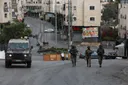

During the skirmish that ensues, someone yells at Noor to jump into an old parked car to duck bullets being fired by Israeli soldiers.
The viewer doesn’t know what happens to Noor.
Instead, we are transported back to 1948, when Noor’s grandfather, Sharif (Adam Bakri), as a young man, resists giving up his house and orange orchard in Jaffa to Israeli soldiers.
He has already sent his wife, Munira, and their children to safety in Nablus, in the occupied West Bank, to her brother’s house.
Soon, Israeli forces announce via megaphones that “the city of Jaffa is now under Israeli authority”.
This leads to Sharif witnessing his house become inhabited by a settler family, and ending up in a prison camp, performing manual labour when he is stricken with a heart attack.
He survives and reunites with his family in Nablus. His hair and beard have grown; he is a scraggy man, but his wife and their children are happy to see him.
Dabis says the character Sharif is inspired by her father, who was exiled from Palestine in 1967.
She says it took him “many years” to get foreign citizenship, to secure his “right to simply visit his family and the only home he’d ever known”.
Dabis grew up in the diaspora, but was still able to commiserate with her father, who became “more and more disillusioned over time, more and more obsessed with all things Palestine. His health deteriorated because of the anger he felt over the political situation, the injustice of it all”.
Dabis feels that her own identity was formed as a reaction to her father’s frustration, his suffering: “I wanted to find a different way, a way of letting go of the past and instead focusing on the future. A way forward,” she says.
“A way to channel my own grief and anger into action, something beneficial.”
She believes that the world needs to remember that the atrocities against the Palestinians did not begin two years ago, after October 7.
“Without understanding 1948, it’s impossible to understand the scale and continuity of what’s unfolding in Gaza today. Today’s genocide is part of the same cycle of dispossession and ethnic cleansing that began back then”.
An estimated 67,000-plus Palestinians have been killed in Israel’s genocidal war in Gaza since October 2023, Palestine’s health ministry in Gaza reported, most of them women and children, and it has largely rendered the area uninhabitable.
“The film sparks connection and conversation,” Dabis says.
“There’s potential for repair or healing in coming together to watch it. Given everything we’ve witnessed the last couple of years, I think some of us could really use that.”