 Shameela Islam-Zulfiqar
In October 2026, I travelled between Damascus, Homs and Deir Ezzor with a medical team. We moved between cities, entered hospitals and spoke openly with colleagues about patients, training and the equipment they needed.
Something extraordinary about how ordinary those journeys felt.
In 2013, getting to a hospital in northern Syria could mean risking your life.
That year, I was driving ambulances from Manchester to Syria. We organised four convoys north, bringing vehicles and medical assistance to communities whose healthcare systems were already collapsing.
I remember the route into Aleppo that we knew as the ‘road of death’: the fear of shelling, detention or kidnapping, and the knowledge that being a medical professional offered no protection.
To my knowledge, I was the only Western female doctor working in Aleppo at the time. In one of the makeshift hospitals, I was shown where I would be sleeping alongside another nurse. Beneath the window, close to where my head would have rested, I noticed a bullet hole. I decided the floor was probably safer.
When treating patients became dangerous
Syria’s healthcare system did not simply deteriorate through neglect. After the uprising against ousted regime leader Bashar al Assad began in 2011 and the country descended into war, hospitals and medical workers were subjected to systematic attacks, detention and intimidation.
Civilians needed treatment for bombardment injuries just as the places and people capable of treating them were being destroyed.
In Aleppo, I encountered another devastating reality: doctors themselves could be treated as high-value targets.
The scale of that assault is documented. Physicians for Human Rights recorded at least 604 attacks on medical facilities and the deaths of 949 medical professionals in Syria between 2011 and March 2024.
Its investigations attributed the overwhelming majority of killings by identified perpetrators to the army loyal to ousted president Bashar al Assad and his allies. Other armed actors also committed abuses, but the Assad government's responsibility for the destruction of healthcare cannot be minimised.

Dr Isa Abdur Rahman, just 26, had suspended his career in London to care for wounded civilians in northern Syria.
On 22 May 2013, he was killed when the field hospital where he was working in Idlib province was shelled. The charity he volunteered with attributed the attack to Syrian government forces.
Then there was Dr Abbas Khan, a British orthopaedic surgeon who had travelled to Aleppo to treat the injured.
He was detained by Syrian authorities in November 2012. I later went to a hospital where he had worked. He died in Syrian custody in December 2013; a British inquest subsequently concluded that he had been unlawfully killed.
My thoughts inevitably return to Dr Jihad Ahmed, known to me as Abu Mohammedin, a Syrian urologist I first met during those dangerous years in Aleppo. He saved my life more than once, helping me navigate situations where the wrong journey, the wrong checkpoint, or the wrong encounter could have been fatal.
He is one of the doctors who continued to treat patients through the war and beyond, at enormous personal cost, while helping preserve knowledge and clinical skills for those who came after them.
Without doctors like Abu Mohammedin, there would be much less of a system left to rebuild.
Freedom of movement is not the same as recovery
Assad’s government fell on December 8, 2024. For many Syrians, that day marked the end of more than five decades of rule by the Assad family.
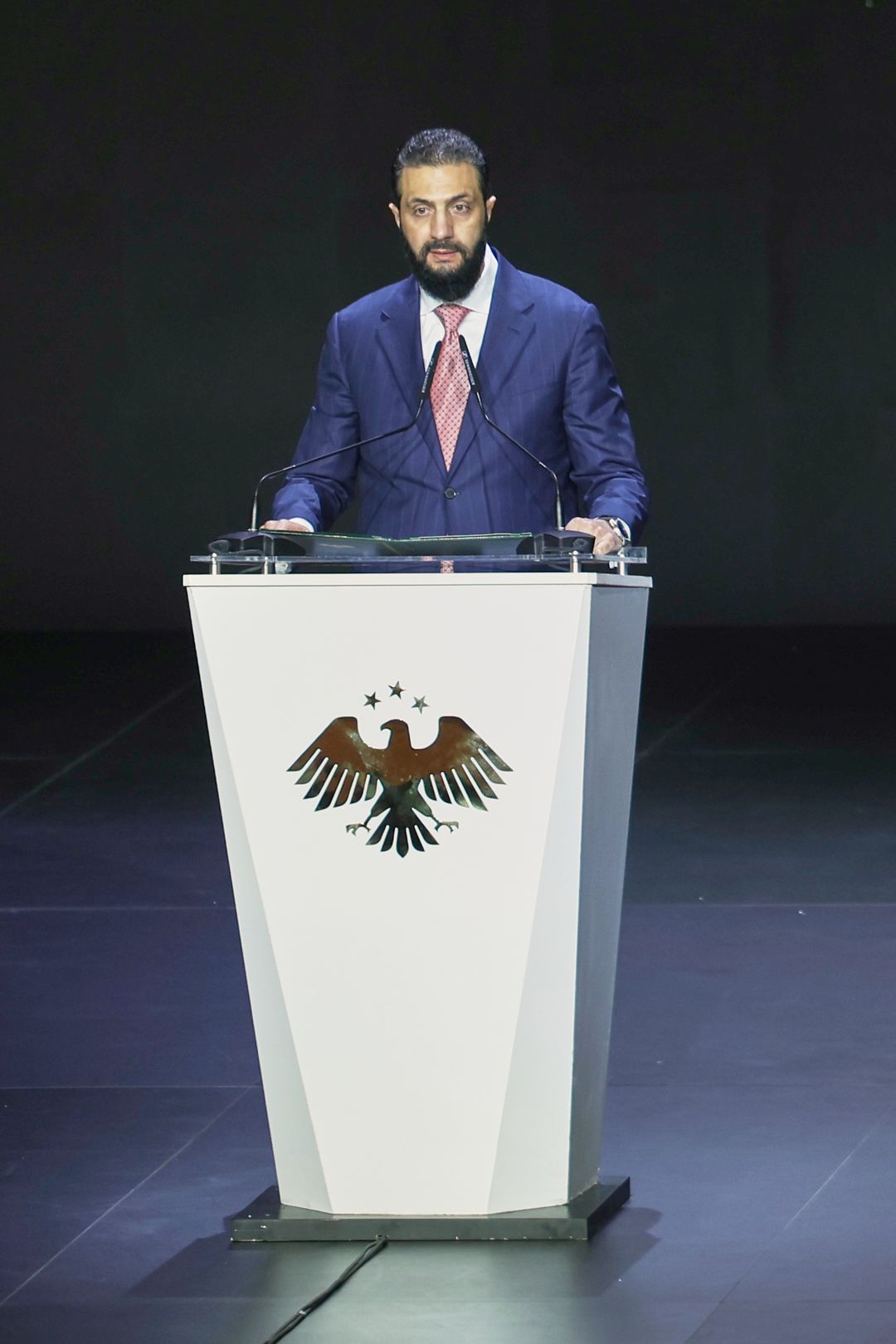
A transitional government, led by Ahmed al Sharaa since 2025, inherited a devastated economy, weakened institutions and a population exhausted by years of violence and displacement.
I have returned to Syria at different points during the war and since its end. The difference in how I can now move between cities is profound. The journeys that once carried the fear of abduction, torture or death are not the journeys I experienced during this October mission. That matters to medical teams, to patients trying to reach care and to families who have spent years separated by fear.
The healthcare system shows the same contrast between possibility and reality. In early 2025, the World Health Organization reported that only 54 percent of hospitals and 39 percent of primary healthcare centres were fully functional.
Equipment shortages, gaps in specialist training and the cost of treatment continue to shape what patients can actually access.
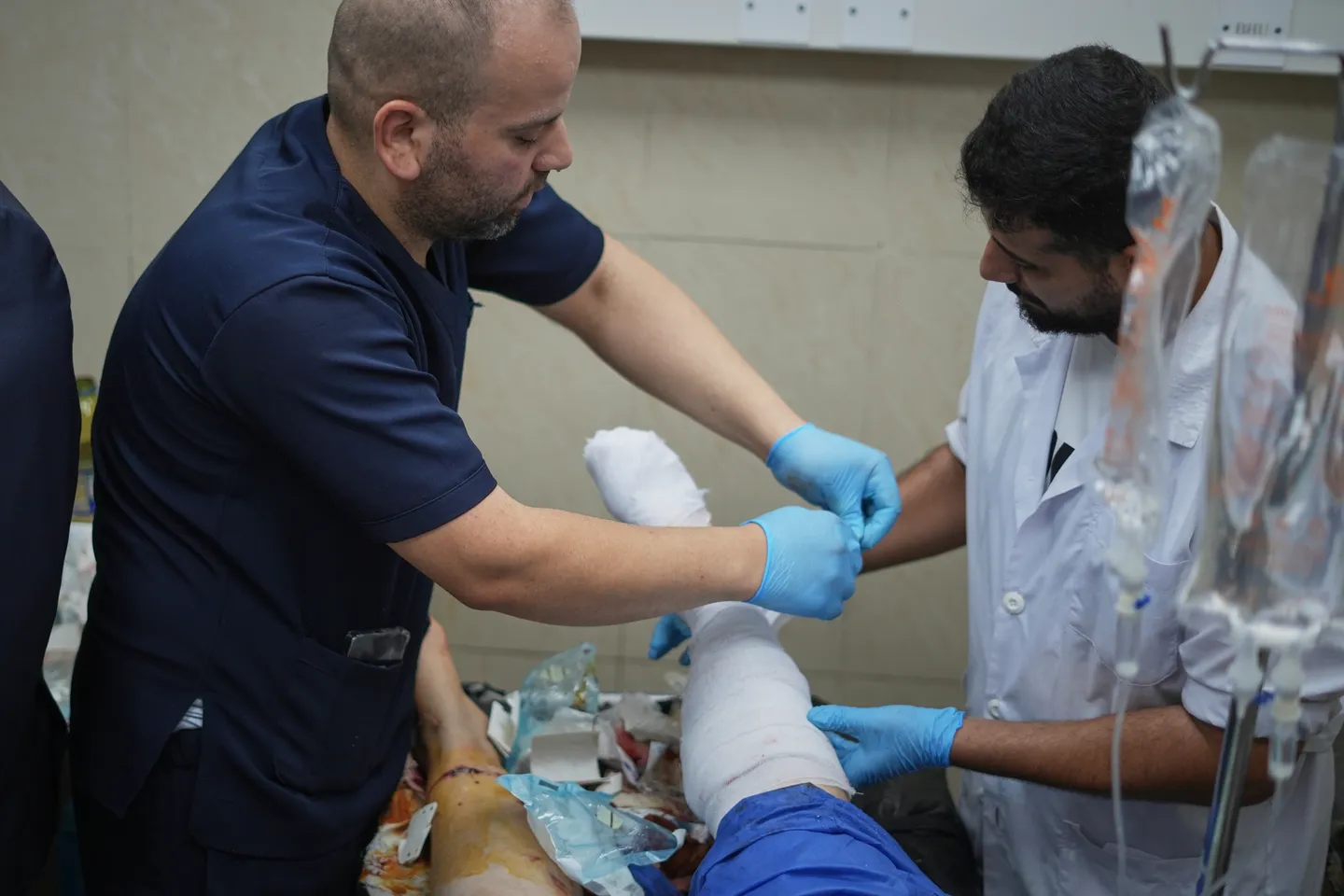
During Action for Humanity’s October medical mission, around 30 professionals worked alongside Syrian colleagues across hospitals in Damascus, Homs and Deir Ezzor. The differences between those hospitals were striking.
At Al-Mouwasat University Hospital in Damascus, I saw the pressure of enormous demand on skilled staff. Corridors were crowded with relatives waiting for news. On one occasion, three consultations were taking place at the same time in one room.
The university environment offered clinical expertise and teaching capacity, but it was stretched far beyond what it should have to absorb.
At Homs University Hospital, the challenges of maintaining specialist services and training were evident. Talented doctors were determined to deliver complex treatment despite equipment shortages and the disruptions of years of war.
A missing item costing a few thousand pounds could mean a whole operating theatre could not function. Skills were present; the means to use them were not always there.
Deir Ezzor confronted us with a more austere reality. At the national hospital, teams continued to work with severe limitations in infrastructure, staffing and specialist resources.
At a trauma and rehabilitation centre, staff described thousands of registered patients and many more awaiting assistance. Landmines and other remnants of war leave injuries that persist long after the front lines move: a child unable to attend school, or a parent unable to work.
And yet even the most difficult conditions I saw there were better than some of the worst hospital environments I witnessed during the war. It is a measure of how far Syria has come- and of how low the baseline of survival once was.
We must not confuse improvement with recovery.
A generation looking forward
What moved me most on this visit was not only the damage. It was the outlook of the younger doctors and medical students. Many had grown up during the war, and some had trained amid its aftermath. They knew exactly what their country had lost. Yet I found a remarkable determination to learn, teach one another, and acquire the skills their communities will need in the years ahead.
International medical missions must do more than perform procedures. Working alongside Syrian doctors, including those in the diaspora, they should strengthen local training and ensure that expertise remains after visiting teams leave.
Syria’s health ministry has launched a national health strategy for 2026–2028, focused on restoring services, training the workforce and making care more accessible.
In February 2026, the ministry and the UN Development Programme signed a German-funded €30 million agreement to rehabilitate five public referral hospitals in governorates including Homs and Deir Ezzor.
The World Bank has also approved a $75 million health recovery project intended to strengthen services at 150 primary healthcare centres.
These are important commitments, but they are plans and financing agreements, not proof that patients are already receiving better care.
Their success must be judged in functioning wards, reliable medicines, properly paid staff and shorter journeys for patients who need treatment. They will also require fair access across communities, transparent management and sustained international engagement.
What gives me hope is the willingness I encountered among Syrian clinicians to think about what comes next. That optimism deserves to be met with resources and opportunity- not another cycle of unfulfilled promises.
Beyond theatres and teaching sessions, much of my work happened in corridors. Relatives approached me with desperation in their eyes, anxious for news of loved ones or unsure whom to ask for help. Some came because I wore a white coat; others simply wanted somebody to stop and listen.
One family feared they would have to find $90 for a plate needed to repair a young woman’s fractured jaw. After speaking with staff, I could reassure them that the hospital had covered the cost.
On another occasion, I helped relatives send messages to a family member recovering from major surgery when visiting was restricted.
My experience as a Muslim chaplain also came into its own. People were carrying grief, displacement, anxiety and memories of violence alongside their physical injuries.
Sometimes the most useful thing I could offer was not a diagnosis or a procedure, but time, reassurance, and a space to speak about what they had endured.
Curing and healing are not always the same thing. A technically successful operation cannot by itself erase years of fear.
The memories I had put away
Returning brought back emotions I had quietly boxed away for years. I thought of sleeping on the floor beneath that hospital window in Aleppo; of the Road of Death; of Isa Abdur Rahman and Abbas Khan; and of Abu Mohammedin and the Syrian colleagues who helped keep us alive while continuing to care for their own people.
The past must be remembered, and those responsible for crimes against healthcare must be held accountable.
But Syria also needs stability, functioning public institutions, and a chance for its young professionals to build lives not defined entirely by the war. I encountered people determined to look forward without pretending that what happened can be undone.
Thirteen years ago, the challenge was sometimes simply reaching the hospital alive. Today the challenge is making sure that once a patient gets there, the care they need is available, affordable and sustainable.
The roads between cities may be easier for me to travel now. The road to rebuilding Syria’s healthcare system will be much longer.
But I think of the young doctors in those hospitals, and of the people who kept their profession alive through its darkest years, and I believe there is a future worth investing in.